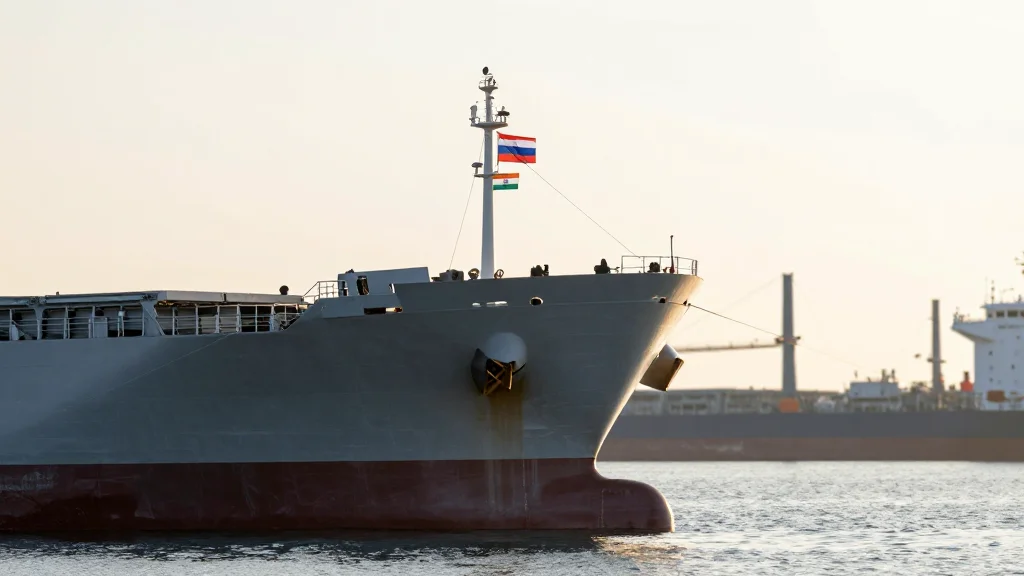
'Making in Russia for India' Eyes Fertilisers, Critical Mineral Mining JVs
Why It Matters
The plan secures essential fertilizer and mineral supplies for India while diversifying its trade base, reducing reliance on traditional partners and strengthening supply‑chain resilience.
Key Takeaways
- •Joint‑venture urea plant will produce 2 million tonnes annually for India.
- •Targeting $100 billion bilateral trade by leveraging minerals and fertilizers.
- •Indian workforce in Russia has grown to 100,000 workers.
- •“Making in Russia for India” aims to de‑risk supply chains.
- •UPI processes over 18 billion transactions monthly, highlighting digital scale.
Pulse Analysis
The "Making in Russia for India" model marks a strategic pivot for New Delhi, aligning with Moscow’s push to deepen industrial ties beyond traditional energy deals. By targeting a $100 billion trade ceiling, both governments aim to capture high‑value sectors such as critical minerals and fertilizers, reducing India’s exposure to supply shocks from other markets. This approach dovetails with broader geopolitical shifts, as India seeks to balance its trade portfolio amid rising tensions in the Indo‑Pacific and evolving global supply‑chain dynamics.
At the heart of the partnership is a joint‑venture urea plant slated to produce 2 million tonnes of fertilizer each year, with the entire output destined for Indian markets. Given India’s annual fertilizer consumption of roughly 30 million tonnes, the plant will shave a significant portion off import bills and help stabilise domestic prices, especially during monsoon‑driven demand spikes. Beyond nitrogen, the framework envisions joint mining projects for lithium, cobalt and rare earths—materials critical to India’s burgeoning electric‑vehicle and renewable‑energy sectors—thereby creating a domestic supply chain that can compete globally.
The initiative also leverages soft power assets, notably the massive Indian diaspora in Russia—now 100,000 strong—and India’s world‑leading Unified Payments Interface, which handles over 18 billion transactions monthly. These factors facilitate smoother cross‑border transactions and talent mobility, essential for de‑risking supply chains and expanding into third‑country markets. As both nations operationalise the framework, the partnership could become a template for other emerging economies seeking resilient, diversified trade ecosystems.
'Making in Russia for India' eyes fertilisers, critical mineral mining JVs
Comments
Want to join the conversation?
Loading comments...