New U.S.–AU Infrastructure Working Group Could Thrive With Strong Values-Based Safeguards
•February 17, 2026
0
Key Takeaways
- •Working Group aims to boost Africa infrastructure via US‑AU partnership.
- •AU implements only ~7% of its decisions, limiting effectiveness.
- •US human‑rights benchmarks have weakened, risking investment climate.
- •Governance, rule of law essential for sustainable infrastructure projects.
- •Business community can pressure for human‑rights conditionalities.
Summary
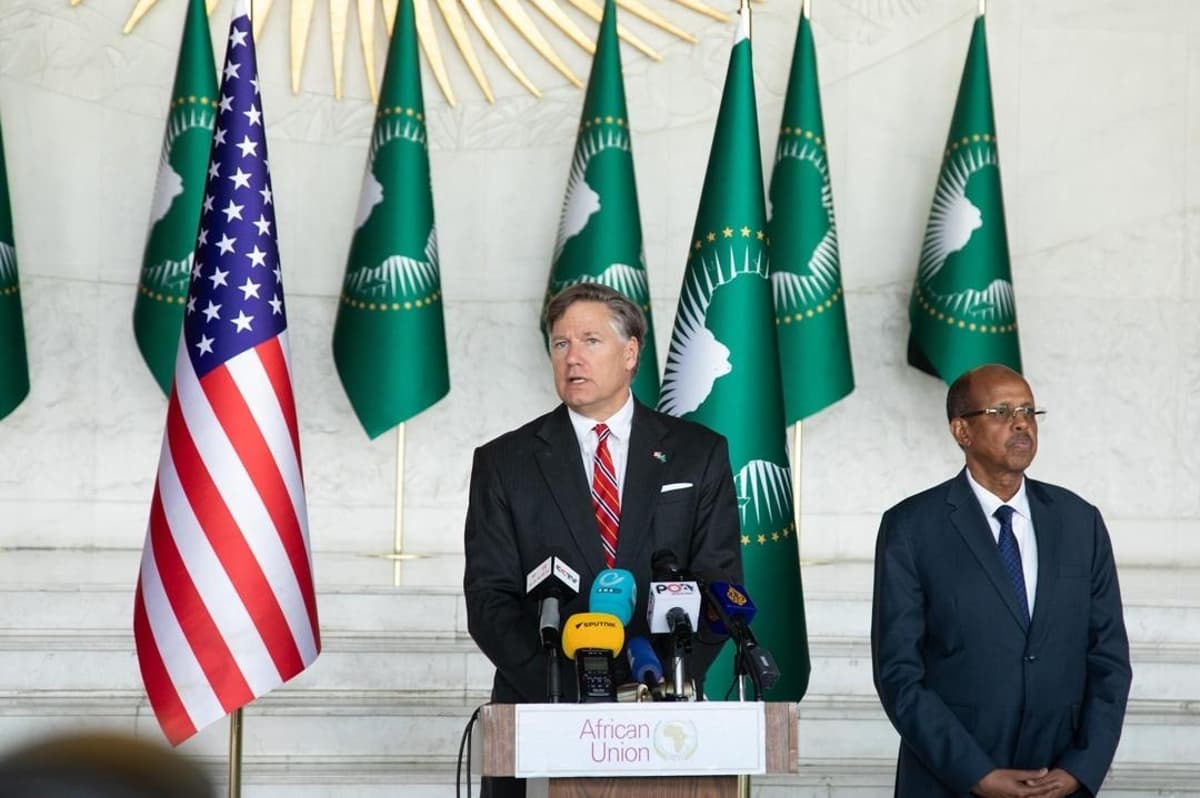
U.S. Deputy Secretary Christopher Landau and African Union Chair Mahmoud Ali Youssouf announced a Strategic Infrastructure and Investment Working Group to deepen U.S.–AU cooperation on trade‑enabling projects. The initiative marks a shift from bilateral deals toward a continent‑wide partnership, but its success hinges on embedding human‑rights, rule‑of‑law and governance safeguards. The article warns that the AU’s historically low implementation rate—about 7 % of its decisions—limits its capacity to oversee such projects. Meanwhile, the U.S. has softened human‑rights benchmarks, raising concerns that investments could be exposed to political instability and corruption.
Pulse Analysis
The launch of the U.S.–AU Strategic Infrastructure and Investment Working Group reflects Washington’s desire to pivot from piecemeal bilateral aid toward a coordinated continental strategy. By routing trade‑related projects through the African Union, the United States hopes to leverage the AU’s political legitimacy and its network of Regional Economic Communities. This approach mirrors broader geopolitical competition, where a unified African platform could counterbalance China’s growing footprint in the continent’s infrastructure landscape. However, the partnership’s credibility will depend on whether the AU can move beyond a convening body to an enforceable governance entity.
A persistent obstacle is the AU’s track record of implementation. Independent assessments show that roughly seven percent of AU resolutions are fully enacted, a shortfall that erodes confidence among investors and donor nations. Coupled with the Trump administration’s recent retreat from explicit human‑rights conditioning in its foreign policy, the risk profile for large‑scale projects—such as the stalled $42 billion LNG venture in Tanzania—has risen sharply. Political volatility, election‑related repression, and coups in several African states further underscore the need for clear, enforceable standards that protect both citizens and investors.
For the Working Group to thrive, it must embed values‑based safeguards into every contract and financing arrangement. This includes linking disbursements to compliance with the African Charter on Democracy, Elections and Governance, and empowering the African Court of Justice and Human Rights to adjudicate disputes. U.S. corporations, already subject to the Foreign Corrupt Practices Act, can champion these standards, turning compliance into a market differentiator. By aligning commercial interests with robust governance, the partnership can deliver resilient infrastructure, attract sustainable capital, and reinforce the United States’ long‑term strategic foothold in Africa.
Comments
Want to join the conversation?