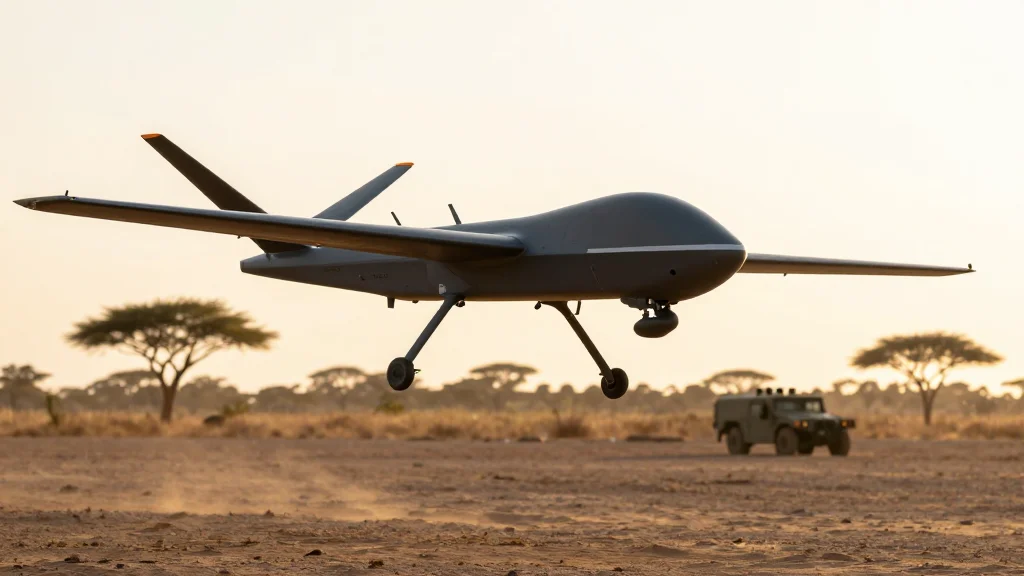
Nigeria and U.S. Joint Strikes Kill 175 ISIS Fighters in Northeast

Why It Matters
The operation marks a rare instance of direct U.S. kinetic engagement in Nigeria, a country that has long struggled with a hybrid insurgency blending Boko Haram, IS‑linked factions and criminal banditry. By demonstrating that joint strikes can produce measurable attrition against senior IS leaders, the partnership may encourage other African states to seek similar support, reshaping the counter‑terrorism architecture across the continent. At the same time, the strike underscores the strategic competition in the Sahel, where Russian private military firms are gaining footholds as Western partners retreat, potentially altering the balance of influence in a region critical to global energy routes and migration flows. If the joint effort translates into sustained pressure on IS networks, it could reduce the frequency of cross‑border attacks that threaten neighboring countries such as Chad and Cameroon. Conversely, failure to address underlying socioeconomic drivers could see militants adapt, prolonging instability and inviting further external intervention. The outcome will influence how the United States allocates resources to Africa’s security challenges and whether emerging markets like Nigeria can attract the investment needed for long‑term peace and development.
Key Takeaways
- •Nigeria and U.S. forces report 175 IS militants killed in joint airstrikes.
- •Senior IS leaders Abu‑Bakr al‑Mainuki and Abd‑al Wahhab were among those eliminated.
- •U.S. AFRICOM Gen. Dagvin Anderson highlighted Nigerian intelligence support as essential.
- •Operation follows a February U.S. advisory deployment and a December airstrike on Christmas Day.
- •Analysts warn of a Sahel intelligence gap and growing Russian influence as Western partners withdraw.
Pulse Analysis
The joint strike campaign reflects a strategic pivot by the United States from a purely advisory posture to a more hands‑on counter‑terrorism role in West Africa. Historically, U.S. engagement in the region has been limited to drone surveillance and capacity‑building, but the recent kill count suggests a willingness to leverage kinetic assets when local partners can provide actionable intelligence. This shift may be driven by the Biden administration’s broader focus on countering extremist groups that threaten both regional stability and trans‑Atlantic security interests.
From an emerging‑markets perspective, Nigeria’s ability to coordinate such operations signals a maturing security apparatus capable of integrating foreign intelligence with domestic operational planning. However, the reliance on U.S. overflight and basing rights exposes a vulnerability: any political friction could curtail access, leaving Nigerian forces to confront a resilient insurgency alone. Moreover, the destruction of financial networks, while a short‑term win, could push militants toward alternative revenue streams, such as illegal mining and kidnapping, which are harder to track.
Looking forward, the sustainability of this partnership will depend on congressional support for continued funding and the establishment of a clear exit strategy that avoids a security vacuum. If successful, the model could be exported to other Sahelian states, creating a network of U.S.-backed counter‑terrorism hubs. If not, the region risks slipping further into a fragmented security landscape where rival powers, notably Russia’s Wagner Group, fill the void, potentially reshaping the geopolitical calculus for investors eyeing Africa’s vast natural resources and growing consumer markets.
Nigeria and U.S. Joint Strikes Kill 175 ISIS Fighters in Northeast
Comments
Want to join the conversation?
Loading comments...