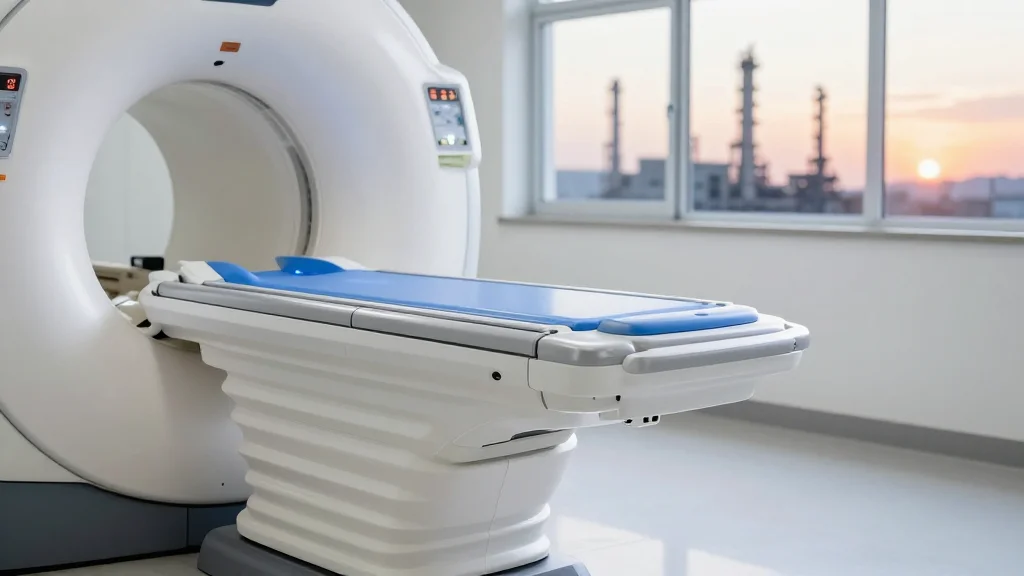
NNPC Deploys $1.5‑Tesla MRI in Nigeria, Boosting Healthcare in Emerging Market

Companies Mentioned

GE
Why It Matters
The MRI handover illustrates how oil‑rich emerging economies can translate resource wealth into tangible social benefits. In Nigeria, where health‑care access remains uneven, a state‑of‑the‑art imaging system can accelerate disease detection, reduce treatment delays, and lower overall health‑care costs for millions. By investing in health infrastructure, NNPC not only improves public welfare but also safeguards its own long‑term labor pool, a critical factor for sustained economic growth. Beyond Nigeria, the initiative showcases a blueprint for other emerging markets with abundant natural‑resource revenues. It demonstrates that strategic corporate social responsibility can address systemic gaps—such as diagnostic capacity—without diverting from core business operations. If replicated, such investments could elevate regional health outcomes, attract foreign medical partnerships, and reinforce the narrative that emerging markets are capable of self‑driven development.
Key Takeaways
- •NNPC installed a 1.5‑Tesla MRI at NAUTH, enhancing diagnostic services for the South‑East region
- •CEO Bashir Ojulari linked the donation to NNPC’s CSR strategy and its 365,000 bpd oil production
- •The MRI is expected to serve thousands of patients, cutting travel time and costs for medical care
- •NNPC’s recent health‑care projects include new wards at the National Orthopaedic Hospital in Lagos
- •The initiative signals a broader trend of resource‑rich emerging markets using energy revenues for health infrastructure
Pulse Analysis
NNPC’s MRI deployment is more than a charitable gesture; it reflects a strategic alignment of fiscal capacity with developmental priorities. Historically, oil‑rich states have faced criticism for neglecting domestic social needs while exporting wealth abroad. By earmarking a portion of its cash flow—bolstered by a 365,000‑bpd output—for high‑impact health infrastructure, NNPC is attempting to rewrite that narrative and build a domestic legitimacy base.
From a market perspective, the move could improve Nigeria’s health‑care index, a metric increasingly watched by foreign investors assessing country risk. Better diagnostics translate into a healthier workforce, lower absenteeism, and potentially higher productivity in sectors ranging from agriculture to manufacturing. Moreover, the public‑private partnership model—where a state‑owned oil company funds public‑health assets—may lower the perceived investment risk for multinational medical equipment firms eyeing Africa’s growing demand.
Looking forward, the key question is scalability. If the NAUTH MRI demonstrates measurable health outcomes—reduced mortality for conditions like cancer or stroke—NNPC may justify expanding the program to other regions, creating a network of advanced imaging centers. Such a network could become a platform for tele‑medicine collaborations, data sharing, and even medical tourism, generating ancillary revenue streams. However, success hinges on complementary investments in trained radiologists, maintenance contracts, and reliable electricity, all of which remain chronic challenges in many emerging markets.
In sum, NNPC’s initiative could serve as a catalyst for a virtuous cycle: resource wealth funds health infrastructure, which improves human capital, which in turn fuels broader economic growth and diversifies the country’s revenue base beyond oil. The next six months will be critical in measuring whether this pilot translates into a replicable model for other resource‑dependent emerging economies.
NNPC Deploys $1.5‑Tesla MRI in Nigeria, Boosting Healthcare in Emerging Market
Comments
Want to join the conversation?
Loading comments...