Quad Ministers Commit $20 B Critical Minerals Framework and Fiji Port Project at Delhi Summit

Why It Matters
The Quad’s coordinated push into critical minerals directly addresses a vulnerability that has hampered emerging‑market tech and clean‑energy ambitions: over‑reliance on China for rare earths and battery metals. By pooling $20 billion and creating a shared investment pipeline, the Quad can accelerate the development of mines in Africa, Latin America and Southeast Asia, fostering local job creation and reducing geopolitical risk. The Fiji port and maritime surveillance initiatives also have outsized strategic value. Improved infrastructure in the Pacific islands can shift trade patterns, offering emerging economies alternative routes to global markets. Enhanced domain awareness reduces the likelihood of maritime incidents that can disrupt supply chains, protecting the flow of commodities essential for manufacturing and energy sectors across the developing world.
Key Takeaways
- •Quad ministers announced a $20 billion Critical Minerals Initiative to fund mining, processing and recycling across member and partner economies.
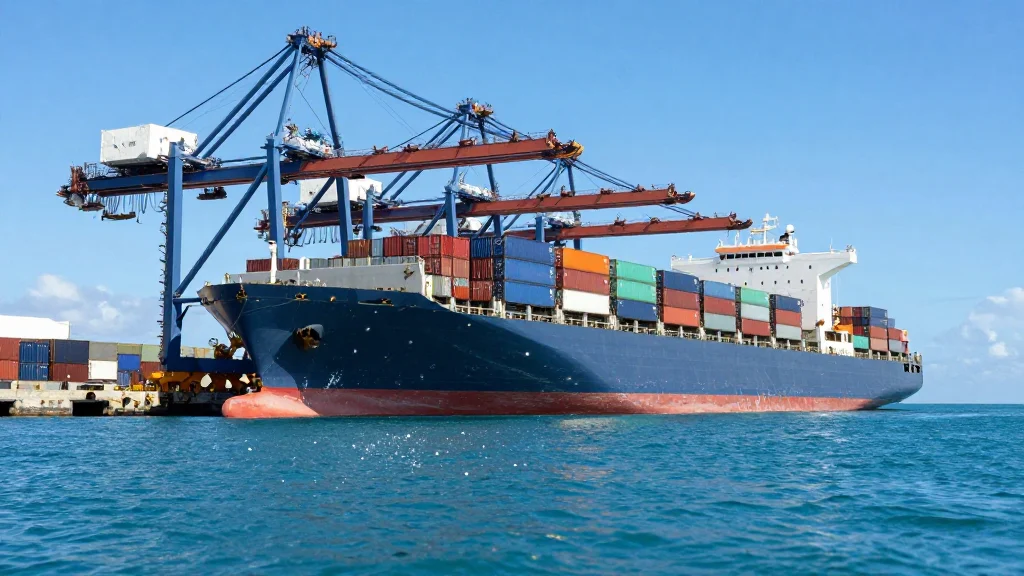
- •First joint Quad infrastructure project: a deep‑water port in Fiji, aimed at diversifying Pacific trade routes.
- •New Indo‑Pacific Energy Security initiative and Quad Fuel Security Forum to stabilise energy markets during shocks.
- •Maritime Surveillance Cooperation Initiative will integrate data across the Indian Ocean and Pacific for real‑time domain awareness.
- •Implementation to be refined at a Quad leaders’ summit slated for later in 2026.
Pulse Analysis
The Delhi summit marks a shift from the Quad’s earlier, more rhetoric‑driven posture to a concrete, investment‑focused agenda. By targeting critical minerals, the Quad is not only countering China’s dominance but also tapping into a multi‑billion‑dollar market that underpins the global transition to renewable energy and advanced manufacturing. The $20 billion pledge, while modest compared with the total estimated spend needed to secure global supply chains, signals a willingness to de‑risk projects that have historically struggled to attract financing due to geopolitical uncertainty.
Infrastructure in the Pacific has long been a proxy battleground for influence. The Fiji port, though still in the planning stage, could become a linchpin for small‑state economies seeking to export commodities without ceding control to Chinese state‑backed firms. If the Quad can deliver a transparent, commercially viable model, it may set a precedent for similar projects in the Indian Ocean rim, reshaping trade flows for emerging markets.
Finally, the maritime surveillance and energy security components underscore a holistic view of supply‑chain resilience. By linking sea‑lane safety with energy market stability, the Quad acknowledges that disruptions in one domain reverberate across the entire value chain. The upcoming leaders’ summit will be the true test: translating ministerial declarations into binding agreements, private‑sector commitments and on‑the‑ground projects that can deliver measurable benefits to emerging economies.
Quad Ministers Commit $20 B Critical Minerals Framework and Fiji Port Project at Delhi Summit
Comments
Want to join the conversation?
Loading comments...