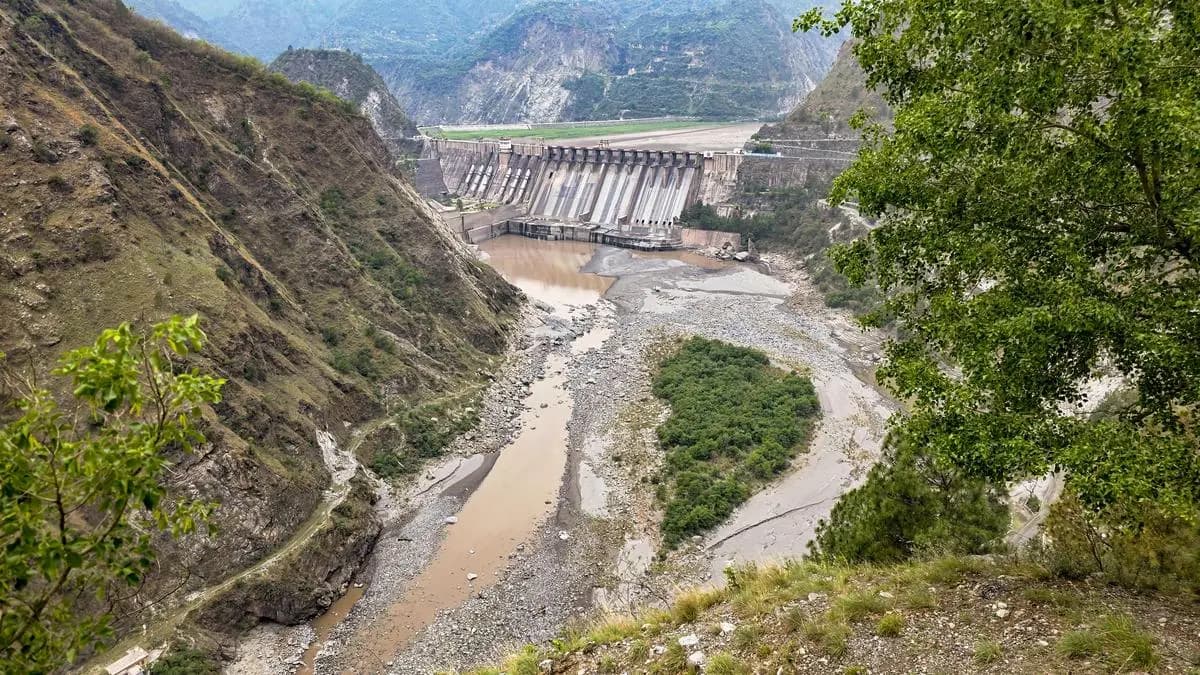
Shahpurkandi Dam Set for Commissioning, Ravi Waters to Boost Irrigation in Jammu and Punjab
•February 17, 2026
0
Why It Matters
Redirecting Ravi waters boosts agricultural productivity in two states while reducing reliance on cross‑border water agreements, reshaping regional water security and economic stability.
Key Takeaways
- •Shahpurkandi Dam to finish by March 31, 2026
- •Diverts surplus Ravi water for irrigation in Jammu, Punjab
- •Irrigates Kathua, Samba districts, reducing drought impact
- •Supports hydropower projects across Chenab basin
- •Treaty suspension accelerates water infrastructure development
Pulse Analysis
The Shahpurkandi Dam, positioned on the Ravi River near the India‑Pakistan border, represents a strategic shift in water management for the sub‑continent. By capturing surplus flows that would otherwise cross into Pakistan, the dam not only secures additional water for domestic use but also aligns with India’s broader policy of reinforcing water sovereignty after the Indus Water Treaty was placed in abeyance. This infrastructure leverages existing river dynamics, converting what was previously a loss into a resource for irrigation and potential hydro‑electric generation.
For farmers in Jammu’s Kathua and Samba districts and Punjab’s arid belts, the dam promises a reliable water supply during the critical Kharif season. Reliable irrigation can expand cultivated acreage, improve crop yields, and mitigate the recurring drought cycles that have constrained agricultural output. The added water is expected to protect staple crops such as wheat and rice, directly influencing farm incomes and regional food security, while also reducing pressure on groundwater extraction.
Beyond agriculture, the dam’s commissioning dovetails with a suite of large‑scale Chenab‑basin projects, including the 850‑MW Ratle Hydroelectric Project and the 260‑MW Dulhasti Stage‑II. These initiatives reflect a coordinated effort to harness the region’s hydropower potential, diversify energy sources, and reduce dependence on fossil fuels. The convergence of water diversion and power generation underscores a holistic approach to resource development, positioning northern India as a growing hub for sustainable infrastructure amid evolving geopolitical dynamics.
Shahpurkandi Dam set for commissioning, Ravi waters to boost irrigation in Jammu and Punjab
0
Comments
Want to join the conversation?
Loading comments...