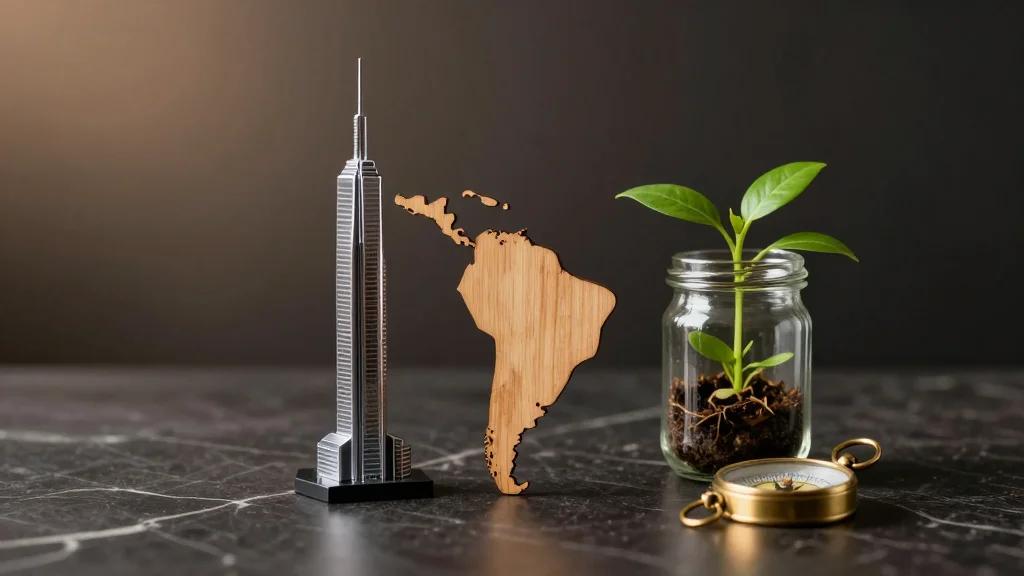
Speculating on South America’s Extraordinary Future
Key Takeaways
- •South America could become global growth engine by 2040
- •Demographic dividend may boost consumer markets across Brazil, Colombia, Peru
- •Renewable energy investments poised to transform regional power landscape
- •Political stability improvements could attract $500B foreign direct investment
- •Infrastructure projects aim to link Atlantic and Pacific trade routes
Pulse Analysis
South America stands at a demographic crossroads, with a median age hovering around 30 and a burgeoning middle class projected to add 150 million consumers by 2035. This youthful workforce can fuel productivity gains, provided education and digital infrastructure keep pace. Meanwhile, the continent’s vast lithium, copper, and rare‑earth reserves position it as a cornerstone of the global clean‑energy transition, attracting multinational interest in mining and battery‑manufacturing hubs.
Economic analysts estimate that, under favorable policy conditions, the region’s combined GDP could surpass $5 trillion within the next two decades—an increase of roughly 70 percent from current levels. Key growth drivers include Brazil’s agribusiness expansion, Colombia’s services sector, and Peru’s mining output. Renewable‑energy projects, especially solar farms in the Atacama Desert and wind farms along Brazil’s coast, are slated to add over 200 GW of capacity, reducing reliance on hydro and fossil fuels while creating export‑ready green electricity.
However, realizing this extraordinary future hinges on political continuity, anti‑corruption reforms, and infrastructure upgrades. Nations that streamline regulatory frameworks and invest in trans‑continental rail and port corridors will likely capture the bulk of the projected $500 billion in foreign direct investment. For global investors, the speculative scenario outlined by Geopolitical Futures signals a high‑reward, high‑risk opportunity that warrants early positioning before the region’s growth narrative fully unfolds.
Speculating on South America’s Extraordinary Future
Comments
Want to join the conversation?