Tactical Agreement Proving Elusive for Central Asian States Grappling with Water Deficit
•February 26, 2026
0
Why It Matters
The inability to reach a tactical water‑management agreement threatens economic growth and climate resilience across a region home to 37 million people, while undermining planned infrastructure investments. A binding, enforceable framework could stabilize water allocation, reduce conflict, and support sustainable development.
Key Takeaways
- •Central Asia faces growing water deficit amid development projects.
- •Upstream-downstream split hampers unified water management strategy.
- •Kazakhstan proposes new enforcement entity under regional water convention.
- •Kyrgyzstan urges reforms, suggests charging downstream for water.
- •Existing ICWC lacks authority, leading to tactical paralysis.
Pulse Analysis
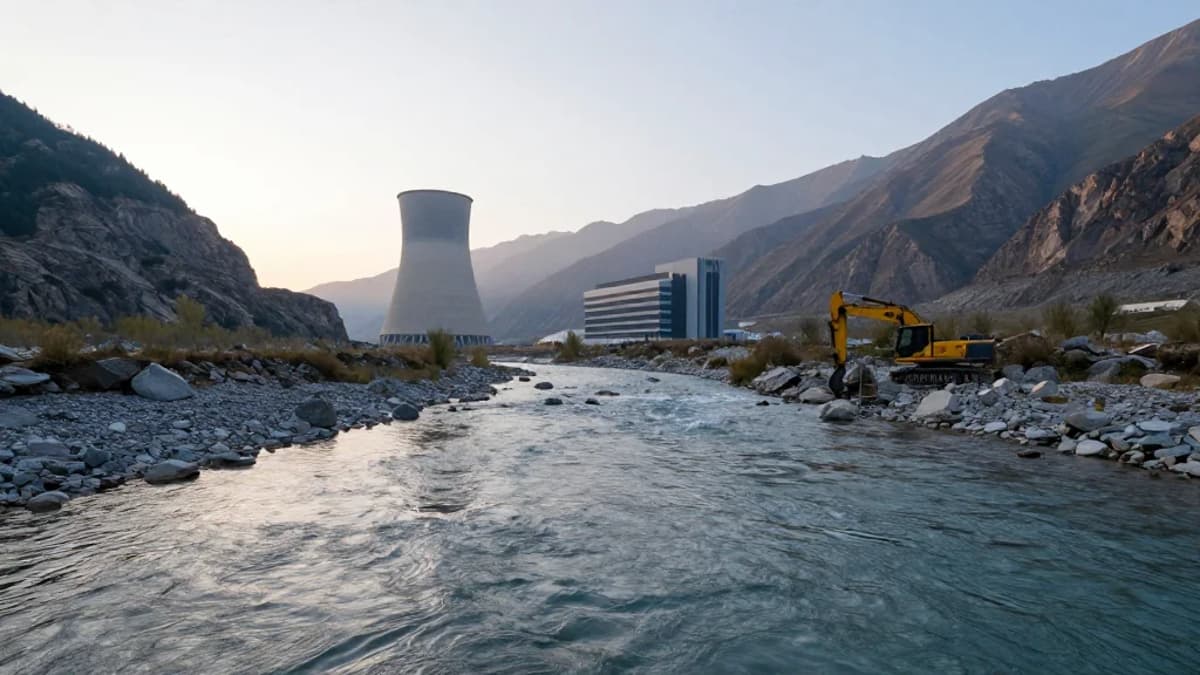
Central Asia’s water balance is tipping toward scarcity as population growth and a wave of capital‑intensive projects strain already thin supplies. The region’s arid basins, fed by the Syr‑Darya and Amu Darya rivers, are seeing record low reservoir levels, a trend amplified by hotter summers and erratic precipitation linked to climate change. At the same time, governments are pushing forward with nuclear power plants, data‑center clusters, and expanded mining operations that demand large, reliable water inputs. Without a coordinated response, the water deficit could become a bottleneck for the region’s diversification agenda.
The political architecture for water allocation has long been fragmented. The Interstate Commission of Water Coordination (ICWC), created after the Soviet breakup, lacks enforcement powers, leaving negotiations to ad‑hoc hydropower swaps that falter under drought conditions. Kazakhstan’s recent proposal to establish a new authority under a Central Asian Framework Convention seeks to give the commission teeth, but downstream states have been cautious, fearing loss of cheap water access. Upstream Kyrgyzstan and Tajikistan, meanwhile, argue that historic inequities have left them short‑changed and are now pressing for compensation mechanisms, including possible water tariffs.
Resolving the stalemate is critical for both economic stability and regional security. A binding, enforceable water‑management regime would enable downstream farmers to adopt water‑saving irrigation technologies while giving upstream nations reliable revenue streams from hydropower and water usage fees. International donors and multilateral banks are already signaling willingness to fund joint infrastructure, such as modernized reservoirs and trans‑boundary monitoring systems, provided a transparent legal framework is in place. In the short term, aligning the ICWC’s mandate with the proposed convention could unlock the cooperation needed to safeguard growth and mitigate climate‑related risks.
Tactical agreement proving elusive for Central Asian states grappling with water deficit
0
Comments
Want to join the conversation?
Loading comments...