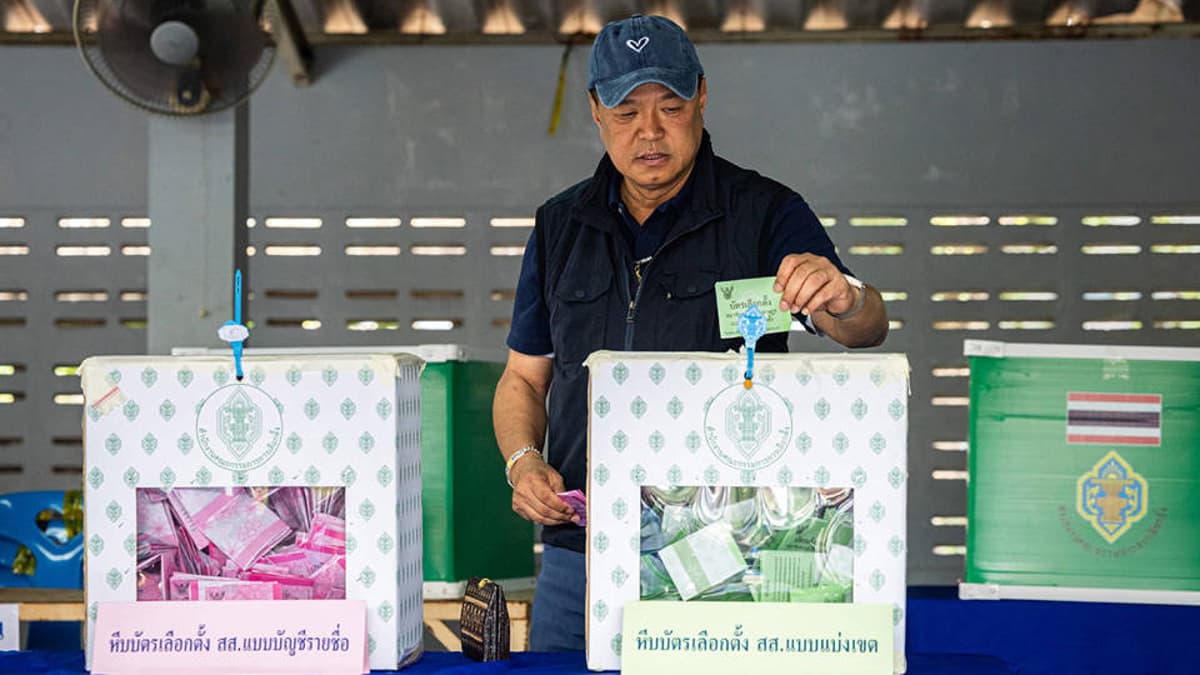
Thailand’s Royalist Right Turn
•February 17, 2026
0
Why It Matters
The win restores establishment control, shaping Thailand’s reform trajectory and influencing investor confidence across Southeast Asia.
Key Takeaways
- •Bhumjaithai secures parliamentary majority, backed by military
- •Reformist People's Party loses, ending 26-year turmoil
- •Economic stagnation threatens party's legitimacy
- •Social rifts could trigger anti‑establishment protests
- •Anutin Charnvirakul faces pressure to deliver growth
Pulse Analysis
Thailand’s political landscape has undergone a dramatic reset as the Bhumjaithai Party, long aligned with the monarchy and the armed forces, secured a commanding parliamentary majority. After decades of alternating protest movements, two coups and frequent court‑driven interventions, the old guard’s return signals a consolidation of power among traditional elites. This shift not only marginalises reform‑oriented factions but also re‑establishes a predictable, albeit rigid, governance framework that foreign investors and regional partners have come to anticipate.
Yet the party’s dominance arrives at a precarious economic juncture. Thailand’s growth has plateaued, with consumer confidence waning and export demand facing headwinds from global supply‑chain disruptions. Anutin Charnvirakul’s administration must craft policies that stimulate investment, modernise infrastructure, and address labor market mismatches without alienating the entrenched interests that facilitated its rise. Successful economic stewardship could reinforce the legitimacy of the royalist agenda, while missteps risk amplifying fiscal deficits and eroding Thailand’s competitive edge in the ASEAN market.
Beyond economics, deep‑seated social fissures persist between urban reformists and rural traditionalists. The previous wave of protests highlighted demands for greater democratic participation and accountability, and those grievances remain unresolved. If the government fails to bridge these divides, it may confront renewed street unrest, threatening stability and drawing international scrutiny. Consequently, Thailand’s trajectory over the next term will hinge on the Bhumjaithai Party’s ability to balance establishment priorities with inclusive, growth‑focused reforms.
Thailand’s Royalist Right Turn
0
Comments
Want to join the conversation?
Loading comments...