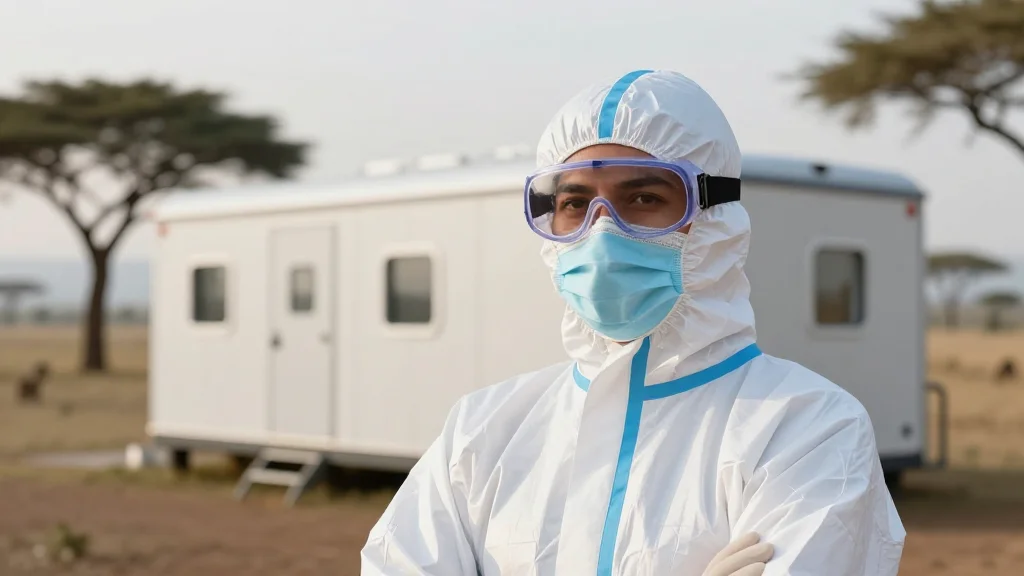
Trump Administration Plans Ebola Care Facility in Kenya Amid DRC Outbreak

Why It Matters
The decision to locate an Ebola treatment center in Kenya highlights how emerging markets can become focal points for high‑stakes health diplomacy. For Kenya, the project could bring advanced medical infrastructure and international attention, but it also risks straining local health systems and sparking public resentment if perceived as preferential treatment for foreigners. For the United States, the plan reflects a shift toward offshore contingency planning, raising legal and ethical questions about the duty of care owed to its citizens abroad. The controversy may influence future bilateral health agreements and shape how emerging economies leverage strategic partnerships during crises. Moreover, the episode illustrates the broader challenge of balancing rapid response with respect for host‑country sovereignty. As global health threats become more frequent, emerging markets like Kenya will increasingly find themselves at the intersection of humanitarian aid, geopolitical strategy, and domestic public‑health priorities.
Key Takeaways
- •Trump administration announces a dedicated Ebola treatment facility in Kenya for U.S. citizens.
- •Secretary of State Marco Rubio says the U.S. will not allow Ebola cases to enter the country.
- •Health experts warn the plan undermines existing U.S. treatment capacity and may be unethical.
- •Kenyan Ministry of Health says any agreement will follow national health laws and biosafety standards.
- •The initiative could set a precedent for future cross‑border health infrastructure projects in emerging markets.
Pulse Analysis
The Kenya Ebola facility proposal is a microcosm of how emerging markets are being pulled into the strategic calculus of major powers. Historically, U.S. health security has relied on domestic high‑containment labs and hospitals; shifting part of that capability abroad signals a willingness to outsource risk, but also a recognition that proximity matters in fast‑moving outbreaks. For Kenya, the influx of U.S. resources could accelerate its own infectious‑disease preparedness, yet the optics of a "U.S. only" clinic risk alienating local communities and eroding trust in public‑health institutions.
From a market perspective, the project may open doors for ancillary services—logistics, construction, medical equipment supply—benefiting Kenyan firms and foreign investors eyeing the East African health sector. However, the lack of transparency around funding and operational control could deter private capital wary of political risk. If the center proves successful, it could catalyze a new wave of public‑private partnerships across the continent, positioning emerging markets as hubs for specialized health infrastructure.
Looking ahead, the controversy may force the U.S. to clarify its legal obligations under the International Health Regulations and domestic statutes governing the export of medical services. A failure to address ethical concerns could prompt legislative pushback, while a well‑executed partnership could become a template for future pandemic‑response collaborations, reshaping the health‑security landscape for both developed and emerging economies.
Trump Administration Plans Ebola Care Facility in Kenya Amid DRC Outbreak
Comments
Want to join the conversation?
Loading comments...