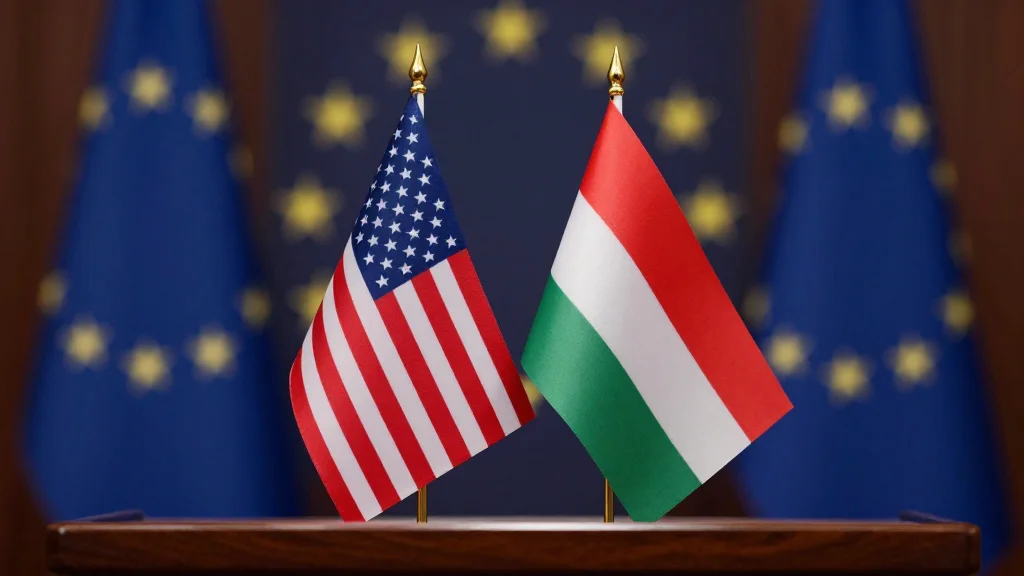
Trump and Vance Back Orbán Ahead of Hungary’s Election
Why It Matters
The backing signals a deepening alliance between U.S. populist figures and Orbán, potentially reshaping diplomatic dynamics and influencing voter sentiment in a contested election.
Key Takeaways
- •Trump and Vance publicly endorse Orbán.
- •Endorsement timed before Hungary's parliamentary vote.
- •Signals US right-wing alignment with European populists.
- •May complicate EU's democratic backsliding criticism.
- •Could influence Hungarian voter perception of foreign support.
Pulse Analysis
Donald Trump and Ohio Senator JD Vance announced their support for Hungarian Prime Minister Viktor Orbán just weeks before the nation’s parliamentary election. Their joint statement highlighted common stances on national sovereignty, strict immigration controls, and market‑friendly reforms, framing Orbán as a bulwark against liberal EU policies. The endorsement marks one of the most high‑profile U.S. interventions in a Central European election in recent years. The endorsement also aligns with Trump’s previous praise for Orbán’s nationalist agenda, reinforcing a shared narrative that challenges multilateral institutions.
The move complicates Washington’s already delicate relationship with the European Union, which has launched legal actions against Hungary for alleged democratic backsliding. By aligning with Orbán, Trump and Vance signal a willingness to overlook rule‑of‑law concerns in favor of ideological affinity, raising questions about future U.S. policy toward EU member states that diverge from liberal democratic norms. European leaders worry the endorsement could legitimize Orbán’s contested reforms and embolden similar right‑wing governments across the bloc. Critics argue this could undermine U.S. credibility on human rights, as allies may perceive a double standard when political loyalty outweighs democratic standards.
The endorsement reflects a broader trend of transatlantic populist cooperation, where electoral calculations increasingly intersect with foreign policy. Investors are watching the Hungarian vote closely, as a continued Orbán government could sustain favorable tax regimes and energy contracts that benefit Western firms, while also risking sanctions if EU pressure escalates. Analysts suggest that any shift in Hungary’s foreign policy orientation could affect regional security dynamics, especially regarding NATO’s eastern flank. Ultimately, the Trump‑Vance backing may sway a segment of Hungarian voters who view U.S. approval as a stamp of legitimacy, potentially tilting the election outcome.
Trump and Vance back Orbán ahead of Hungary’s election
Comments
Want to join the conversation?
Loading comments...