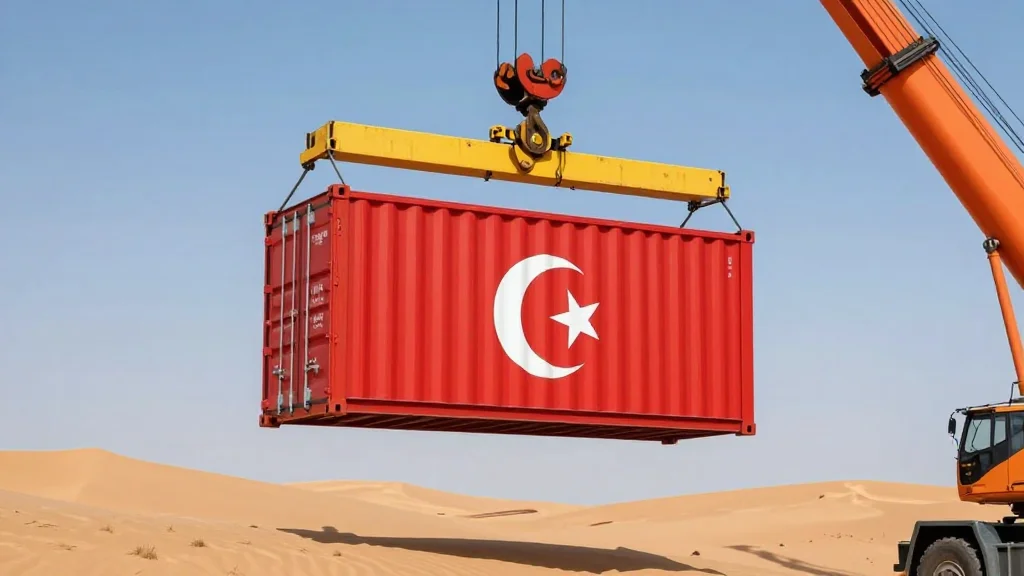
Turkey's Export Outlook Improves as Middle East Demand Rebounds, Europe Slows

Companies Mentioned

Why It Matters
The shift toward Middle Eastern demand reshapes Turkey's trade calculus, reducing its reliance on a Europe that is grappling with inflation and slower growth. For emerging markets broadly, the story illustrates how geopolitical shocks—such as the Iran war—can quickly rewire export corridors, creating new opportunities and risks. Investors and policymakers will monitor whether Turkey can translate this modest optimism into sustained export growth, which could bolster its current account and support broader regional economic stability. Moreover, the data underscores the importance of diversified export baskets for emerging economies. As Europe’s slowdown drags on, countries that can pivot to alternative markets like the Middle East or the United States may mitigate downside exposure, a lesson that could inform trade strategies across the Global South.
Key Takeaways
- •Turkey's Export Climate Index rose to 50.3 in May, the 29th month of improvement
- •European markets (Germany, France, U.K.) showed deeper output declines, representing ~19% of Turkey's manufacturing exports
- •UAE non‑oil activity expanded at its fastest pace in three months; Saudi Arabia also accelerated growth
- •U.S. economic activity continued expanding for a 40th consecutive month, offering a modest demand buffer
- •Geopolitical tensions from the Iran war remain a headwind for broader international demand
Pulse Analysis
Turkey's modest index gain masks a deeper realignment of its export engine. Historically, Europe has been the cornerstone of Turkish manufacturing sales, but persistent inflation, energy price volatility, and now a post‑war slowdown are eroding that foundation. The latest S&P Global survey suggests that the Middle East, once a peripheral market, is emerging as a new growth pole, driven by non‑oil sectors that are less vulnerable to commodity price swings.
For emerging markets, Turkey's experience offers a cautionary tale about over‑reliance on a single region. The ability to quickly capture demand rebounds in the UAE and Saudi Arabia reflects both geographic proximity and a diversified product mix that includes machinery, textiles, and automotive parts. Companies that have already cultivated supply‑chain links and compliance frameworks for the Gulf are reaping early benefits, while those still focused on Europe may face a longer adjustment period.
Looking forward, the trajectory of Turkey's export outlook will hinge on three variables: the durability of Middle Eastern recovery, the pace of European fiscal and monetary tightening, and the evolution of geopolitical risk in the region. If the Gulf can sustain its growth, Turkey could see its Export Climate Index breach the 52‑point mark by year‑end, potentially unlocking new foreign‑direct investment flows. Conversely, a resurgence of conflict or a sharper European recession could push the index back below the growth threshold, prompting policymakers to consider stimulus measures or trade diversification incentives. The coming months will be a litmus test for how resilient Turkey—and by extension, other emerging exporters—can be in a world where trade patterns are increasingly dictated by geopolitical flashpoints.
Turkey's Export Outlook Improves as Middle East Demand Rebounds, Europe Slows
Comments
Want to join the conversation?
Loading comments...