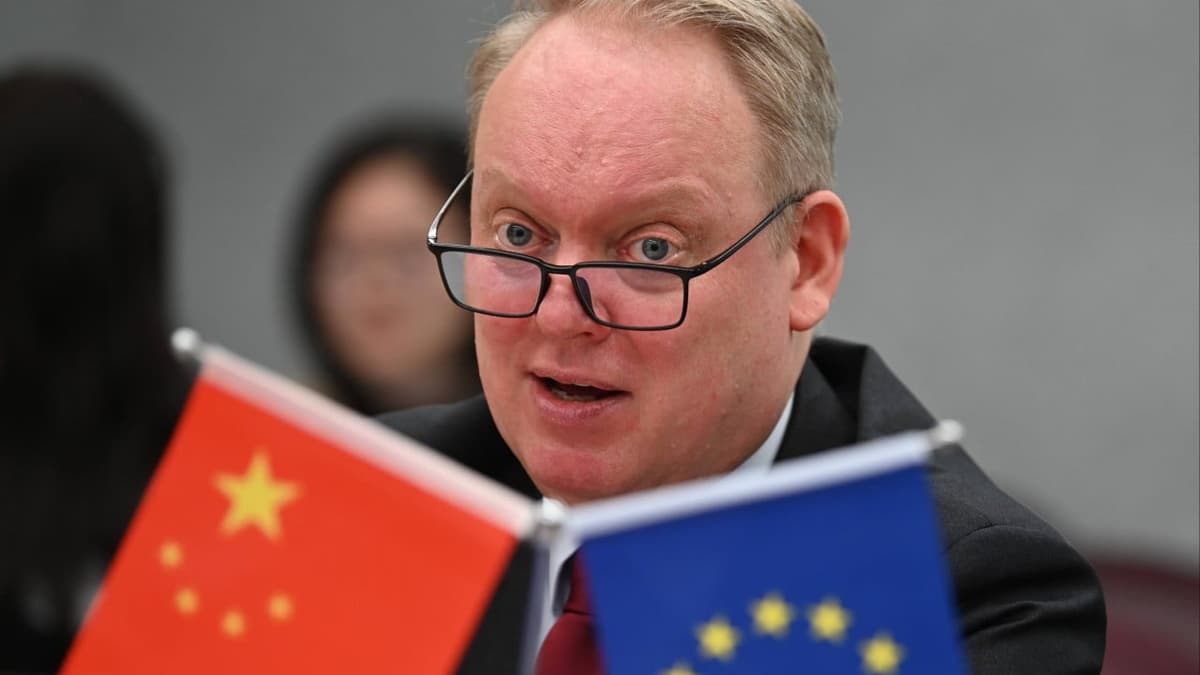
Two Worlds Collide: The Regulatory Battlefield Hanging over the EU’s Ties with China
Why It Matters
The escalating EU‑China regulatory war raises compliance costs and supply‑chain risk for companies operating across both markets, while reshaping the strategic balance of technology and critical‑materials trade.
Key Takeaways
- •EU halted funding for Chinese inverters over hacking concerns
- •Norwegian mine test revealed remote access to Chinese buses
- •Industrial Accelerator Act pushes Chinese tech production to Europe
- •China sued EU over foreign‑subsidies rule demanding prohibited data
- •Dual EU‑China rules force firms to choose between conflicting regulations
Pulse Analysis
The European Union’s latest security scare began in an abandoned Norwegian mine, where Yutong electric buses were shown to be controllable from China. The test highlighted how remote software updates could become a backdoor for state actors, prompting Brussels to treat Chinese hardware as a strategic vulnerability. This incident has accelerated a broader EU push to de‑risk supply chains, especially in sectors like renewable energy and electric‑vehicle charging where Chinese components dominate.
In response, the EU has rolled out a suite of measures: it froze all public funding for Chinese‑made inverters, introduced the Industrial Accelerator Act to obligate local production of key components, and is drafting a second‑generation Cybersecurity Act that could ban certain Chinese firms from critical infrastructure. Simultaneously, the bloc’s foreign‑subsidies regulation and international procurement rules are being used to scrutinise Chinese investment and technology transfer. Beijing has countered with lawsuits, alleging violations of Chinese law, and warned of reciprocal actions against European firms, turning trade disputes into a legal battlefield.
For businesses, the fallout means navigating an increasingly tangled web of overlapping regulations. Companies must conduct rigorous supply‑chain audits to satisfy EU standards while avoiding data‑sharing mandates that could breach Chinese law. The clash also threatens the flow of rare‑earth minerals and other critical inputs, as both sides leverage export controls for strategic leverage. Ultimately, the regulatory tug‑of‑war forces firms to reassess their China strategies, diversify sourcing, and invest in compliance capabilities to survive a market where geopolitics and technology are inseparable.
Two worlds collide: the regulatory battlefield hanging over the EU’s ties with China
Comments
Want to join the conversation?
Loading comments...