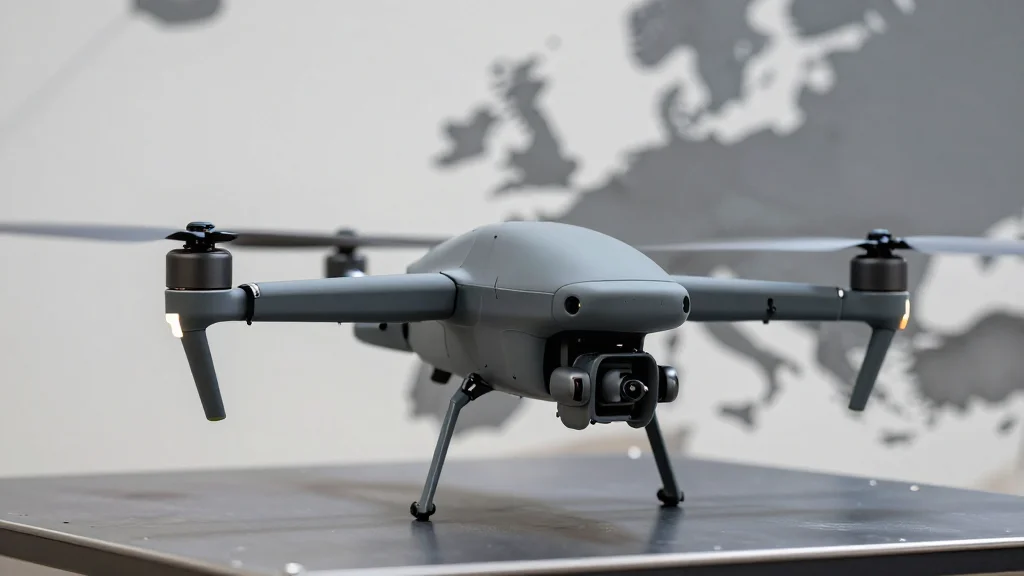
Ukraine Secures $45 Billion Western Aid Boost, Emphasizing Drone Production and Air Defense

Companies Mentioned
Why It Matters
The $45 billion aid pledge reshapes the defence landscape for both Ukraine and its Western partners, turning a crisis‑driven charity model into a durable industrial collaboration. For emerging markets, the resulting supply‑chain integration offers a pathway to acquire advanced aerospace technologies, potentially narrowing the gap with established manufacturers. Moreover, the scale of funding underscores how geopolitical conflicts can drive capital flows into high‑tech sectors, influencing investment patterns across Asia, Africa and Latin America. At a macro level, the commitment signals that major economies are willing to allocate substantial resources to counter Russian aggression, reinforcing the perception of a coordinated Western front. This may deter further escalation but also embeds defence spending into fiscal planning for years to come, affecting everything from sovereign debt strategies to private‑sector R&D budgets in emerging economies that depend on Western technology partnerships.
Key Takeaways
- •Western allies pledged >$45 bn at Ramstein, the largest single aid package since the war began.
- •Germany and the UK earmarked €300 m and £600 m respectively for joint drone production and air‑defence systems.
- •Zelensky introduced the “Drone Deal format” to secure long‑term industrial partnerships.
- •European defence firms will expand capacity, creating opportunities for emerging‑market suppliers of components.
- •EU Energy Commissioner warned that prolonged conflict could trigger broader economic pressures, including higher travel costs.
Pulse Analysis
The shift from ad‑hoc weapon deliveries to joint production marks a strategic inflection point for the defence sector. Historically, aid to conflict zones has been consumptive—once a weapon is delivered, it disappears from the donor’s inventory. By embedding Ukrainian engineers within European factories, the West is effectively creating a new supply chain that can outlast the immediate conflict, turning a wartime exigency into a commercial opportunity.
This model also aligns with broader trends in emerging markets, where governments are increasingly seeking to localise high‑tech manufacturing to reduce dependence on external sources. Countries such as Brazil and India have announced ambitions to develop indigenous drone capabilities, and the European‑Ukrainian partnership could serve as a template for technology transfer agreements. The financial magnitude of the aid—over $45 bn—means that even a modest share of component contracts could represent multi‑billion‑dollar opportunities for firms in those regions.
Nevertheless, the sustainability of this approach hinges on political will and fiscal health in donor nations. The UK’s reliance on frozen Russian assets and the EU’s broader energy crisis illustrate the competing budgetary pressures. If energy costs or inflation erode public support for foreign aid, the flow of funds could taper, jeopardising the long‑term industrial projects that underpin the new strategy. Monitoring how quickly joint‑venture contracts materialise and the speed at which drones reach the front lines will be key indicators of whether this ambitious aid package translates into a lasting shift in the global defence ecosystem.
Ukraine Secures $45 Billion Western Aid Boost, Emphasizing Drone Production and Air Defense
Comments
Want to join the conversation?
Loading comments...