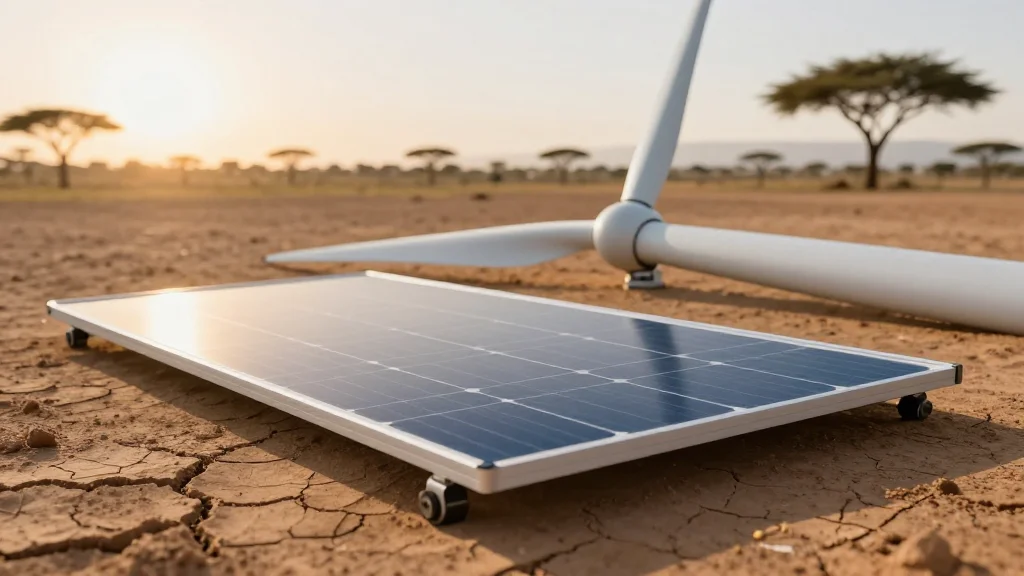
UN Chief Says Africa Could Meet 10× Its Power Needs with Renewables by 2040

Why It Matters
Africa’s renewable potential represents a seismic shift for emerging‑market finance. By unlocking even a modest share of the estimated 60 million TWh solar resource, the continent could meet its own electrification goals while supplying export‑grade clean power to Europe, the Middle East, and beyond. This would diversify Africa’s economic base, reduce reliance on fossil‑fuel imports, and create a new pipeline of infrastructure projects that attract sovereign, multilateral, and private capital. The financing gap also highlights systemic risk‑pricing challenges that affect all emerging markets. If innovative blended‑finance tools succeed in Africa, they could become templates for other regions where climate‑linked projects face similar currency and credit constraints, accelerating the global energy transition while delivering high‑yield opportunities for investors seeking exposure to the next wave of growth.
Key Takeaways
- •UN Secretary‑General António Guterres said Africa could generate ten times its current electricity needs by 2040 using renewables
- •Africa holds about 60% of the world’s best solar resources and an estimated 60 million TWh of solar potential per year
- •Less than 3% of global clean‑energy investment flows to Africa despite the resource base
- •Financing costs are inflated by currency risk, sovereign debt concerns, and grid constraints
- •Blended‑finance mechanisms are being urged to decouple project risk from country credit ratings
Pulse Analysis
The UN’s pronouncement is less a diplomatic flourish than a market catalyst. Historically, emerging‑market infrastructure has lagged because investors demanded sovereign guarantees that many African states cannot comfortably provide. By framing the continent’s renewable assets as a global supply source rather than a domestic utility, Guterres is nudging capital providers to think in terms of export‑oriented, revenue‑stable projects that can be securitised against long‑term power purchase agreements.
In practice, this means a shift from ad‑hoc project finance to structured, multi‑tranche deals that combine development‑bank concessional loans, green bonds, and private equity. The World Bank’s recent "Risk Mitigation Facility" for African solar farms, for example, could lower the weighted‑average cost of capital from 12% to under 8%, making projects financially comparable to European peers. If such structures gain traction, they will not only unlock the $1‑$2 trillion investment needed to tap even 10% of the continent’s solar potential, they will also create a new benchmark for pricing climate risk in emerging markets.
Looking ahead, the real test will be execution. Grid upgrades, regulatory harmonisation across the African Union, and the development of cross‑border power markets will determine whether the continent can move from a resource‑rich narrative to a revenue‑rich reality. Investors will watch closely for the first large‑scale, export‑oriented solar hub—likely in the Sahel or North Africa—to gauge the viability of the financing models being championed today. Success could rewrite the playbook for emerging‑market clean‑energy investment worldwide.
UN chief says Africa could meet 10× its power needs with renewables by 2040
Comments
Want to join the conversation?
Loading comments...