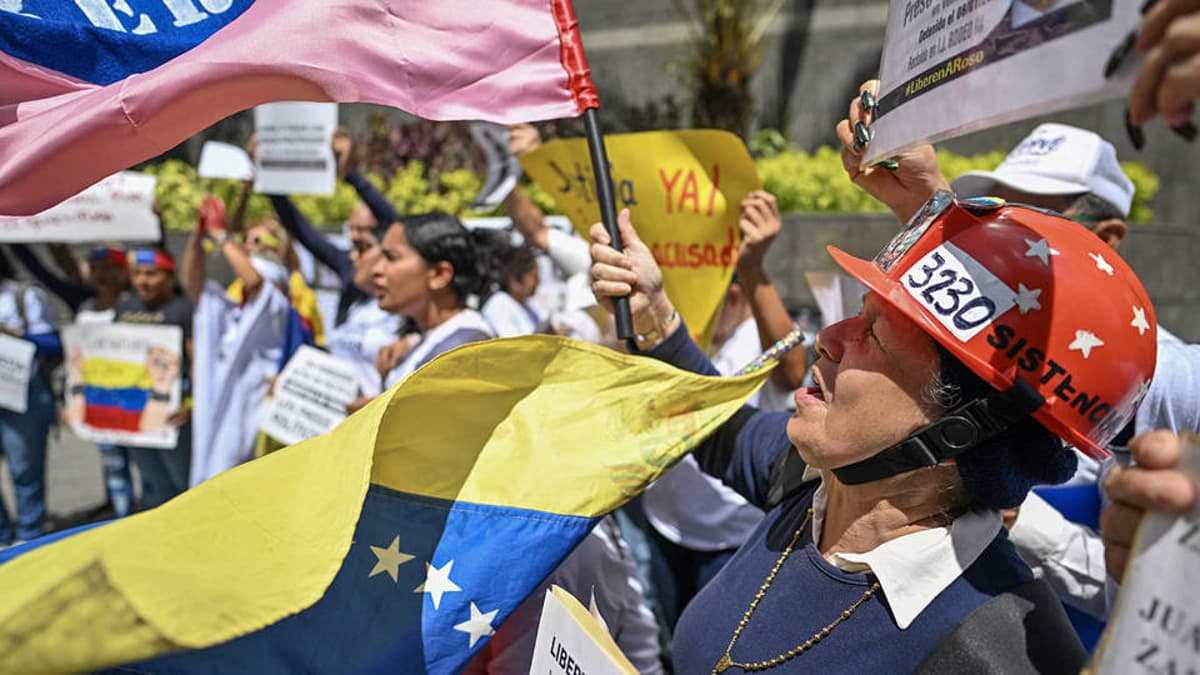
Venezuelan Democracy Needs Action, Not Cheap Talk
•February 20, 2026
0
Why It Matters
The strategy ties massive U.S. capital to Venezuela’s oil sector, reshaping regional power dynamics and raising questions about the future of democratic governance in the country.
Key Takeaways
- •Trump promises $100 billion oil sector investment.
- •Reconstruction prioritized over immediate democratic elections.
- •U.S. aims to control Venezuela's oil infrastructure.
- •Election timeline left undefined, raising governance concerns.
- •Strategy could reshape South American energy markets.
Pulse Analysis
The Trump administration’s pivot toward oil‑first reconstruction marks a stark departure from decades of U.S. policy that relied on sanctions to pressure the Maduro regime. By promising $100 billion in private sector investment, Washington is signaling confidence in Venezuela’s proven hydrocarbon reserves and seeking to secure a foothold in a market long dominated by state‑run entities. This move also reflects broader geopolitical calculations, as the United States aims to counter growing Chinese and Russian influence in Latin America by positioning American firms as the primary engine of recovery.
While the financial commitment may attract multinational energy companies, it simultaneously sidelines the democratic aspirations of Venezuelans. By deferring elections indefinitely, the policy risks legitimizing an authoritarian status quo, potentially undermining international norms that tie economic assistance to political reforms. Investors must weigh the allure of high‑return oil projects against reputational and regulatory risks associated with operating in a country where governance remains uncertain and human‑rights concerns persist.
Regionally, a U.S.-led oil renaissance in Venezuela could reshape South American energy markets, lowering global oil price volatility and altering trade flows. Neighboring countries may respond with policy adjustments, either aligning with Washington’s vision or reinforcing ties with alternative partners like Russia and China. The long‑term success of this strategy hinges on whether reconstruction can be decoupled from democratic progress, a balance that will dictate both the stability of Venezuela’s economy and the United States’ standing in the hemisphere.
Venezuelan Democracy Needs Action, Not Cheap Talk
0
Comments
Want to join the conversation?
Loading comments...