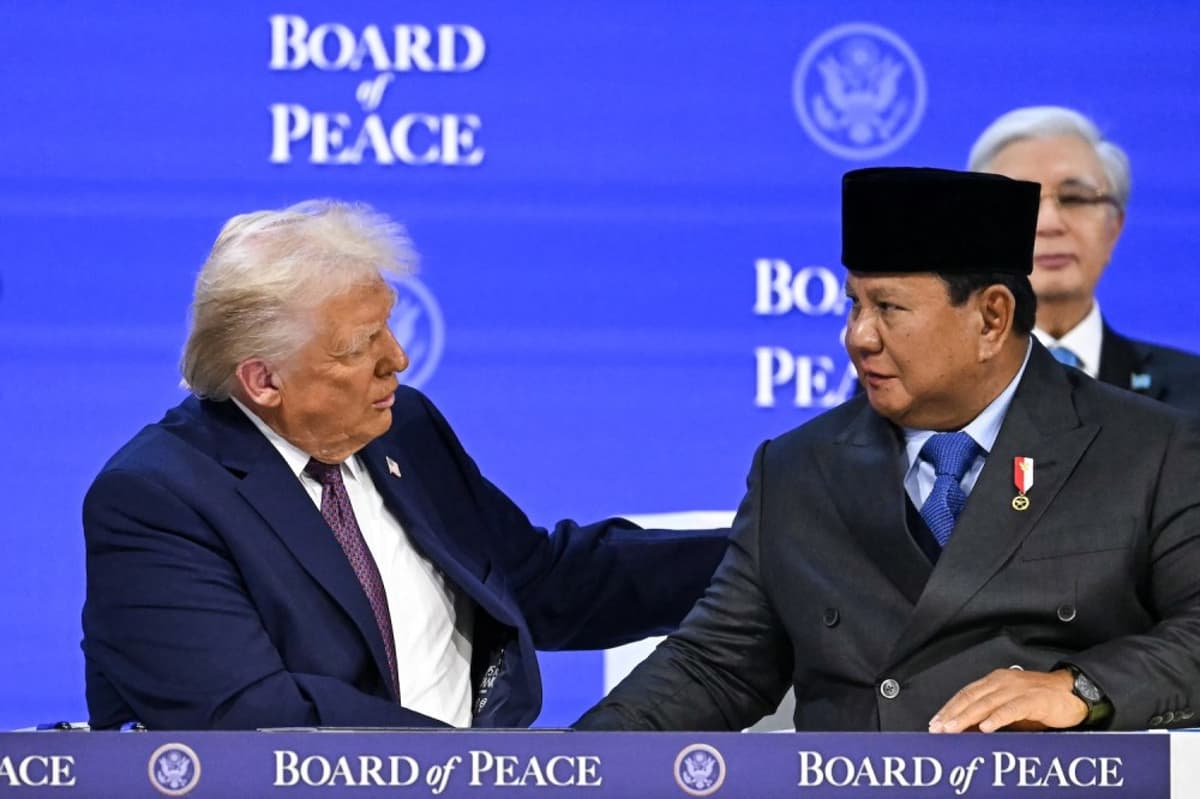
Why Indonesia Is All-In on Trump’s Board of Peace
•February 18, 2026
0
Why It Matters
The deployment could reshape Indonesia’s global profile and influence U.S. trade negotiations, while also testing its non‑aligned foreign‑policy doctrine and domestic political stability.
Key Takeaways
- •Indonesia pledges up to 8,000 peacekeepers for Gaza
- •Troops to deploy starting April, full force by June
- •Move aims to boost Indonesia’s global profile, U.S. trade talks
- •Proposal risks Indonesia’s non‑aligned foreign policy stance
- •Public backlash possible if troops perceived favoring Israel
Pulse Analysis
The Trump Board of Peace, a new U.S.-led diplomatic platform, convenes with three Southeast Asian nations—Cambodia, Indonesia, and Vietnam—while the rest of the region remains on the sidelines. Indonesia’s commitment to send up to 8,000 troops, beginning with a 1,000‑strong contingent in April, signals a strategic pivot. President Prabowo Subianto views peacekeeping as a fast‑track to elevate Jakarta’s stature on the world stage and to sweeten negotiations on a long‑awaited U.S.-Indonesia trade pact. By positioning itself as a humanitarian actor in Gaza, Indonesia hopes to leverage its status as the world’s largest Muslim‑majority country and gain political capital with Washington.
Domestically, the proposal walks a tightrope. Indonesia has a storied peacekeeping legacy, from the 1956 Suez crisis to current deployments on the Israel‑Lebanon border, which lends credibility to the plan. Yet, the nation’s long‑standing non‑aligned foreign‑policy doctrine could be compromised by overt alignment with a U.S. initiative that many view as partisan. Public sentiment remains heavily pro‑Palestinian, and any perception that Indonesian troops are protecting Israeli interests could trigger fierce backlash, threatening the government’s legitimacy and social cohesion.
Regionally, Indonesia’s move creates a contrast with neighboring states. Vietnam’s participation appears driven by trade priorities, while Cambodia follows a U.S.-friendly trajectory. In contrast, Malaysia, Singapore, the Philippines, Thailand, and others are either skeptical or silent, underscoring divergent calculations about U.S. engagement in the Middle East. The outcome of Indonesia’s peacekeeping pledge will likely influence future Southeast Asian alignments, trade negotiations, and the broader discourse on how non‑aligned nations navigate great‑power initiatives.
Why Indonesia Is All-In on Trump’s Board of Peace
0
Comments
Want to join the conversation?
Loading comments...