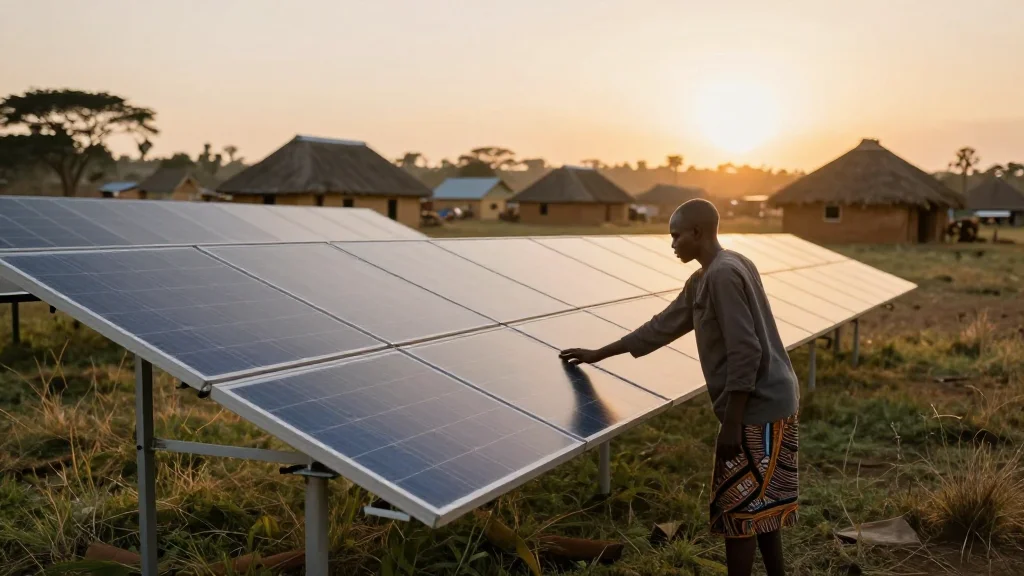
Zambia’s 2‑MW Solar‑by‑Constituency Plan Serves as Blueprint for Kenya’s Energy‑Poverty Fight

Why It Matters
Zambia’s constituency‑level solar rollout demonstrates how emerging economies can leverage existing public‑finance mechanisms to accelerate renewable‑energy deployment while directly addressing energy poverty. By turning development funds into long‑term power assets, the model offers a replicable pathway for countries like Kenya to meet growing electricity demand, reduce carbon emissions, and build climate‑resilient economies. If successful, it could shift the financing paradigm across Africa, encouraging more decentralized, community‑owned energy projects that align climate goals with tangible socioeconomic benefits. The initiative also signals a political shift: African parliaments are moving from passive endorsement of climate targets to active policy design that integrates emissions reduction with development imperatives. This could attract new climate‑finance flows, as donors and multilateral institutions increasingly prioritize projects that deliver both environmental and poverty‑alleviation outcomes.
Key Takeaways
- •Zambia plans 2‑MW solar plants in all 156 constituencies, funded by the Constituency Development Fund.
- •Open‑access electricity reforms will let local communities sell surplus power to the national grid.
- •The scheme was prompted by a severe 2024‑2025 drought that caused up to 20‑hour daily power cuts.
- •Kenyan lawmakers see the model as a template to address their own energy‑poverty challenges.
- •Parliament unanimously passed a motion for a national methane‑abatement strategy, the first in Africa.
Pulse Analysis
The Zambian Solar‑by‑Constituency Initiative marks a strategic inflection point for energy policy in emerging markets. Historically, renewable‑energy projects in Africa have been dominated by large, donor‑financed, centrally managed schemes that often suffer from lengthy procurement cycles and limited local ownership. By repurposing the Constituency Development Fund—a budget line traditionally used for small‑scale infrastructure—Zambia is creating a hybrid financing model that blends public‑sector capital with market‑oriented revenue streams. This reduces reliance on external donors and aligns incentives for local stakeholders, who now have a direct financial stake in plant performance.
From a market perspective, the approach could unlock a new wave of private‑sector participation. Open‑access reforms mean independent power producers can contract directly with constituencies, fostering competition and potentially driving down the levelized cost of electricity. For investors, the model offers a clearer risk profile: revenue is tied to both local consumption and grid sales, diversifying cash flows. If Kenya adopts a similar framework, we may see a cascade of constituency‑level projects across East Africa, creating a patchwork of micro‑grids that collectively bolster regional energy security.
Looking ahead, the initiative’s scalability hinges on several factors: the speed of equipment procurement, the capacity of local authorities to manage operations, and the robustness of grid‑integration infrastructure. Successful implementation could set a precedent for other sectors—such as water and broadband—to be financed through development funds, further embedding the principle of community‑owned public assets. Conversely, delays or cost overruns could reinforce skepticism about decentralized models. Monitoring the first cohort of Zambian plants will provide critical data on cost, performance, and community impact, informing whether this blueprint can truly become a continent‑wide playbook for sustainable development.
Zambia’s 2‑MW Solar‑by‑Constituency Plan Serves as Blueprint for Kenya’s Energy‑Poverty Fight
Comments
Want to join the conversation?
Loading comments...