Companies Mentioned
Why It Matters
EMH and passive strategies reshaped asset allocation, lowering costs for investors while challenging active managers and regulators to adapt to more efficient, yet potentially fragile, markets.
Key Takeaways
- •EMH introduced data‑driven, passive investment strategies.
- •Index funds launched 1970s, democratized market access.
- •Diversification became core of modern portfolio theory.
- •Luck and technology crucial in finance breakthroughs.
- •Excess passive investing may erode price discovery.
Pulse Analysis
The efficient‑market hypothesis (EMH) marked a paradigm shift from intuition‑based stock picking to evidence‑based investing. By asserting that prices reflect all available information, the theory forced the industry to reconsider the value of active management and paved the way for systematic, low‑cost vehicles such as index funds. This transition was enabled by the computational advances of the 1960s, which allowed researchers at the University of Chicago to process vast price histories and test statistical models, ultimately turning finance into a quantitative discipline.
Modern portfolio theory, another legacy of the Chicago school, formalized diversification as a risk‑mitigation tool. By blending large‑cap stalwarts with high‑growth smaller firms, investors could achieve smoother returns without sacrificing upside. Dimensional Fund Advisors exemplifies how academic insights can be commercialized; the firm leverages EMH principles to construct factor‑tilted portfolios that aim for market‑average returns at reduced expense. The widespread adoption of these concepts has reshaped asset allocation across retail and institutional spheres, driving billions into passive vehicles and redefining the role of fund managers.
However, the proliferation of passive strategies has sparked debate about market efficiency. Critics argue that when too many participants simply track benchmarks, the flow of new information into prices slows, potentially inflating bubbles and weakening price discovery. The rise of AI‑driven trading adds another layer of complexity, as algorithms can both enhance efficiency and amplify systemic risk. As the industry grapples with these tensions, the next evolution may involve hybrid models that blend quantitative rigor with human judgment, ensuring markets remain both efficient and resilient.
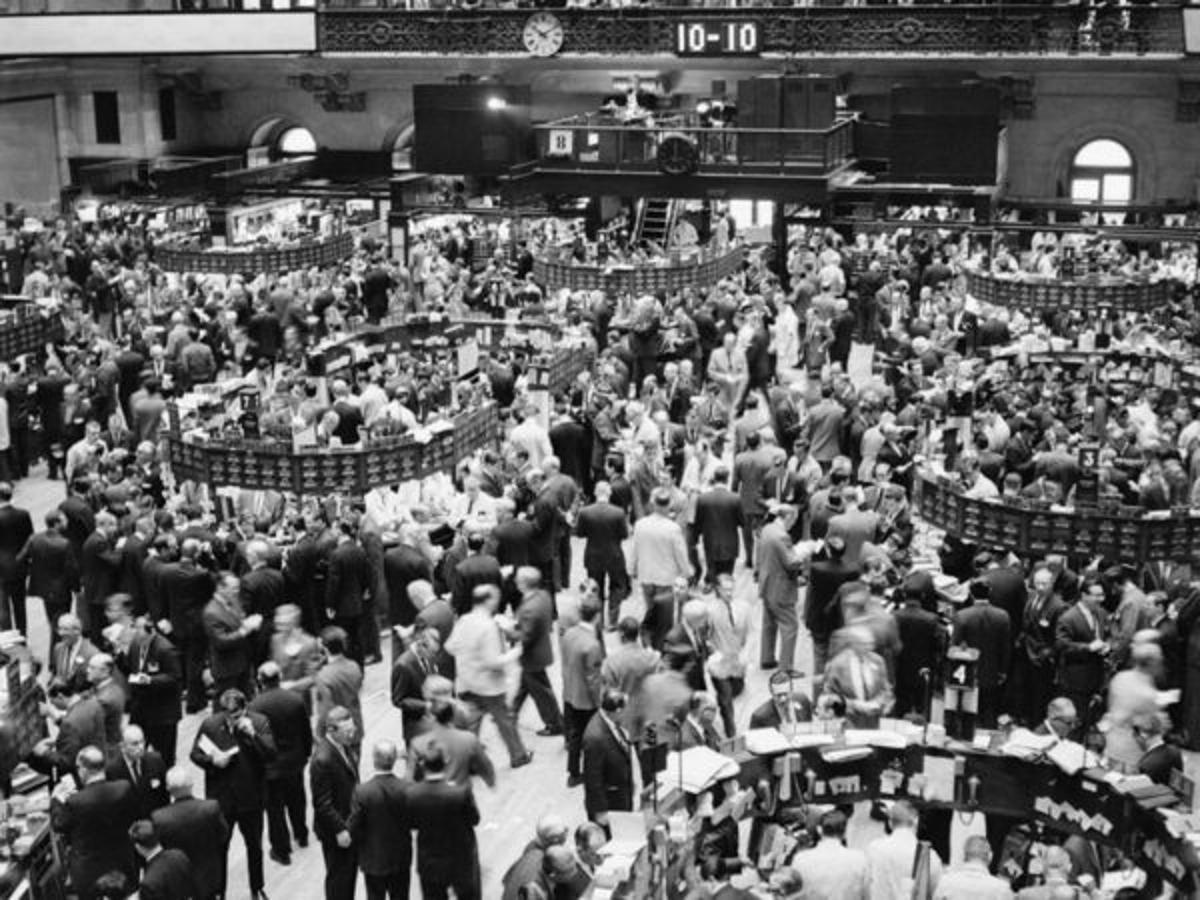
The birth of modern investing


Comments
Want to join the conversation?
Loading comments...