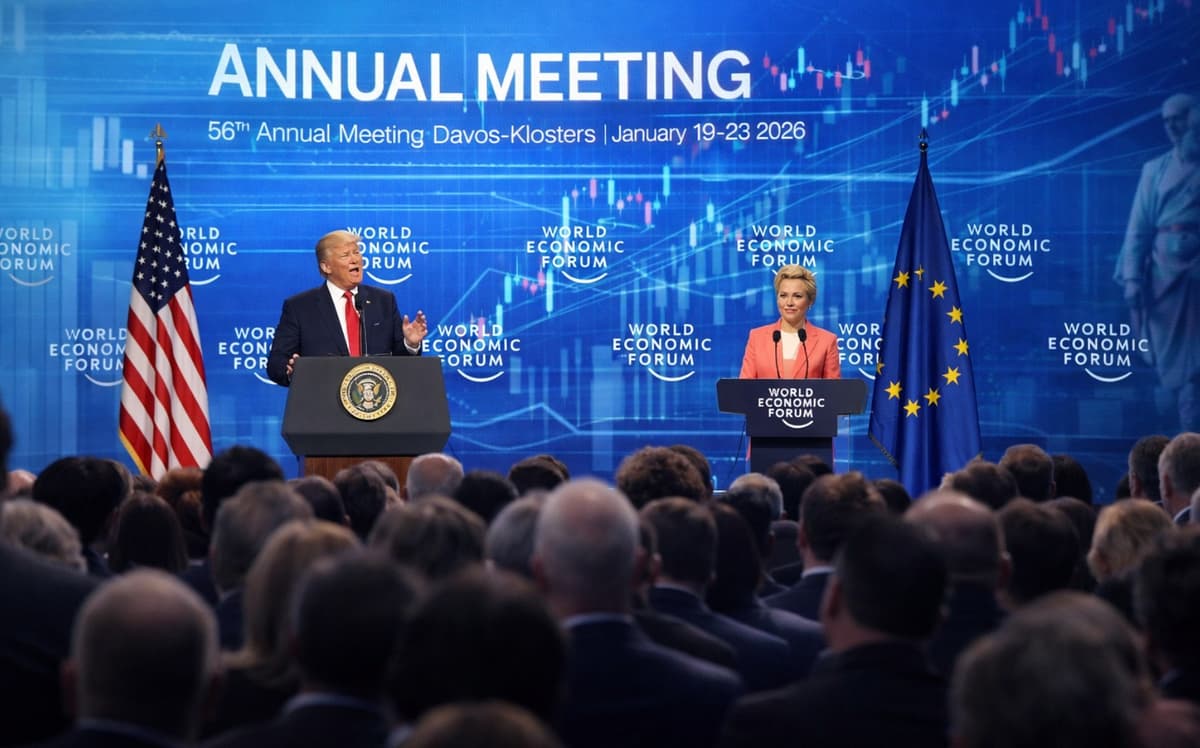
The Dissonance of Davos 2026: Capital Allocation in an Age of Fragmentation and the AI–Energy Nexus
Companies Mentioned

Why It Matters
The shift signals that the global energy transition is being dictated by market economics and AI‑driven power demand, reshaping geopolitics and investment strategies. Companies and governments must align with this infrastructure focus to stay competitive.
Key Takeaways
- •Capital prioritizes grid, storage, and reliable power over ESG labels
- •US nationalist stance clashes with Europe’s strategic energy sovereignty
- •AI growth intensifies demand for stable, low‑carbon electricity
- •Variable geometry alliances keep transition momentum despite political friction
- •China positions clean‑tech manufacturing as global stabiliser
Pulse Analysis
Davos 2026 served as a barometer for the evolving power dynamics that now drive the energy transition. The traditional climate narrative gave way to a pragmatic discussion of energy as a strategic asset, with the United States championing a fossil‑centric, nationalist approach while Europe framed renewables and grid resilience as essential to sovereignty. This divergence highlighted that political posturing no longer steers capital; instead, investors are betting on the physical infrastructure required to sustain electrification, from high‑voltage transmission to large‑scale storage.
A critical undercurrent of the summit was the AI‑energy nexus. As compute workloads expand exponentially, data centers and advanced manufacturing demand reliable, low‑carbon electricity. This reality reframes clean power from a policy preference to a technical prerequisite, accelerating interest in firm generation sources such as nuclear, dedicated renewables, and on‑site storage. Regions that can guarantee stable, affordable power are poised to attract AI‑driven investment, creating a new competitive frontier that transcends traditional geopolitical alliances.
The investment community responded by treating the transition as an infrastructure super‑cycle rather than a climate‑policy exercise. Capital flows are targeting assets that deliver long‑term cash flows—grid upgrades, battery farms, and modular generation—while embracing a "variable geometry" of partnerships that sidestep binary political risk. China’s positioning as a clean‑tech manufacturing hub adds another layer, offering scale and supply‑chain security. As the transition moves into its execution phase, firms that align with this infrastructure‑first mindset will capture the upside of a digitised, resilient energy future.
The Dissonance of Davos 2026: Capital Allocation in an Age of Fragmentation and the AI–Energy Nexus


Comments
Want to join the conversation?
Loading comments...