Companies Mentioned
Why It Matters
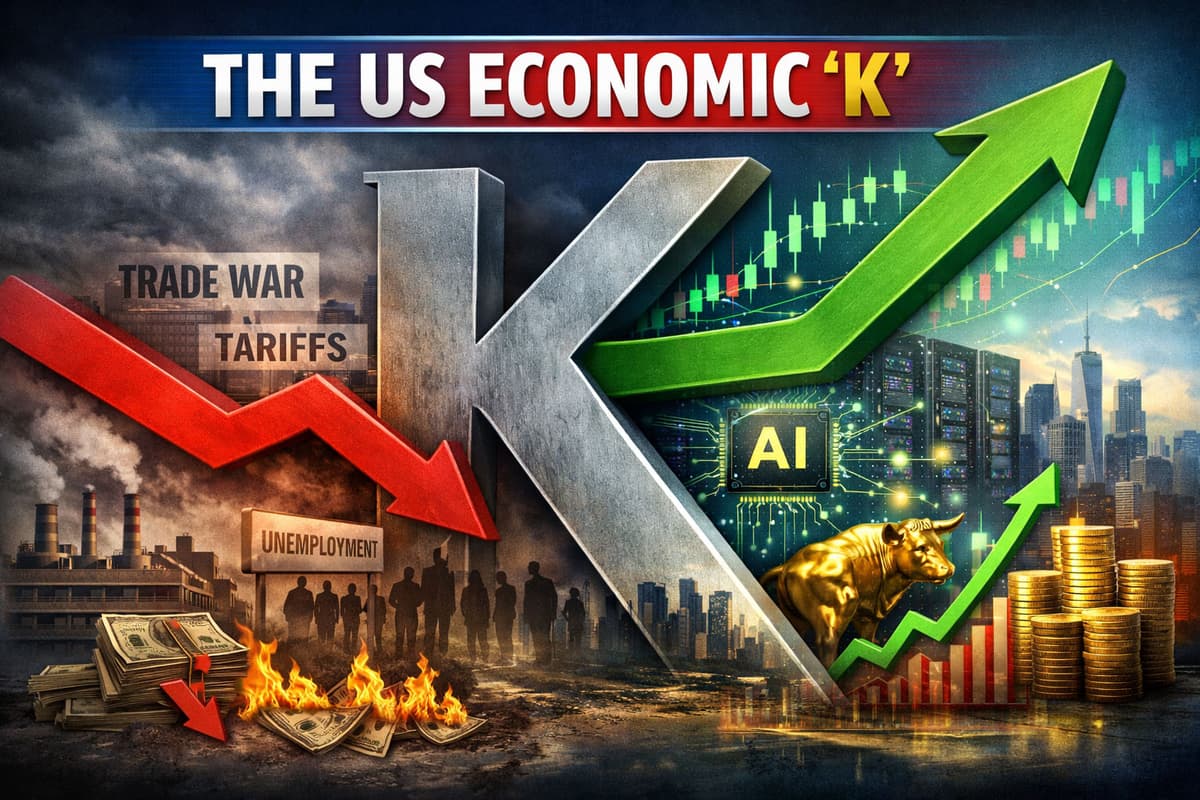
The divergent trajectory highlights growing income inequality and supply‑chain strain, forcing policymakers and investors to reassess growth, trade, and monetary strategies.
Key Takeaways
- •Tariffs shifted trade from China to lower‑tariff economies.
- •AI spending fuels capital expenditure but productivity lag persists.
- •Wage growth diverges sharply between top and bottom quartiles.
- •Manufacturing faces cost pressure from lingering tariffs.
- •Fed likely to pause easing amid persistent inflation.
Pulse Analysis
The United States’ post‑election tariff wave has reshaped global trade patterns, nudging Chinese exporters toward alternative markets while granting a modest reprieve to allies with lower duties. This realignment eases some supply‑chain bottlenecks but leaves manufacturers grappling with higher input costs, a dynamic that tempers the broader GDP outlook despite resilient headline growth.
Meanwhile, AI‑driven capital spending continues to inflate the valuations of a handful of “magnificent seven” firms, echoing the late‑1990s dot‑com frenzy. Although cash‑rich hyper‑scalers fund data‑center expansion, the lag between investment and measurable productivity gains suggests the sector’s upside may be more gradual than headline numbers imply, keeping equity markets cautious.
On the labor front, wage growth remains bifurcated: top‑quartile earners see robust gains, while bottom‑quartile wages stagnate, eroding purchasing power and dampening consumer confidence. Inflation has steadied near 3%, prompting the Federal Reserve to tread carefully—maintaining an easing stance for now but signaling a potential policy pivot if labor demand resurges and price pressures intensify. The interplay of tariffs, AI investment, and uneven income trends will shape the U.S. economic narrative through 2026.
The US Economic ‘K’


Comments
Want to join the conversation?
Loading comments...