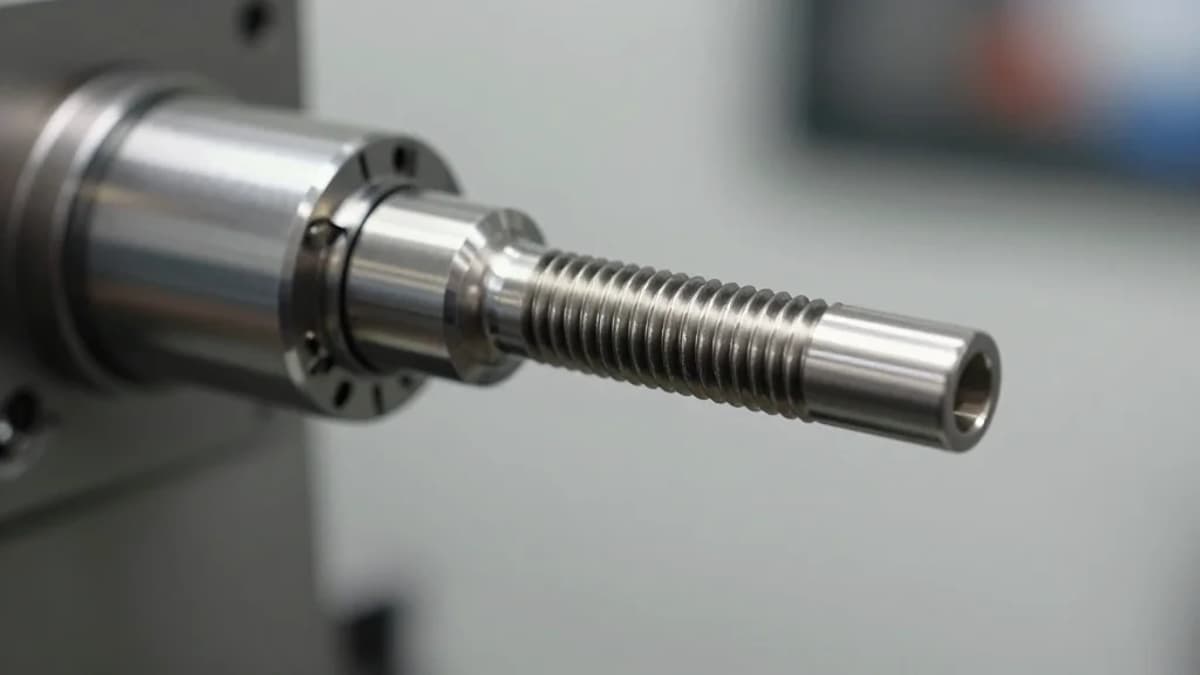
Precision Under Pressure: How Advanced Machining Is Reshaping Global Supply Chains
Companies Mentioned
Why It Matters
Precision machining directly influences product performance, regulatory compliance, and time‑to‑market, making it a competitive differentiator. Firms that secure reliable, high‑tolerance partners gain faster program launches and lower scrap rates.
Key Takeaways
- •Swiss‑type lathes eliminate deflection, enabling ±0.005 mm tolerances.
- •Automated bar‑feeding maintains quality while scaling production.
- •Material expertise outweighs sheer machine count for stainless steel.
- •In‑process probing auto‑compensates tool wear, reducing scrap.
- •Strategic supplier partnerships embed design insight and compliance.
Pulse Analysis
The past half‑decade has forced industrial buyers to rethink supply‑chain calculus. Geopolitical risk, rapid product miniaturisation, and the surge in electric‑vehicle and aerospace demand have shifted focus from lowest unit cost to the ability to deliver ultra‑precise, high‑volume parts. Advanced machining centres—particularly Swiss‑type lathes—provide the rigidity needed for tolerances as tight as ±0.005 mm, a requirement that conventional turning cannot meet. This technical edge enables manufacturers to meet stringent regulatory standards while maintaining design flexibility.
Beyond equipment, mastery of challenging materials such as 316L, 440C, and duplex stainless steels separates market leaders from the rest. Each alloy reacts uniquely to cutting forces, heat, and tool wear, demanding extensive process knowledge and real‑time monitoring. Leading shops embed quality into the workflow through in‑process probing, statistical process control, and automated tool‑compensation, turning measurement data into immediate corrective actions. The result is higher yield, lower scrap, and traceability that satisfies ISO 13485, AS9100, and IATF 16949 certifications.
These capabilities are reshaping procurement strategies. Buyers now favor partnership models where suppliers contribute design insight, maintain full material traceability, and can scale production without sacrificing quality. Such alliances reduce development cycles for medical devices, aerospace components, and EV power‑train parts, delivering faster time‑to‑market and cost predictability. As demand for precision‑machined components continues to climb, firms that invest in strategic, technically proficient manufacturing partners will secure a durable competitive advantage.
Precision Under Pressure: How Advanced Machining is Reshaping Global Supply Chains


Comments
Want to join the conversation?
Loading comments...