Biological Age Estimation Using Circulating Blood Biomarkers
Key Takeaways
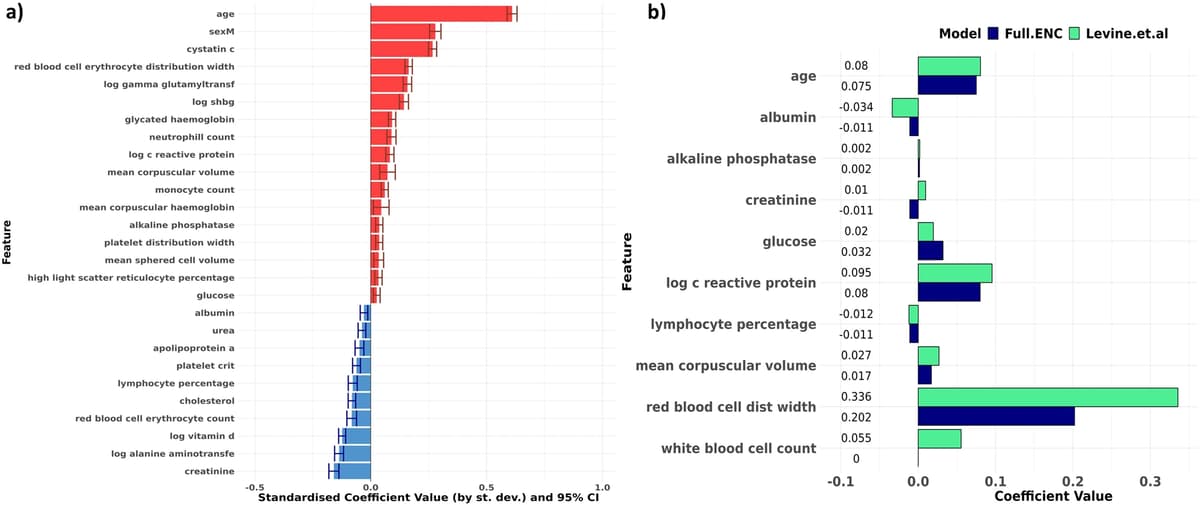
- •Elastic‑Net Cox model achieves C‑Index 0.778, 11% boost over PhenoAge
- •Only 25 of 60 biomarkers needed for optimal mortality prediction
- •Cystatin C emerges as strongest single predictor of biological age
- •Reduced clinical panels with imputation retain near‑maximum predictive accuracy
- •Biological age estimates span ±20 years relative to chronological age
Pulse Analysis
Biological age has emerged as a more actionable metric than chronological age, offering insight into an individual’s physiological wear and tear. Traditional models such as Levine’s PhenoAge rely on a broad set of blood markers, but they often require extensive laboratory panels and can be costly for large‑scale screening. By leveraging the UK Biobank’s extensive dataset, the new Elastic‑Net Cox model refines this concept, focusing on a curated set of 25 biomarkers that capture mortality risk with a C‑Index of 0.778. This performance not only surpasses PhenoAge’s 0.750 but also demonstrates the power of regularized regression in distilling high‑dimensional health data into a robust predictor.
The study’s methodological rigor lies in its use of Elastic‑Net regularization, which balances variable selection and coefficient shrinkage, ensuring that only the most informative markers drive the model. Cystatin C and C‑reactive protein surface as the dominant contributors, echoing prior research linking kidney function and systemic inflammation to ageing trajectories. Importantly, the authors prove that even when the full biomarker suite is unavailable, imputed values from standard clinical panels preserve predictive fidelity. This flexibility means health systems can adopt the model without overhauling existing laboratory workflows, making biological age estimation feasible in routine primary‑care settings.
From a business perspective, the ability to deliver precise biological age scores at low cost opens new revenue streams for diagnostics companies, insurers, and wellness platforms. Personalized intervention plans—ranging from lifestyle coaching to targeted therapeutics—can be calibrated to an individual’s biological age, potentially improving outcomes and reducing long‑term healthcare expenditures. As the market gravitates toward preventive health analytics, this scalable, evidence‑backed model positions stakeholders to capture early adopters while contributing to a broader shift toward data‑driven longevity strategies.
Biological age estimation using circulating blood biomarkers
Comments
Want to join the conversation?