🎯 Today's Longevity Pulse
KHL Foundation Launches Gene‑Therapy Medical‑Tourism Program for Seniors
The KHL Foundation, founded by longevity veterans Ken Scott and Helga Sands, has introduced a medical‑tourism program that offers a Rejuvenation Cocktail combining intramuscular follistatin, intranasal klotho, and SIRT1. The cocktail uses already‑tested viral‑vector therapies, allowing the foundation to bypass traditional regulatory pathways while targeting muscle, brain, and metabolic health in people over 60.
🚀 Top Longevity Headlines
Advocacy Group Wants TAVR Changes, Urging Trump Admin to ‘Stop Getting in Between Patients and Their Doctors’
The Alliance for Aging Research wants CMS to go through with policy changes that could make many more patients eligible for TAVR. The agency is currently considering the changes, and a final decision is expected in June.
Cardiovascular Business
This Startup’s 4-Minute AI Test Could Prevent Deaths From a Common Killer. Here’s How It Works
Some 22 million Americans live in counties with no cardiologist. One startup thinks AI can fill the gap.
Inc. — Leadership
The Triad of Collagen, Vitamin C, and Vitamin E in Aging: Emerging Roles in Mood and Psychological Health, Neurotrophic Support, Cognitive Function, Endurance, and Sarcopenia
Aging is correlated with a progressive deterioration in muscle mass, strength, metabolic efficiency, vascular and hepatic functions, immune competence, and cognitive capabilities, predominantly influenced by augmented oxidative stress and compromised anabolic signaling pathways. Prophylactic nutritional interventions, particularly those involving collagen, vitamin C, and vitamin E, have emerged as promising, integrative modulators of these age-related declines, especially when combined with structured exercise regimens. Collagen supplementation delivers critical amino acids that facilitate muscle protein synthesis (MPS) and promote tendon integrity, while vitamin C not only enhances collagen biosynthesis but also demonstrates antioxidant and immunomodulatory properties. Vitamin E, recognized as a lipid-soluble antioxidant, serves to safeguard cellular membranes from oxidative damage induced by exercise and plays a significant role in muscle recovery and vascular health. It should be noted that most current evidence examines single nutrients in isolation rather than the integrated triad, limiting the mechanistic clarity of multi-system interactions. This review synthesizes contemporary evidence derived from randomized controlled trials and preclinical investigations examining the synergistic effects of collagen, vitamin C, and vitamin E in conjunction with various exercise modalities as a preventive strategy in elderly cohorts, rather than a therapeutic treatment for established sarcopenia. This discourse examines the outcomes pertinent to skeletal muscle mass, strength capabilities, oxidative stress levels, immune functionality, vascular and hepatic wellness, in addition to cognitive performance metrics. Collectively, the triadic components appear to confer synergistic advantages by facilitating MPS, alleviating oxidative stress, maintaining immune equilibrium, and augmenting metabolic and cognitive resilience among the geriatric population. Future research should emphasize stratification by population characteristics, baseline nutritional status, and exercise modality to clarify differential responses, and should investigate optimal dosing regimens, timing considerations, and mechanistic interactions of the triad with exercise to maximize functional outcomes in older adults.
Frontiers in Nutrition
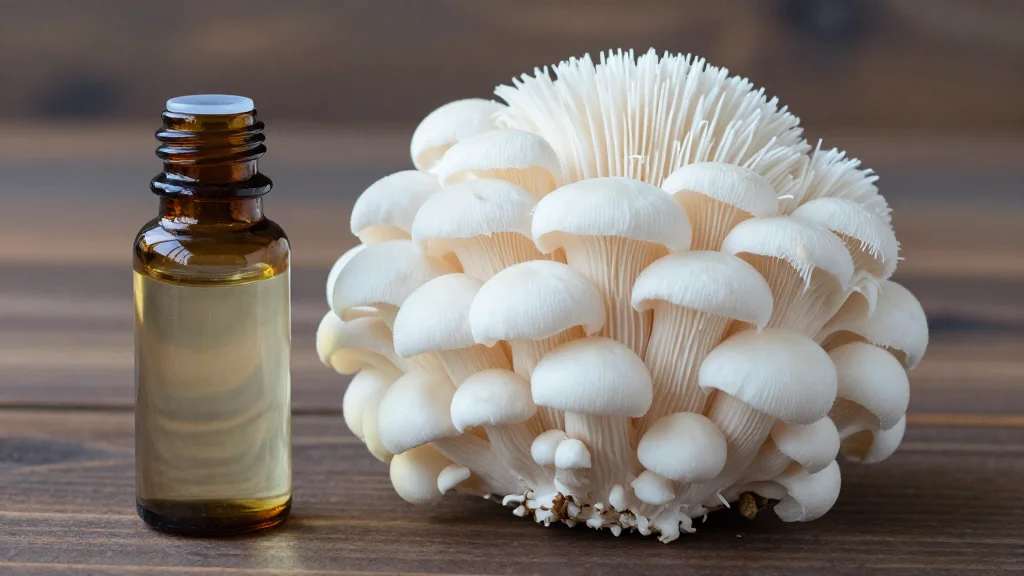
Ergothioneine-Rich Water Extracts of Hericium Erinaceus HE-17 Alleviate Alzheimer’s Disease in Mice by Regulating Oxidative Stress, Inflammation, and the Gut Microenvironment
Alzheimer’s disease (AD) imposes a significant global disease burden, necessitating simple dietary interventions to prevent or delay disease progression. However, the neuroprotective effects of ergothioneine (EGT)-rich natural extracts as dietary supplements remain largely unexplored. This study aimed to screen a high EGT-producing Hericium erinaceus strain (HE-17) from 29 isolates, optimize its culture conditions and amino acid supplementation using single-factor and orthogonal experiments, and evaluate the neuroprotective effects of its extract in an APP/PS1 transgenic mouse model. Cognitive function, neuronal damage, inflammation, oxidative stress, and gut microbiota composition were assessed using the Morris Water Maze test, histopathology, immunofluorescence, biochemical assays, enzyme-linked immunosorbent assay (ELISA), and 16S rRNA gene sequencing. The results showed that the water extract of H. erinaceus HE-17 (WEH) contained 2.57 ± 0.14 mg/g EGT and exhibited no acute toxicity in mice. High-dose WEH (2 g/kg BW/d, containing 5.76 mg/kg EGT), low-dose WEH (0.50 g/kg BW/d, containing 1.44 mg/kg EGT), and pure EGT (1.44 mg/kg), administered for 90 days, were found to improve cognitive function and enhance spatial learning and memory, while reducing Aβ aggregation and tau phosphorylation. Meanwhile, WEH supplementation was associated with decreased pro-inflammatory cytokine levels (IL-1β, IL-6, and TNF-α) in both the brain and serum. It also reduced oxidative stress markers while increasing antioxidant indicators in brain tissue, with the high-dose group showing the most pronounced effects in APP/PS1 mice. Gut microbiota analysis revealed that low-dose WEH was associated with a reduced abundance of Fusobacteriota and Proteobacteria and an increased abundance of Lactobacillus. These findings suggest that WEH may help mitigate AD-related pathological changes in APP/PS1 mice.
Frontiers in Nutrition

TPE Long-Term Effects in Healthy Elderly Same as Sham
(post deleted by author)
Rapamycin News
💬 Top Longevity Social Posts
Thread by @Robertlufkinmd
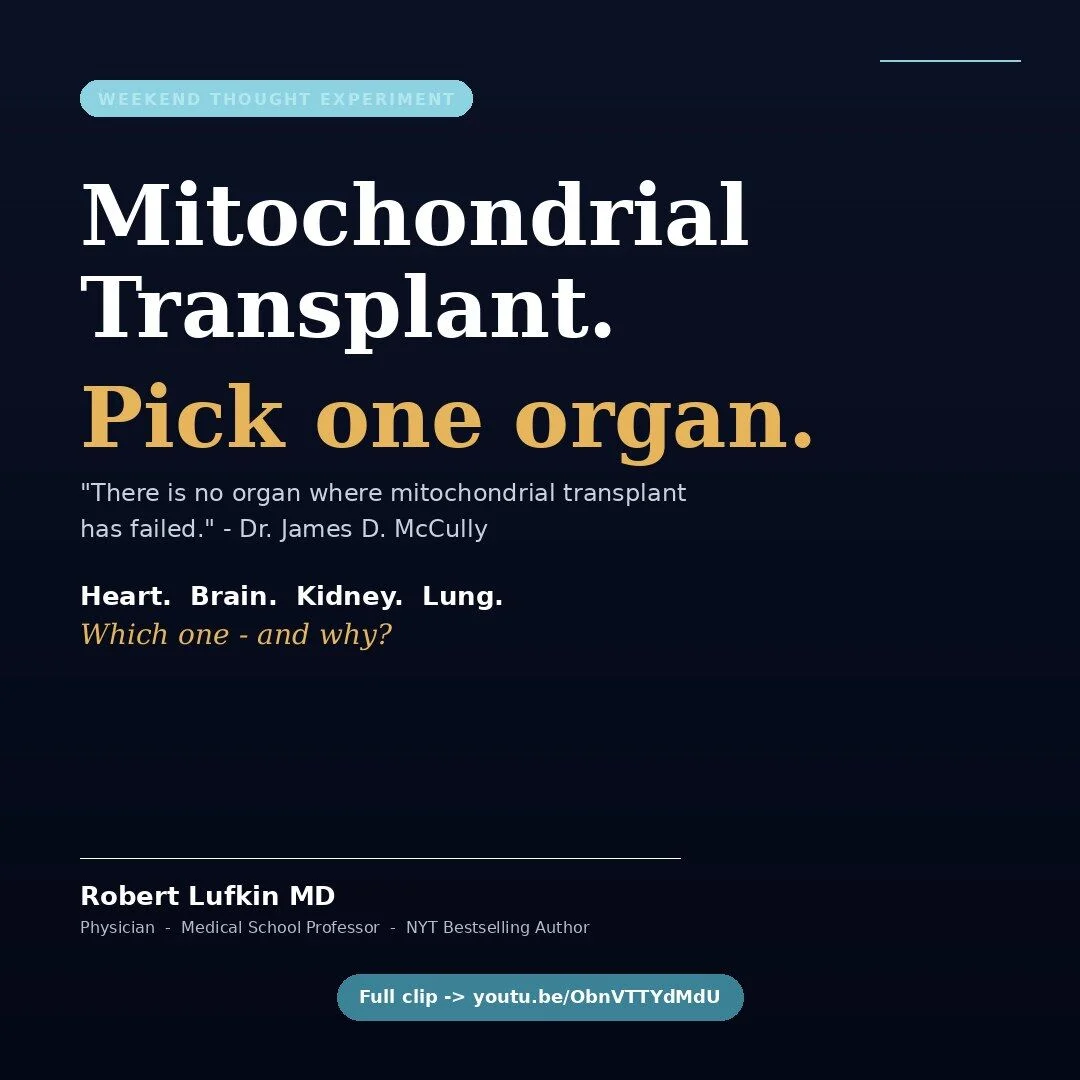
A quick thought experiment for the weekend. Dr. James D. McCully recently said there is no organ where mitochondrial transplant has failed. Heart. Brain. Kidney. Lung. Every one - clinical benefit. So if you woke up tomorrow with one free dose of fresh, healthy mitochondria to pour into a single organ in your own body... Which organ would you choose? And more interesting to me - WHY that one? Full clip if you missed it: https://youtu.be/ObnVTTYdMdU (1/2)

Tweet by @SatchinPanda
Muscle talks to the brain. 💪🧠 Exercise triggers myokines & myometabolites that boost cognition, while inactivity sends harmful signals that impair brain function. This muscle–brain crosstalk shapes behavior and resilience to aging and neurodegeneration. @WuTsaiAlliance https://t.co/63skqJToIa