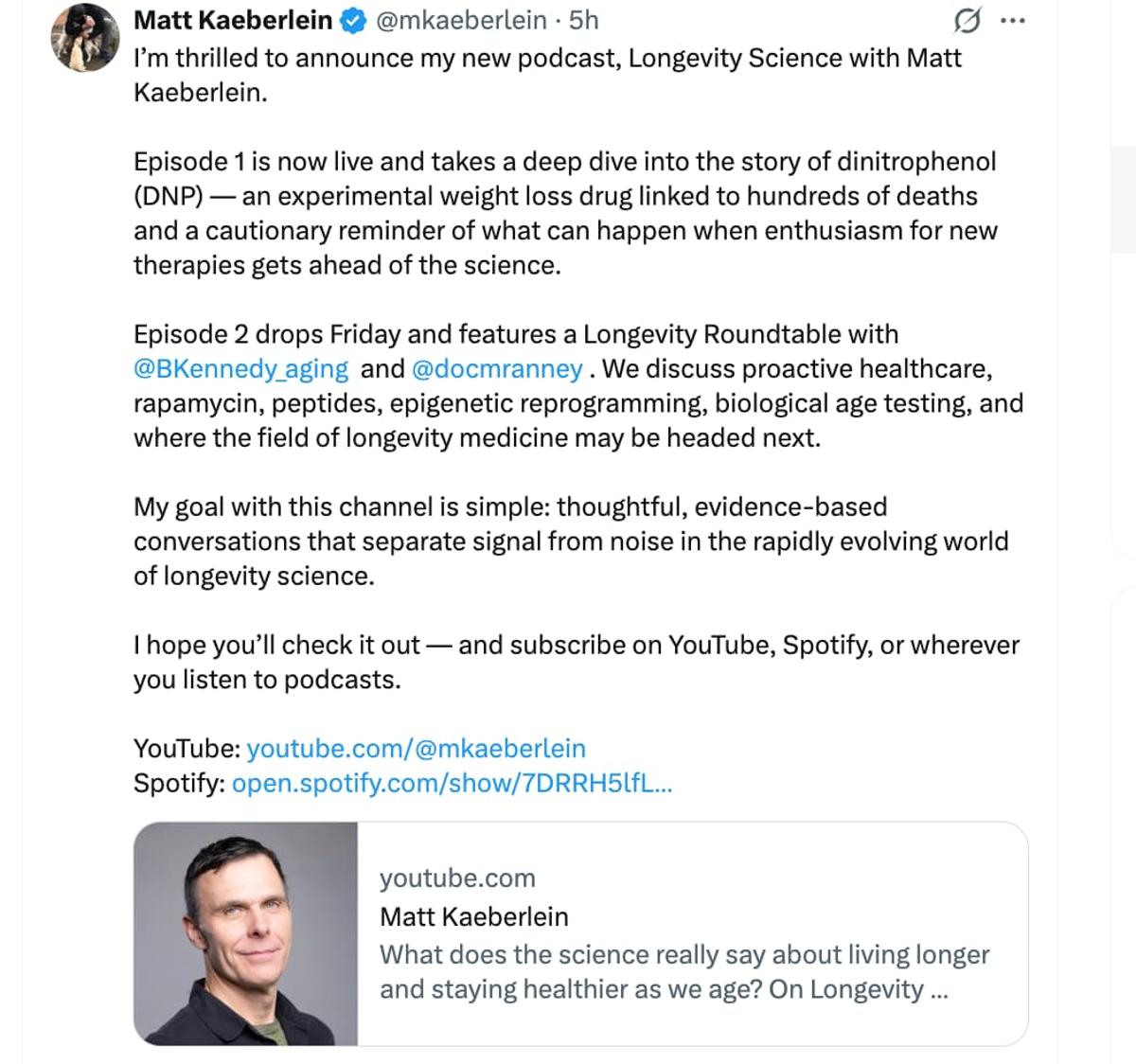
Matt Kaeberlein's New Longevity Science Podcast / Youtube Channel (May, 2026)
Key Takeaways
- •Unapproved compound SLU‑PP‑332 prescribed despite no human safety data
- •DNP’s historic toxicity spurred 1938 Food, Drug, Cosmetic Act
- •GLP‑1 agonists offer proven, safer weight‑loss alternatives
- •Clinicians must demand Phase I/II data before using research‑grade molecules
Pulse Analysis
The allure of rapid metabolic acceleration has resurfaced in the longevity sector, where compounds that tamper with mitochondrial efficiency are marketed as shortcuts to fat loss and extended healthspan. Dr. Matt Kaeberlein’s recent podcast spotlights SLU‑PP‑332, a pan‑agonist of estrogen‑related receptors, as a contemporary echo of 2,4‑dinitrophenol (DNP). While DNP produced dramatic weight reduction in the 1930s, its uncoupling mechanism also triggered lethal hyperthermia and organ damage. Modern research‑grade chemicals lack human pharmacokinetic data, yet they are being offered through online clinics and influencer channels, creating a high‑risk, low‑evidence landscape.
The historical fallout from DNP directly informed the 1938 Food, Drug, and Cosmetic Act, which instituted mandatory pre‑market safety testing for all consumer products. That legislative milestone closed a loophole that once allowed manufacturers to sell toxic substances without clinical validation. Today’s gray‑market ecosystem mirrors the pre‑1938 environment: unregulated vendors distribute potent small molecules without any Phase I or II trials, exploiting the same regulatory blind spots that prompted early federal action. This parallel underscores why robust toxicology and human safety studies remain non‑negotiable before any metabolic agent reaches patients.
For clinicians and investors, the practical implication is clear: proven therapeutics such as FDA‑approved GLP‑1 receptor agonists provide comparable or superior weight‑loss outcomes with well‑characterized safety profiles, rendering high‑risk uncouplers obsolete. Due diligence now requires verification of clinical trial registration, peer‑reviewed toxicology, and manufacturing quality before endorsing any novel compound. Patient education should emphasize that the absence of reported adverse events in animal models does not equate to human safety. By anchoring longevity strategies in evidence‑based medicine, the industry can protect consumers while still pursuing genuine metabolic innovations.
Matt Kaeberlein's New Longevity Science Podcast / Youtube Channel (May, 2026)
Comments
Want to join the conversation?