Garlic Compound May Hold Clue to Slowing Muscle Aging
Why It Matters
S1PC could become an affordable, diet‑based intervention for sarcopenia, addressing a major unmet need in aging populations and opening a new market for anti‑aging supplements.
Key Takeaways
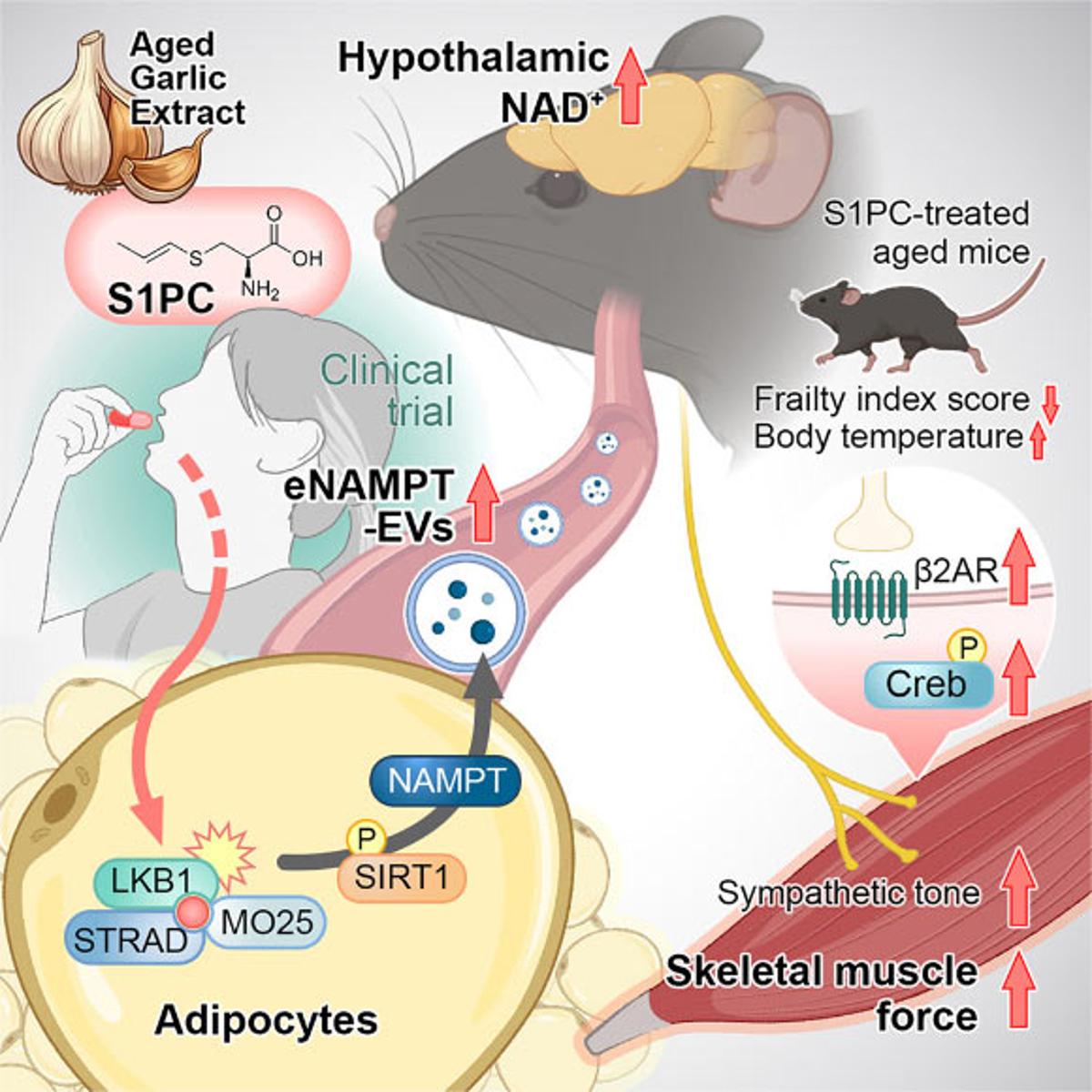
- •S1PC activates LKB1, boosting eNAMPT secretion from fat tissue
- •Elevated eNAMPT enhances NAD+ production, improving muscle function
- •Aged mice given S1PC showed reduced frailty and higher muscle force
- •Human trial showed increased circulating eNAMPT after S1PC supplementation
- •Researchers propose S1PC as low‑cost nutraceutical anti‑aging strategy
Pulse Analysis
The discovery that a single molecule from aged garlic extract can reverse age‑related muscle decline adds a new chapter to the long‑standing reputation of garlic as a health tonic. S‑1‑propenyl‑L‑cysteine (S1PC), a sulfur‑containing amino acid abundant in aged garlic, has been shown in pre‑clinical models to improve strength, lower frailty scores, and normalize core body temperature in elderly mice. By leveraging a readily available dietary source, the finding suggests a low‑cost, scalable approach to mitigate sarcopenia, a condition that currently lacks effective pharmacologic treatments.
The underlying biology hinges on S1PC’s activation of liver kinase B1 (LKB1), which in turn amplifies the SIRT1‑eNAMPT axis. eNAMPT, released from adipose tissue in extracellular vesicles, travels to the hypothalamus and triggers sympathetic signaling that enhances NAD+ synthesis throughout the body. Higher NAD+ levels support mitochondrial function, DNA repair, and cellular resilience, directly translating into stronger muscle fibers. This newly mapped fat‑brain‑muscle communication pathway not only clarifies how metabolic cues regulate locomotion but also opens avenues for targeting systemic aging processes.
From a market perspective, the data position S1PC as a promising nutraceutical candidate for the burgeoning anti‑aging supplement sector, projected to exceed $60 billion globally. Early human data indicating a rise in circulating eNAMPT after S1PC intake reinforce translational potential, though large‑scale clinical trials are needed to confirm efficacy and safety. Companies developing functional foods or dietary supplements may soon explore standardized AGE formulations enriched with S1PC, while investors watch for patents covering the LKB1‑eNAMPT mechanism. Continued research could ultimately reshape preventive geriatric care and extend healthy lifespan.
Garlic Compound May Hold Clue to Slowing Muscle Aging
Comments
Want to join the conversation?
Loading comments...