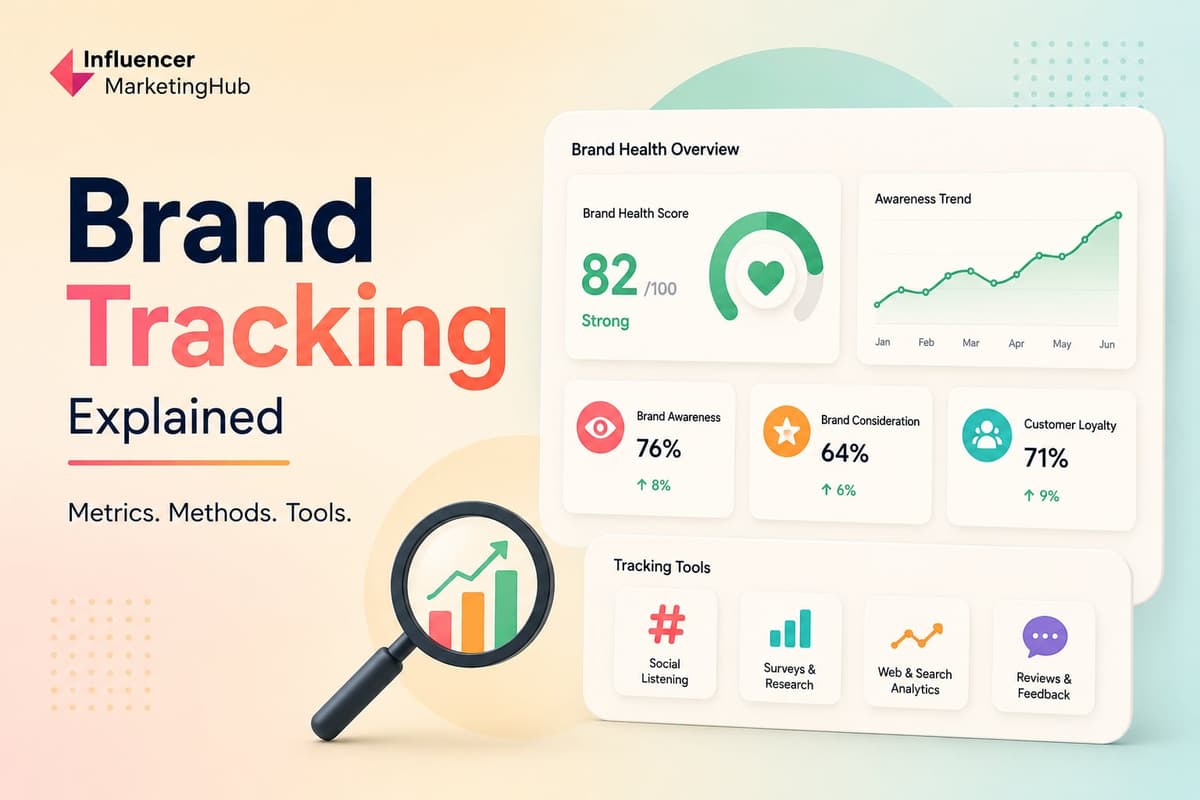
Brand Tracking Explained: Metrics, Methods, and Tools
Companies Mentioned
Why It Matters
Continuous brand tracking turns volatile consumer sentiment into actionable insight, enabling faster risk mitigation and more precise marketing ROI. It directly links perception metrics to sales performance, making it a strategic imperative for competitive advantage.
Key Takeaways
- •Continuous tracking reveals perception shifts before sales impact
- •Surveys combined with social listening deliver holistic brand health insights
- •AI-generated mentions now a critical visibility metric
- •Benchmarking against competitors informs strategic positioning
Pulse Analysis
The rise of short‑form video, creator ecosystems and AI‑driven search has fragmented the consumer journey, forcing brands to abandon one‑off studies in favor of ongoing measurement. Modern brand tracking treats perception as a living metric, pulling data from TikTok trends, Reddit threads, review sites and conversational AI outputs. This shift not only captures the pulse of public opinion but also aligns measurement cadence with the speed at which digital narratives form and dissolve, ensuring marketers stay ahead of reputation swings.
Integrating multiple data streams is the cornerstone of effective brand intelligence. Survey panels still provide the longitudinal backbone for awareness, consideration and Net Promoter Score, while social listening platforms translate millions of unstructured mentions into sentiment scores and share‑of‑voice calculations. Adding AI‑visibility tracking—monitoring how often a brand appears in large‑language‑model responses or algorithmic recommendations—fills a critical blind spot in discoverability. When these layers are benchmarked against competitors, marketers gain a clear view of whether shifts are brand‑specific or industry‑wide, allowing for rapid campaign adjustments and proactive crisis management.
The tooling landscape reflects this complexity, offering modular solutions that range from pure social listening (YouScan, Brand24) to comprehensive experience management suites (Qualtrics, Quantilope). Selecting the right stack hinges on data integration capabilities, scalability and the ability to deliver real‑time dashboards that surface actionable alerts. As predictive analytics mature, future brand tracking systems will not only report current sentiment but also forecast perception trajectories, turning brand health into a forward‑looking asset that drives strategic decisions across product development, pricing and market expansion.
Brand Tracking Explained: Metrics, Methods, and Tools
Comments
Want to join the conversation?
Loading comments...