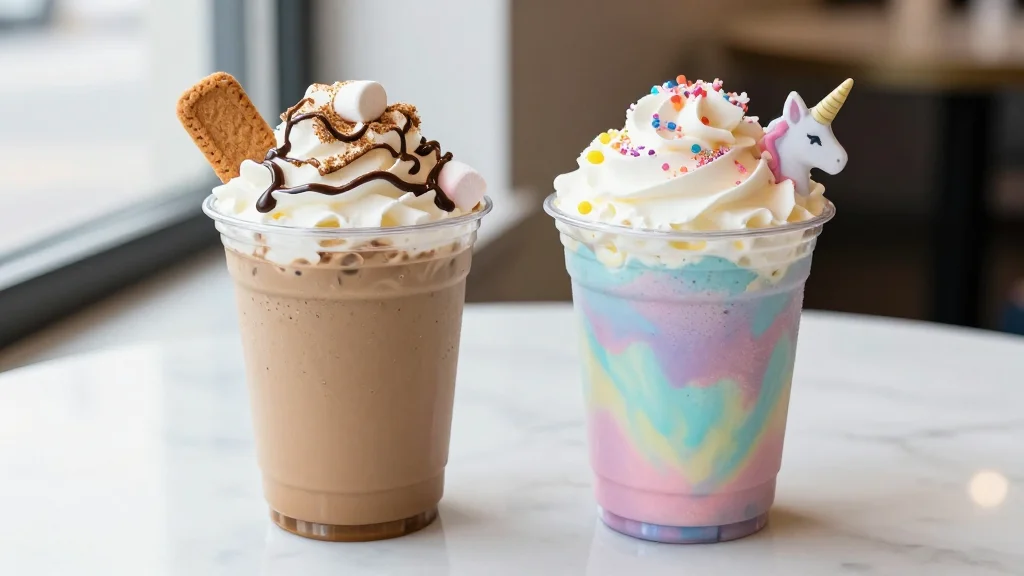
Starbucks Revives S'mores and Unicorn Frappuccinos to Spark Sales Rebound

Companies Mentioned
Why It Matters
The revival of legacy drinks highlights how major brands are leveraging nostalgia to combat stagnant growth and shifting consumer spending habits. For marketers, the case illustrates the power of limited‑time, socially resonant products to drive urgency, repeat visits, and higher ticket sizes. It also signals a strategic pivot in the coffee sector: rather than flooding the market with new flavors, companies are curating a smaller, high‑impact menu that aligns with operational goals while still delivering buzz‑worthy experiences. If Starbucks can sustain the early sales lift, the approach could become a template for other brands facing similar traffic declines. The success—or failure—of these drinks will inform how marketers balance innovation with the safety of proven, nostalgic offerings in an increasingly cost‑conscious consumer environment.
Key Takeaways
- •Starbucks will reintroduce S'mores Frappuccino (discontinued 2019) and Unicorn Frappuccino (2017) in summer 2026.
- •Unicorn Frappuccino will debut at the 2026 Coachella Valley Music and Arts Festival.
- •Q1 FY2026 North America comparable store sales rose 4%, transactions up 3%, average ticket size up 1%.
- •"Back to Starbucks" strategy focuses on menu simplification, brand revitalization, and operational efficiency.
- •Competitors like McDonald’s, Dunkin’, and Dutch Bros. are also using nostalgia‑driven limited‑time offers to boost traffic.
Pulse Analysis
Starbucks' decision to resurrect two viral Frappuccinos is less about product development than it is about brand psychology. Nostalgia taps into the emotional memory bank of long‑time customers, turning a simple beverage into a cultural moment that can be amplified on social platforms. By anchoring the Unicorn launch at Coachella, Starbucks aligns the drink with a festival known for trendsetting, ensuring organic media coverage and user‑generated content that extends beyond the coffee aisle.
The broader strategic context is equally important. After pruning its menu in early 2025, Starbucks reduced operational friction and freed up shelf space for high‑impact launches. This lean‑menu approach mitigates the risk of cannibalizing core sales while allowing the company to test limited‑time offers that can be scaled quickly if they resonate. The early Q1 metrics suggest the tactic is delivering incremental traffic and higher spend per visit, a crucial win in a market where discretionary spending is tightening.
Looking ahead, the real test will be whether the nostalgia boost translates into sustained growth or remains a short‑term spike. If the revived drinks maintain strong sales beyond the limited‑time window, Starbucks may double down on a cyclical product calendar, rotating legacy items to keep the brand fresh without the cost of full‑scale innovation. Conversely, a rapid fade could reinforce the need for a balanced pipeline that blends nostalgic hits with genuinely new, differentiated offerings. Either outcome will shape how the coffee industry—and broader consumer brands—approach the interplay of memory, marketing, and menu management.
Starbucks revives S'mores and Unicorn Frappuccinos to spark sales rebound
Comments
Want to join the conversation?
Loading comments...