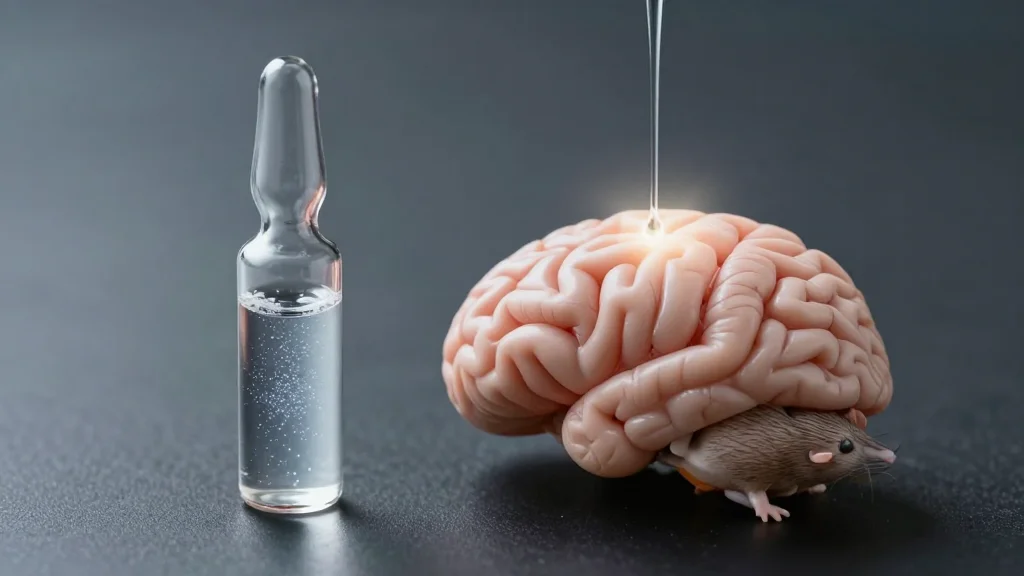
Nanoparticle Formulation Erases 60% of Alzheimer Plaques and Restores Memory in Mice

Why It Matters
The study shifts the therapeutic focus from directly attacking amyloid plaques to repairing the brain’s own waste‑removal infrastructure. By demonstrating that a nanotechnological intervention can rapidly restore BBB function and trigger endogenous clearance, the work opens a new avenue for disease‑modifying treatments in Alzheimer’s, a field that has seen repeated clinical failures. Moreover, the approach could be adapted to other disorders where barrier breakdown contributes to pathology, potentially broadening the impact of nanomedicine across neurology. Beyond the scientific breakthrough, the result may influence funding priorities and partnership strategies. Venture capital and pharma pipelines have increasingly sought platform technologies that address root causes rather than downstream symptoms; a BBB‑repairing nanoparticle fits that paradigm and could attract sizable investment, accelerating translation to human trials.
Key Takeaways
- •~60% reduction of amyloid‑beta plaques in treated mice
- •Memory and maze performance restored within 60 minutes
- •Nanoparticles target and repair the blood‑brain barrier, reactivating LRP1
- •Study published in Nature Nanotechnology by a Spain‑China collaboration
- •Potential paradigm shift from plaque‑targeting drugs to barrier‑repair nanomedicine
Pulse Analysis
The rapid cognitive recovery reported in this study challenges the prevailing amyloid‑centric model that has dominated Alzheimer’s research for decades. Historically, pharmaceutical efforts have poured billions into monoclonal antibodies and small‑molecule inhibitors aimed at dissolving plaques, yet most have failed to demonstrate meaningful clinical benefit. By contrast, the nanotechnology approach sidesteps the plaque itself, addressing the vascular dysfunction that permits toxic proteins to accumulate. This upstream intervention aligns with emerging evidence that BBB breakdown is an early event in neurodegeneration, suggesting that timing of therapy could be as critical as the target.
From a market perspective, the data could catalyze a reallocation of R&D dollars toward platform nanomedicines that modulate physiological barriers. Companies with expertise in targeted delivery and barrier engineering—such as those developing lipid‑based carriers for CNS drugs—may find new partnership opportunities. Moreover, the swift effect observed in mice hints at a potential for acute dosing regimens, which could simplify clinical trial designs and reduce exposure‑related risks.
Looking ahead, the key hurdles will be safety validation and scaling the nanoparticle manufacturing process under Good Manufacturing Practice standards. Human BBB physiology is more complex, and off‑target effects could arise from systemic distribution. Nonetheless, the proof‑of‑concept establishes a compelling narrative: restoring the brain’s own clearance mechanisms may be a viable, perhaps superior, route to halting or reversing Alzheimer’s progression. If subsequent trials confirm efficacy, the nanotech platform could become a cornerstone of next‑generation neurotherapeutics, reshaping both scientific inquiry and commercial strategy in the field.
Nanoparticle Formulation Erases 60% of Alzheimer Plaques and Restores Memory in Mice
Comments
Want to join the conversation?
Loading comments...