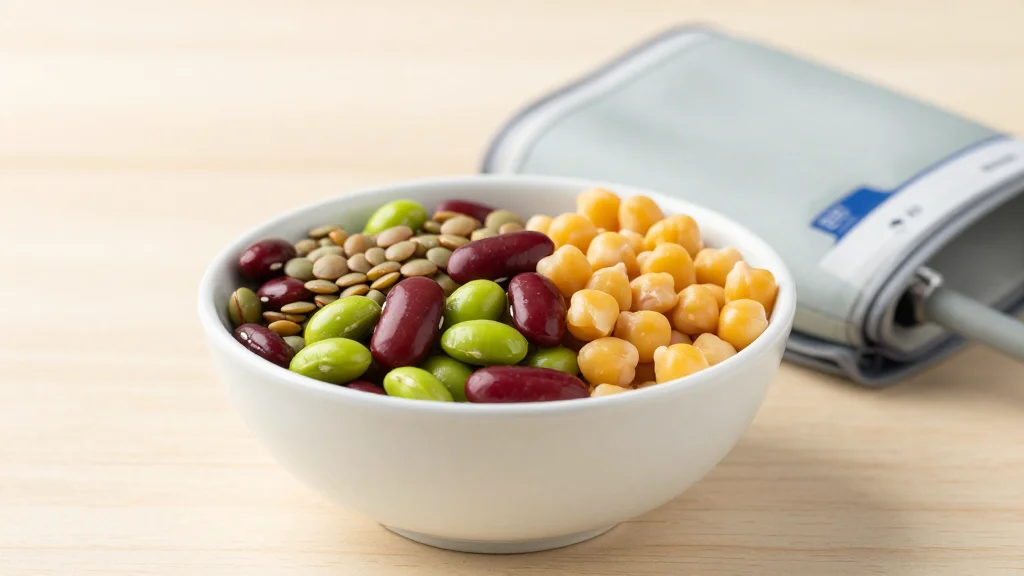
Legumes and Soy Cut Hypertension Risk by Up to 19% in New Meta‑Analysis

Why It Matters
Hypertension affects roughly 1.13 billion people worldwide and is a leading risk factor for cardiovascular disease and premature death. Demonstrating that modest, affordable food choices—legumes and soy—can cut risk by up to one‑fifth offers a scalable, low‑cost strategy for governments and health systems seeking to curb the hypertension epidemic. Moreover, the dose‑response data provide concrete targets for nutrition education, food‑policy incentives, and agricultural planning. Beyond individual health, the findings could reshape food markets, encouraging producers to expand legume and soy product lines and prompting retailers to promote these items more prominently. If dietary guidelines adopt the suggested intake levels, the ripple effect may include increased demand for plant‑based proteins, supporting broader sustainability goals tied to reduced meat consumption.
Key Takeaways
- •Meta‑analysis of 10 publications covering 12 prospective studies up to June 2025.
- •Highest legume consumers had a 16% lower hypertension risk; highest soy consumers a 19% reduction.
- •Optimal daily intake: ~170 g legumes (6 oz) and 60‑80 g soy (2.1‑2.8 oz).
- •Risk reduction plateaued beyond these intake levels, indicating a target ceiling.
- •Findings support a probable causal link, prompting potential updates to global hypertension guidelines.
Pulse Analysis
The new meta‑analysis arrives at a pivotal moment when dietary guidelines are under pressure to incorporate more plant‑based foods for both health and environmental reasons. Historically, hypertension recommendations have emphasized sodium reduction and increased fruit and vegetable intake, but protein sources have received less attention. By quantifying a clear, dose‑dependent benefit from legumes and soy, the study fills a critical evidence gap and offers policymakers a tangible metric to embed in nutrition policies.
From a market perspective, the data could accelerate the already growing legume and soy sector. Food manufacturers may leverage the findings in product labeling, positioning beans, lentils, tofu, and tempeh as functional foods with blood‑pressure‑lowering claims—subject to regulatory approval. This could also stimulate innovation in ready‑to‑eat legume‑based meals, aligning with consumer trends toward convenience and health.
Looking ahead, the robustness of observational data still leaves room for randomized controlled trials to confirm causality and explore mechanisms. If future trials validate the dose‑response curve, we may see a shift from generic “eat more plant foods” advice to precise, evidence‑based prescriptions—mirroring the evolution of cholesterol‑lowering guidelines that now specify daily fiber and plant sterol targets. Until then, clinicians can responsibly recommend modest increases in legumes and soy as part of a comprehensive dietary approach to blood‑pressure management.
Legumes and Soy Cut Hypertension Risk by Up to 19% in New Meta‑Analysis
Comments
Want to join the conversation?
Loading comments...