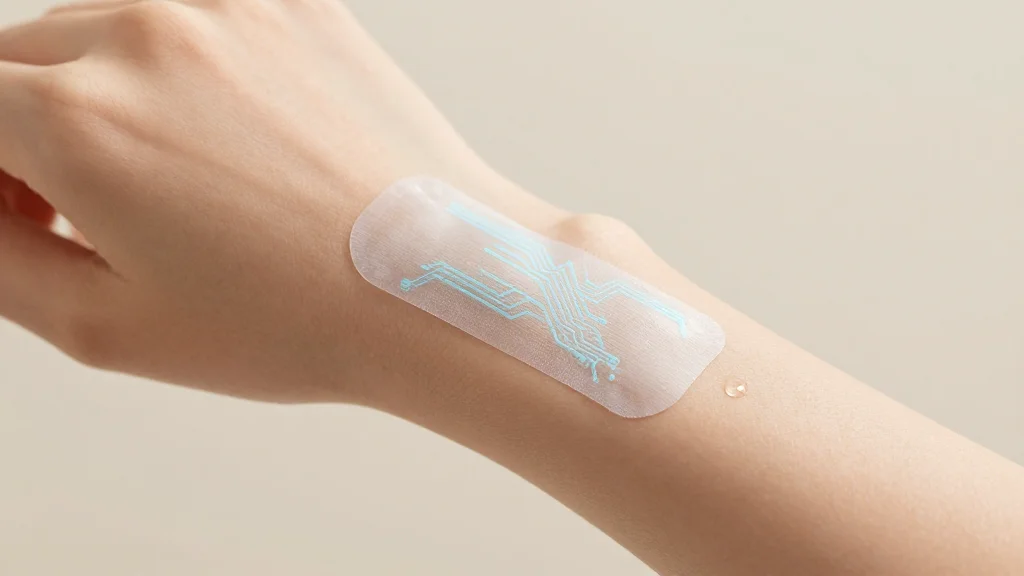
Wearable Sweat Patch Detects Six Vitamins in Real Time, Hits 0.33 nM Sensitivity

Why It Matters
Micronutrient deficiencies remain a silent public‑health crisis, especially in low‑income regions where routine blood testing is impractical. A non‑invasive, real‑time sensor could transform how individuals track and correct nutrient gaps, shifting nutrition from a periodic, reactive practice to a continuous, data‑driven one. Moreover, the technology could accelerate research on nutrient‑exercise interactions, inform clinical trials of supplementation, and support precision‑nutrition platforms that tailor recommendations to an individual's biochemical profile. Beyond health, the patch could influence food and supplement industries by providing granular feedback on product efficacy. Manufacturers may use real‑world adherence data to refine formulations, while insurers could consider coverage for wearable‑enabled nutrition monitoring as a preventive measure, potentially lowering long‑term healthcare costs associated with deficiency‑related illnesses.
Key Takeaways
- •Patch detects six vitamins (B1, B2, B7, B9, B12, D) in sweat
- •Detection limit reaches 0.33 nanomolar for vitamin B9
- •Uses gold‑nanoflower nanocomposite electrodes for enhanced signal
- •Validated against ELISA in controlled human trials
- •Wireless smartphone interface enables continuous, on‑body monitoring
Pulse Analysis
The emergence of a sweat‑based micronutrient sensor arrives at a moment when wearable health tech is maturing from heart‑rate and activity trackers to biochemical analytics. Companies like Abbott and Dexcom have already commercialized continuous glucose monitors, proving that consumers will adopt invasive‑free, data‑rich devices when accuracy meets clinical standards. This new patch extends that paradigm to vitamins, a domain traditionally locked behind lab‑based assays.
From a market perspective, the device could catalyze a new segment of nutrition‑focused wearables, prompting startups and established med‑tech firms to invest in multiplexed biosensing. However, scaling will hinge on regulatory clearance; the FDA will likely treat the patch as a medical device requiring rigorous validation, especially for claims around deficiency detection. Partnerships with nutrition supplement brands could accelerate adoption, but they also raise concerns about data privacy and potential conflicts of interest.
Looking ahead, the technology's ability to provide real‑time feedback may reshape dietary guidelines, moving from population‑level recommendations to individualized, dynamic targets. If subsequent studies confirm its reliability across varied skin types, activity levels and environmental conditions, the patch could become a cornerstone of precision nutrition, enabling clinicians to intervene before clinical symptoms manifest. The next milestones will be large‑scale field trials, FDA submission, and integration with broader health‑ecosystem platforms that aggregate diet, activity and biometric data into actionable insights.
Wearable Sweat Patch Detects Six Vitamins in Real Time, Hits 0.33 nM Sensitivity
Comments
Want to join the conversation?
Loading comments...