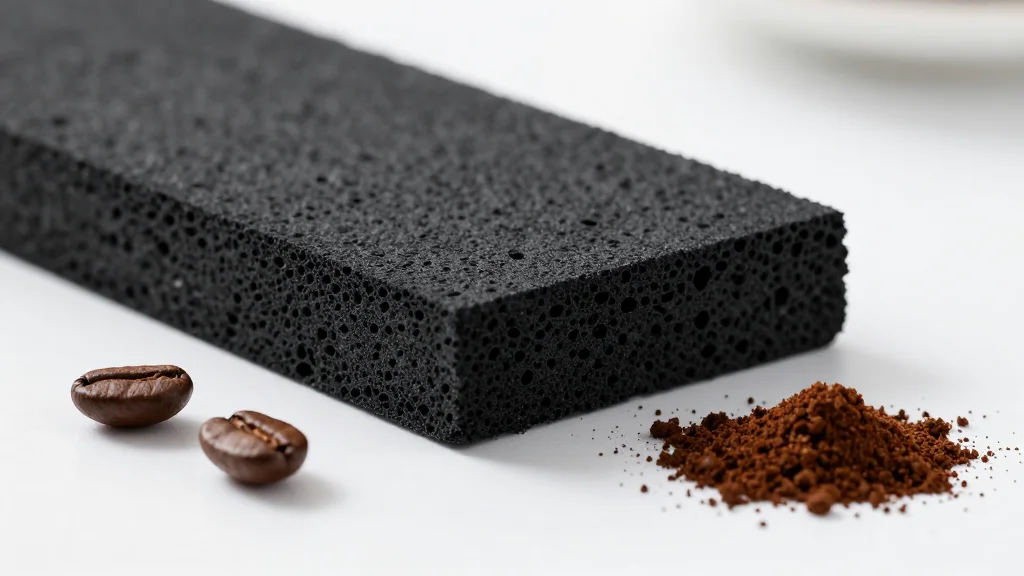
Coffee in Your Walls? Breakthrough Converts Grounds to Insulation
Why It Matters
The innovation turns a massive, methane‑producing waste stream into a low‑carbon insulation alternative, cutting reliance on petroleum‑based foams and supporting circular‑economy goals. It also opens new revenue opportunities for coffee producers and waste‑management firms.
Key Takeaways
- •Up to 60 million tons of coffee grounds discarded annually worldwide
- •Biochar from coffee grounds achieves 71% porosity after 700 °C pyrolysis
- •Composite insulation reaches 0.04 W·m⁻¹·K⁻¹, matching expanded polystyrene
- •Pore‑restoration uses propylene glycol and ethyl cellulose for structural stability
- •Circular‑economy potential reduces landfill methane and petroleum‑based foam demand
Pulse Analysis
Coffee consumption remains a cultural staple, with more than two billion cups brewed each day. The resulting spent grounds, estimated between 8 million and 60 million tons annually, typically end up in landfills where they generate methane and carbon dioxide, contributing to climate change. Converting this abundant organic waste into high‑value products aligns with growing regulatory pressure and consumer demand for sustainable solutions, prompting researchers worldwide to explore novel applications beyond composting and biofuel.
The Shenyang Agricultural University team tackled a key technical hurdle—low porosity—by pyrolyzing dried grounds at 700 °C, transforming them into biochar with 71% porosity. Their patented "pore restoration" process fills the pores with propylene glycol, adds ethyl cellulose powder, and then compresses the mixture before vacuum‑drying to lock in a network of air‑filled voids. The resulting composite exhibits a thermal conductivity of just 0.04 W·m⁻¹·K⁻¹, a six‑fold improvement over ethyl cellulose alone and on par with commercial expanded polystyrene. Tests on solar‑panel installations confirmed the material’s ability to limit heat transfer, demonstrating practical performance in real‑world settings.
If scaled, this technology could reshape the insulation market by offering a biodegradable, low‑carbon alternative to petroleum‑derived foams. Coffee producers and waste‑management firms stand to monetize a previously discarded by‑product, while construction firms gain access to a material that meets energy‑efficiency standards and supports green‑building certifications. Moreover, the approach reinforces circular‑economy principles, reducing landfill methane emissions and decreasing demand for fossil‑based plastics. Continued pilot projects and supply‑chain integration will be critical to move from laboratory success to commercial adoption, potentially unlocking billions of dollars in sustainable‑material revenue streams.
Coffee in your walls? Breakthrough converts grounds to insulation
Comments
Want to join the conversation?
Loading comments...