
Critical Updates Could Provide Near-Term Market Insights
The S&P 500 surged past 7,000, marking its fastest climb to new highs after a 7%+ drawdown, and is poised to double its value within the current bull market. Approximately 44% of the index’s market capitalization is set to report earnings next week, making it the busiest week of the 1Q26 earnings season. Key macro data—including consumer confidence, PCE, and ISM manufacturing—will be released alongside heightened scrutiny of the US‑Iran cease‑fire and the April Fed meeting, which may be Chair Jerome Powell’s final appearance. Strong tech earnings are expected to reinforce AI‑driven momentum while the Fed’s policy outlook remains cautious.
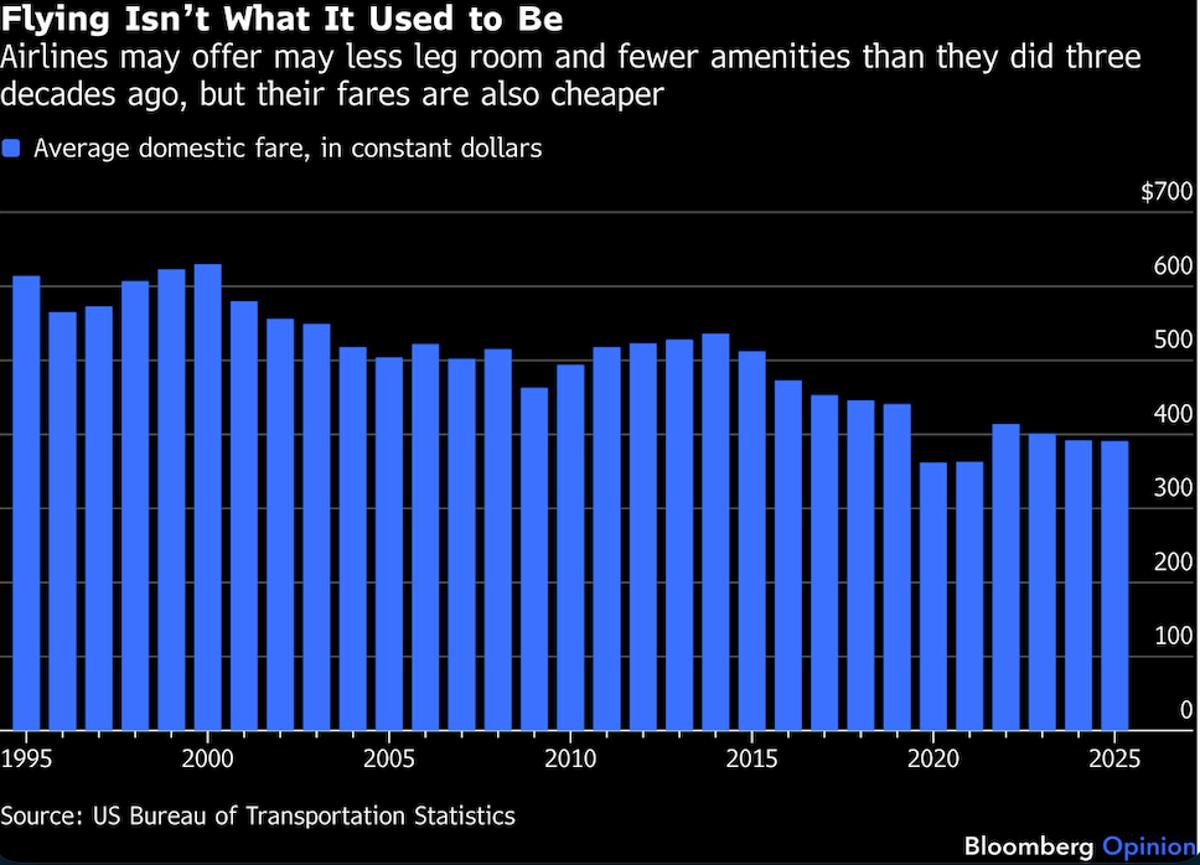
More Corporate Power Can Help Solve the Affordability Crisis
Budget airlines Spirit and JetBlue are on the brink of bankruptcy, a fate that could have been mitigated by a blocked 2024 merger. The article argues that, contrary to traditional antitrust thinking, greater corporate scale can lower costs and help...

The Oil Futures Market Is Lying to Us
The closure of the Strait of Hormuz has forced the removal of roughly 500 million barrels from global oil inventories, a pace that could top a billion barrels by June. While Brent futures have rebounded above $100, long‑dated contracts are rising...

Multisector Bond ETF FUSI Gets 5-Star Rating From Morningstar
American Century’s Multisector Floating Income ETF (FUSI) received a 5‑star rating from Morningstar, reflecting its strong risk‑adjusted performance. The actively managed fund returned almost 6% over the past three years and posted a 5.4% 12‑month distribution rate as of March...

Active Mutual Funds Owning at Least 1 ETF More Than Doubled
Active mutual funds that own at least one ETF have more than doubled since 2006, reaching nearly 1,200 funds by year‑end. The average allocation to ETFs within these portfolios has risen fivefold, turning ETFs from competitors into core building blocks....

SpaceX Is Widening Its Competitive Moat Ahead of a Record IPO
SpaceX is gearing up for a summer IPO that could fetch a record $2 trillion valuation, buoyed by its rapidly expanding Starlink business and upcoming Starship launches. The company’s integrated model—building rockets, satellites, ground stations and user kits—delivers a 71% EBITDA...

JPMorgan Readies Fresh Private Credit Push After Needling Market
JPMorgan Chase is launching its most aggressive private‑credit push yet, planning to allocate tens of billions of dollars to loans sourced by its commercial bankers. The asset manager is courting institutional investors to raise several billion dollars and has already...

Jay Leno Is Unusual Guest in Muni Roadshow for Airport Deal
Jay Leno appeared in a video promoting a $379 million revenue‑bond offering for the Burbank‑Glendale‑Pasadena Airport Authority. The bonds will fund a 355,000‑square‑foot terminal slated to open in October, timed for the 2027 Super Bowl and the 2028 Olympics. Fitch Ratings...
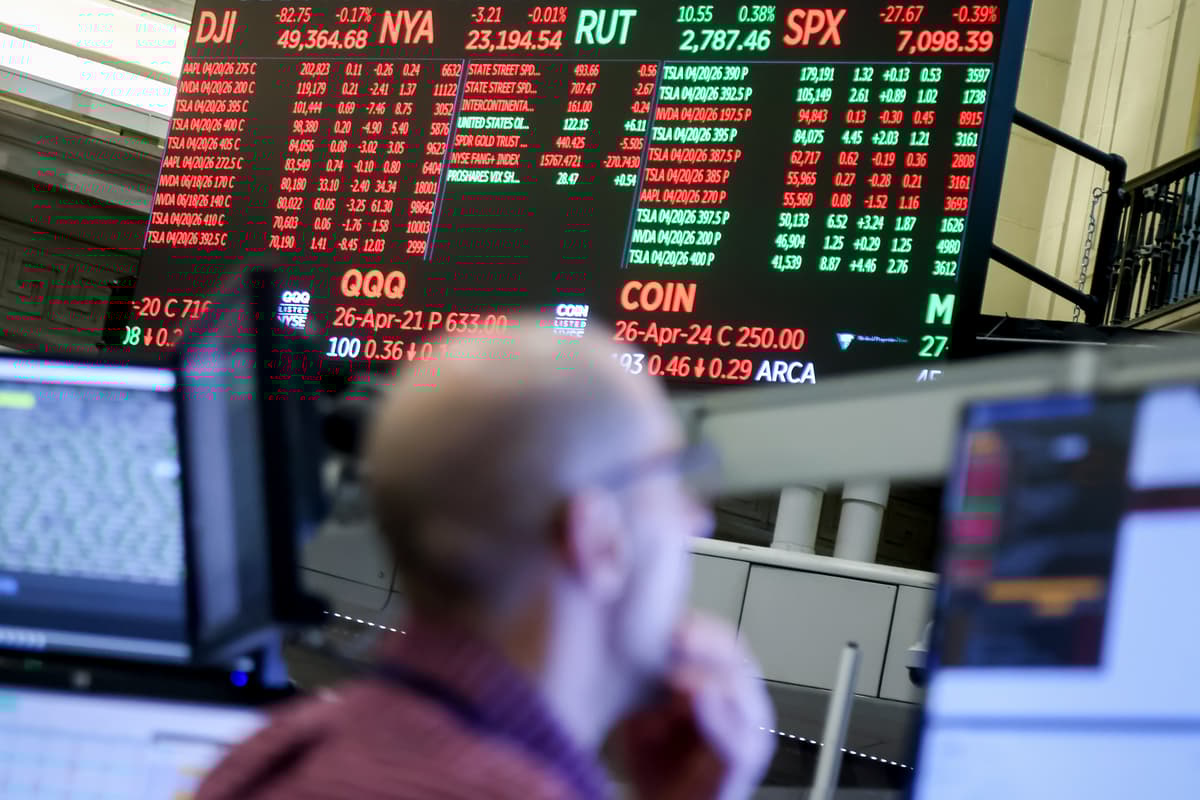
Five Reasons Global Markets Are Surprisingly Resilient Despite War in Iran
Two months into the Iran conflict, global equities are rallying toward record highs despite heightened geopolitical risk. Investors have largely discounted worst‑case scenarios, focusing on solid corporate fundamentals and abundant liquidity. A surge in artificial‑intelligence chip stocks and robust first‑quarter...

American Airlines Lowers Earnings Goal as Fuel Bill Surges
American Airlines lowered its 2026 earnings outlook to a loss of $0.40 per share up to a modest $1.10 profit, citing $4 billion in extra fuel costs tied to the Iran conflict. The carrier posted an adjusted loss of 40 cents per...

Chicago Fed National Activity Index: Economic Growth Decreased in March
The Chicago Fed’s National Activity Index (CFNAI) fell to –0.20 in March, reversing a modest +0.03 reading in February. The three‑month moving average (CFNAI‑MA3) also slipped into negative territory at –0.03, underscoring below‑trend growth. Three of the four component categories—production...

Are Treasuries Losing Their Luster?
The article argues that warnings from the IMF and former Treasury Secretary Hank Paulson about rising U.S. debt do not signal an imminent loss of Treasury market credibility. It notes that the 10‑year yield at roughly 4.25% sits within the...

What Are 529 College Savings Plans?
529 college savings plans are state‑sponsored, tax‑advantaged accounts that let families invest in mutual‑fund portfolios or prepaid tuition contracts to cover future education costs. Contribution limits typically range from $200,000 to over $500,000, and many plans require no minimum opening...

The Accountability Gap in Estate Planning
Estate‑planning has undergone a rapid digital transformation, shifting many processes from attorney‑driven to software‑centric experiences. While the technology improves intake, modeling, and client visualization, it also creates an accountability gap as advisors increasingly act as de‑facto legal service providers without...

Wall Street’s Bullish Stocks View Contrasts With Consumer Gloom
Wall Street’s major indices are hovering near record highs, buoyed by strong corporate earnings and a resurgence in artificial‑intelligence spending, even as consumer confidence plunges to an all‑time low. A preliminary University of Michigan survey showed the sentiment index fell...

Google Cloud Debuts New AI Chips, Tools for Building Agents
Alphabet’s Google Cloud unveiled the next‑gen Tensor Processing Units – the TPU 8t for training and the TPU 8i for inference – at its Cloud Next event. The chips promise 124% and 117% more performance per watt than the prior generation, respectively,...

5 Ways to Take Your Leadership Skills From Good to Great
Beverly Flaxington, a practice‑management consultant, shares five actionable leadership habits for middle‑management professionals in the financial advisory sector. She stresses the need to articulate clear, measurable goals, understand each team member’s motivations, and proactively remove obstacles. The piece also highlights...

Why Flows Into Active ETFs Are Outpacing Total Market Share
Financial advisors are rapidly shifting from passive indexing to active ETF strategies, a trend accelerated by the 2019 ETF Rule, heightened market volatility, and a quest for tax efficiency. Active ETFs, though only about 10% of total ETF assets, attracted...

Interest Rates, Inflation, and Growth
U.S. fixed‑income markets in 2026 have been defined by sticky inflation, a modest slowdown in real GDP, and a patient Federal Reserve. The 10‑year Treasury hovered around 4.3% while the 2‑year nudged up to 3.7%, reflecting a range‑bound curve rather...

Military Wealth-Building Levers Financial Planners Should Know
Military households enjoy a suite of under‑used benefits—tax breaks, subsidized health care, the Thrift Savings Plan (TSP), VA‑backed mortgages, deployment savings programs, and education credits—that can accelerate wealth when applied deliberately. Financial planners who capture recurring discounts, use advance pay...

The Hidden Factors that Shape Your Retirement Decades Before It Begins
The article emphasizes that retirement security is forged in a person’s 20s and 30s, when decisions about when to start investing and how to prioritize life milestones have lasting effects. Early contributions harness compounding interest, while directing funds away from...

Why Are Workers Stuck? Not Enough Employers
Bloomberg argues that the U.S. labor market is behaving like a recession despite the economy not meeting the technical definition of one. A sharp decline in the Labor Market Tightness Index and a rise in long‑term unemployment signal slowed job...

US Homebuilders Set for Another ‘Lost’ Earnings Season
US homebuilders D.R. Horton, Lennar and KB Home all missed quarterly expectations as the Iran war drove oil prices higher and squeezed household budgets. The conflict has lifted construction material costs, pushed mortgage rates up and eroded consumer confidence, prompting...

Innovation Insights Quarterly: Q2 2026
Innovation Insights Quarterly Q2 2026 spotlights breakthroughs in agri‑robotics, biotech, medical devices, water treatment and public‑safety AI. A new AI model enables laser‑weeding robots to identify crops and weeds in real time, cutting retraining from weeks to minutes. Engineered cell therapy...

To Make a Tech Unicorn, Mix a Few Workers With Some AI Hype
Bloomberg analysis shows the average headcount of new unicorns has slumped from 1,128 in 2023 to 323 in 2026, a shift driven by AI hype and aggressive early‑stage venture capital. AI‑focused startups now reach billion‑dollar valuations with teams under 40,...

EQT Warns of Exit Risks for Alternative Energy Assets Held by PE
EQT AB warns that private‑equity firms are hitting a wall when trying to exit clean‑energy developers and operators, which have ballooned from 1‑2 GW to as much as 8 GW of assets. Traditional buyers can no longer absorb such scale, and IPOs...

Three Trends Shaping Transition Management
Transition management is evolving from a simple execution step to a core driver of portfolio outcomes as activity accelerates. Credit transitions now demand granular, exposure‑focused handling of duration, spread and liquidity, while electronic trading platforms and new fee structures lower...

Bitcoin’s Fragile Recovery Sets Up a Big Short-Squeeze Risk
Bitcoin has rebounded about 14% from its April low, trading near $75,250, while perpetual futures funding rates have stayed negative for 46 straight days—the longest bearish stretch since late 2022. The prolonged short‑bias creates a classic short‑squeeze setup: any sustained...

Private Credit Vs. Public High Yield: Understanding the Tradeoffs
Franklin Templeton’s April 2026 note compares private credit with public high‑yield bonds, emphasizing how each market lets investors measure, manage and reprice risk. Private credit offers floating‑rate income, senior seniority and smoother returns but suffers from slower price discovery and...

Stocks Rally as Oil Plunges on Reopening of Hormuz Strait
U.S. equities surged on Friday after Iran announced the reopening of the Strait of Hormuz, a move that eased oil‑price pressures that have lingered since the Trump‑initiated conflict. The S&P 500 rose 0.8% to a fresh all‑time high, the Nasdaq 100 added...
Why the Fed Could Shrink Its Balance Sheet Again (and Markets Might Not Notice)
Late last year the Federal Reserve concluded its most recent quantitative‑tightening cycle, cutting the balance sheet by more than $2 trillion from a peak of nearly $9 trillion, about 35 % of U.S. GDP. The market barely reacted, suggesting the unwind was largely...

How Bond Optimizers Can Work More Optimally—And Why It Matters
Bond optimizers are evolving from simple allocation tools into fully integrated digital platforms that combine market data, detailed bond analytics, and portfolio managers' research insights. By digitizing core scores, scenario risk ratings, and liquidity metrics, these systems can rank thousands...

Q2 Strategic Income Outlook: Everything Everywhere All at Once
The first quarter of 2026 was marked by a cascade of geopolitical shocks—from Venezuela’s president’s arrest to a U.S.-Israel strike on Iran—while AI breakthroughs drove hyperscaler capital expenditures to an estimated $720 billion. Private‑credit markets showed stress, with default risk projected...

On My Mind: The $ Is Dead, Long Live the $
The article challenges the growing narrative that the U.S. dollar is in rapid decline, arguing that its dominance remains underpinned by deep capital markets, institutional credibility, and the sheer scale of the U.S. economy. Recent Deutsche Bank research linking Middle‑East conflict...

Tax Loss Harvesting in Volatile Equity Markets: Q1 2026
Parametric’s direct‑indexing platform harvested over $3.9 billion in losses in Q1 2026, delivering an estimated $1.5 billion tax benefit to Custom Core investors. The S&P 500 fell 4.33 % for the quarter, with Information Technology down 9.13 % and Energy soaring 38 % after the U.S. offensive...

Treasuries Steady as Traders Assess War’s Inflation Risks
U.S. Treasury yields held near 4.30% as the latest producer‑price index came in below expectations, reinforcing bets for at least one Federal Reserve rate cut in 2026 despite lingering inflation concerns tied to the Iran‑Israel war. The PPI rose 0.5%...

What Tax-Time Mistakes Reveal About Hidden Planning Gaps for High-Net-Worth Investors
Tax season exposes coordination gaps among high‑net‑worth investors, where fragmented advice leads to last‑minute decisions on retirement contributions, crypto gains, and charitable gifts. The root cause is siloed professionals—tax advisors, estate attorneys, and financial planners—who lack shared visibility into each...

How the US-Iran Conflict Is Impacting Portfolios and Advisors
The US‑Israel war with Iran has pushed oil prices higher, reigniting inflation and extending market volatility into 2026. Advisors, especially solo practitioners, are fielding client anxiety and revising portfolios to mitigate geopolitical risk. Chicory Wealth’s CEO Max Kulyk says his...

S&P 500 Outlook: The 8.2% Rally & What Comes Next
After five weeks of decline, the S&P 500 rallied 8.2% from its March lows near 6,300, reclaiming its 20‑, 50‑, and 200‑day moving averages and closing at 6,816.9, just 2.6% shy of the January all‑time high. The surge was sparked by...

Infrastructure Investing—Growth, Income and Inflation Protection in One Asset Class
Michael Bell, CEO of Meketa Capital, highlighted that infrastructure investing is moving from a niche institutional asset class into the broader wealth‑management arena. Advisors are gaining confidence as educational resources proliferate, enabling them to allocate to projects that support digitization...

Analyzing the Analysis: How Do AI Portfolio Recommendations Hold Up?
Allan Roth tested Anthropic’s Claude on a $1.37 million multi‑account portfolio, including an $80,000 cash infusion, to see how well AI could generate a summary and rebalancing recommendations. Claude correctly identified the low 0.03% weighted expense ratio, proper tax‑location of assets,...

Kalshi Is Half Right About Prediction Markets and Gambling
Kalshi CEO Tarek Mansour argues that its peer‑to‑peer prediction‑market platform differs from traditional sportsbooks because the house takes no position on outcomes, only fees. While the fee‑based, balanced‑book model mirrors the exchange‑style betting that has existed since the 1940s, it does...

The Evolution of Private Credit
The paper by Franklin Templeton outlines how private credit has matured into a multi‑trillion‑dollar asset class encompassing direct lending, distressed debt, asset‑based financing, CRE debt and CLOs. It highlights the sector’s rapid growth, driven by investors seeking higher yields as traditional...

Geopolitical Risk, Commodities and Core Portfolio Resilience
Parametric warns that heightened geopolitical tension, exemplified by the Iran‑Iran conflict, can erode the traditional diversification benefits of stocks and bonds as both asset classes move in tandem. Energy‑price spikes drive stagflation, breaking the historic negative correlation between equities and...

How Advisors Are Rewiring Fixed Income Portfolios
Advisors are reconfiguring the fixed‑income portion of 60/40 portfolios as sticky inflation and shifting Fed expectations compress yields. A VettaFi survey shows 34% of advisors struggle most with finding yield without excess credit risk, while 31% worry about duration. Eighty‑eight...

Inside the Consumer Price Index: March 2026
The Bureau of Labor Statistics’ March 2026 CPI report breaks down consumer spending into eight weighted categories, with food, shelter and clothing together representing over 60% of the index. Medical care, housing and food have each more than doubled in...

Finance Titans Bet Mideast Resilience Will Outweigh War Fallout
Wall Street’s biggest banks and private‑equity firms are deepening their Gulf foothold despite Iran’s missile attacks and a two‑week cease‑fire. Blackstone announced a $250 million private‑equity commitment, while Citi’s CEO Jane Fraser reiterated confidence in the region. Goldman Sachs is pursuing...

A 1,300% Rally Turns a Tiny Shipping ETF Into an Iran War Gauge
Breakwave Tanker Shipping ETF (BWET) has exploded 1,300% over the past year, rising from about $10 to nearly $150 per share, making it 2026’s top‑performing US‑listed ETF. The fund’s performance is tightly tied to VLCC freight rates, especially the cost...

Muhlenkamp Quarterly Market Commentary – April 2026
U.S. and Israeli forces resumed combat against Iran in late February, prompting Tehran to close the Strait of Hormuz and launch missile strikes on Gulf energy infrastructure. The conflict lifted crude oil to about $102 per barrel, boosted the DXY...

What Happens Next
U.S. economic data for March showed continued manufacturing expansion and a surprisingly strong labor market despite ongoing Middle East tensions. The ISM Manufacturing index rose to 52.7, marking the third consecutive month above the neutral 50 threshold. Non‑farm payrolls increased...