The Hormuz Crisis Is Making Low-Carbon Energy Strategies More Expensive
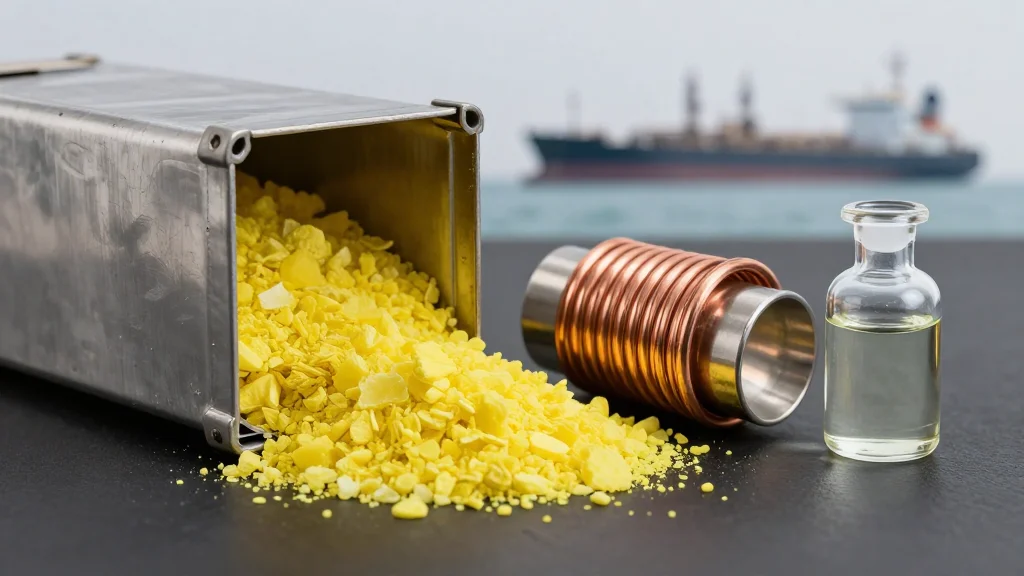
The Iran‑Houthi conflict in the Strait of Hormuz has sharply disrupted sulfur shipments, driving global sulfur prices up more than 70 percent and reaching about $600 per metric ton. Sulfuric acid, a by‑product of oil refining, is essential for hydrometallurgical processes that produce battery‑grade nickel, cobalt, lithium and copper, making the transition to solar, wind and electric vehicles more costly. Indonesia’s high‑pressure acid leaching (HPAL) nickel plants, which supply roughly 75 % of the world’s battery‑grade nickel, are especially vulnerable, while the DRC’s copper and cobalt leaching also depend heavily on imported acid. The crisis highlights a structural supply‑side weakness: as oil refining declines after 2035, sulfur availability will fall just as demand from the energy transition rises.
Ajay Banga on Responding to This Economic Crisis: ‘Focus on Policies’ that ‘Create Jobs’
World Bank Group President Ajay Banga warned that the Iran war could add 0.9 percentage points of inflation and shave 0.4 percentage points off global growth, especially hurting emerging markets. He highlighted the Bank’s Crisis Response Windows, which let countries draw up...

What to Make of the Iran War Cease-Fire
U.S. President Donald Trump and Iranian Foreign Minister Abbas Araghchi announced a two‑week cease‑fire, marking the first pause in hostilities since the Iran war began on Feb 28. Markets reacted with a dip in oil prices, yet experts warn that extensive...

Sanctions Waivers on Russian and Iranian Oil Are Set to Expire. Here’s What Trump Should Do Next.
The U.S. Treasury’s general licenses that let Russia and Iran ship oil expire on April 11 and April 19, respectively. The temporary influx has not stopped crude prices from climbing, and both regimes are now earning roughly $150 million and $139 million per day....

Kroenig Interviewed on BBC on Trump and Iran
Atlantic Council vice‑president and Scowcroft Center senior director Matthew Kroenig appeared on the BBC on April 7 to discuss the Trump administration’s approach toward Iran. He evaluated the “maximum pressure” campaign, its diplomatic ramifications, and the potential for escalation. Kroenig also...
What’s Behind Tehran’s Tollbooth?
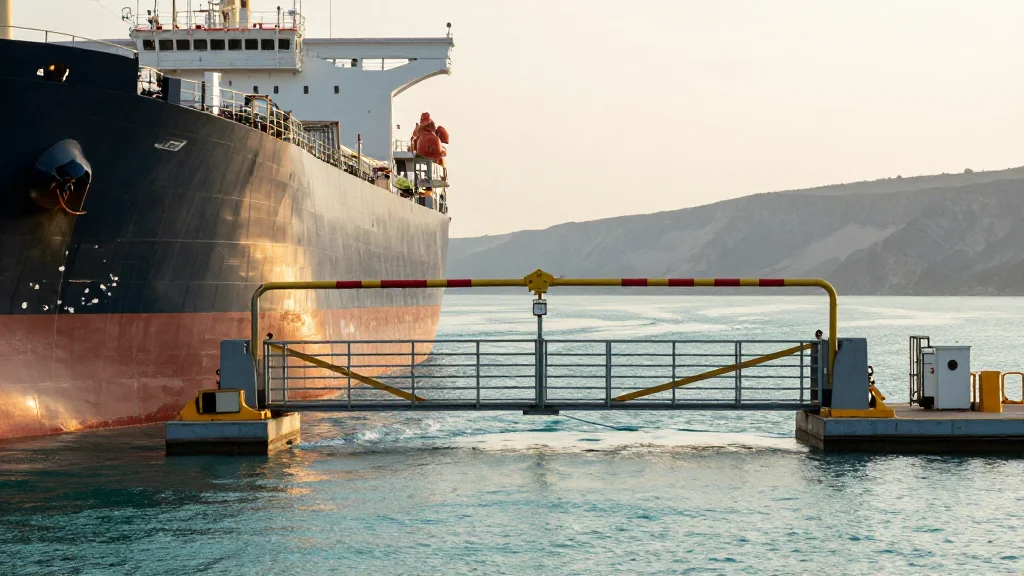
Iran briefly shut the Strait of Hormuz and began levying steep fees on transiting tankers, effectively turning the waterway into a tollbooth. Although a ceasefire has been brokered, the fee‑collection mechanism remains active, targeting vessels that are not subject to...

Lipsky Quoted in Reuters Article on China’s Role in Iran’s Military and Drone Production Process, and How Trump Is Unlikely...
The Atlantic Council cited a Reuters interview in which former Pentagon official Michael Lipsky warned that China is deepening its partnership with Iran, supplying components that enable Tehran's expanding drone and missile programs. Lipsky also noted that President Trump’s recent...
What Ukraine’s Wartime Tech Ecosystem Can Teach the Rest of the World
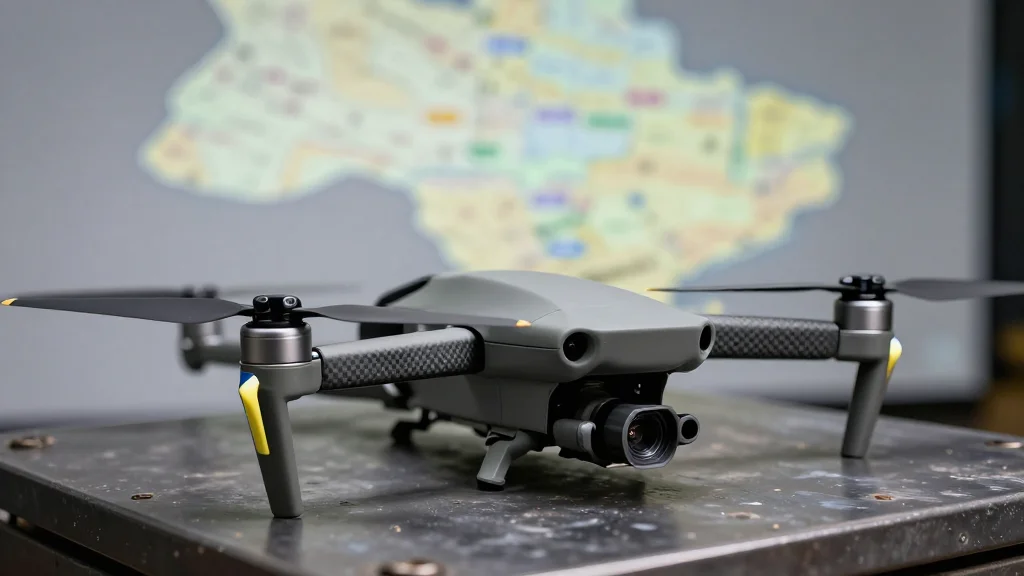
Ukraine’s wartime experience has turned its defense sector into a rapid‑innovation laboratory. Since the February 2022 invasion, the country expanded from seven drone manufacturers to over 500 and built the Brave1 cluster, now linking more than 3,000 firms with frontline units....

American AI Leadership Can Open a New Chapter for Middle East Integration
The United States is spearheading a multi‑nation AI infrastructure push in the Middle East, highlighted by G42’s massive Abu Dhabi data‑center built on NVIDIA chips and Oracle cloud, Saudi Arabia’s Humain project powered by US hardware, and the joint Israeli‑U.S....

Charai for The Jerusalem Post: Trump and the End of Tehran’s Illusion
Ahmed Charai argues that former President Donald Trump’s renewed pressure on Tehran has shattered Iran’s belief it can dictate regional outcomes. By reinstating maximum‑sanctions regimes and supporting a tougher stance on Iran’s nuclear program, the U.S. forced Tehran to confront...

Chhangani and Kumar Cited in 2025 ECA Report Discussing Advancement of Regional Integration in Africa Using Frontier Technologies and Innovation
The United Nations Economic Commission for Africa’s 2025 report on regional integration cites Atlantic Council experts Alisha Chhangani and Ananya Kumar. The paper highlights how frontier technologies—artificial intelligence, blockchain, renewable energy, and satellite communications—can accelerate cross‑border trade and policy harmonisation...

Lipsky Cited in Bloomberg Article Detailing Why the Iran War May Impact Trump’s Goal of Lowering Interest Rates
A Bloomberg piece cites Atlantic Council analyst Josh Lipsky to explain how the escalating war in Iran could derail former President Donald Trump’s longstanding ambition to push the Federal Reserve toward lower interest rates. The conflict is inflating geopolitical risk...

Nikoladze Joined the Embassy of the Republic of Poland to Launch and Discuss Findings From the Organizations’ New Report
Atlantic Council expert Maia Nikoladze partnered with the Embassy of the Republic of Poland on April 6, 2026 to unveil a joint report that maps Iran’s logistical and financial support for Russia’s drone campaign in Ukraine. The analysis quantifies the flow of...

Nikoladze Joined The Warcast Podcast to Discuss the Complications of the U.S. Suspension of Russian and Iranian Oil Sanctions
Former Atlantic Council senior fellow Dmitri Nikoladze appeared on The Warcast podcast to dissect the United States’ recent decision to suspend sanctions on Russian and Iranian crude. He argued that while the move temporarily eases global fuel prices, it also...

Washington Post Cites GeoEconomics Research on China’s Cross-Border Digital Currency Platform mBridge
The Washington Post referenced a new GeoEconomics study highlighting China’s cross‑border digital currency platform, mBridge. The research notes that mBridge, built on the digital yuan, now supports real‑time settlements among pilot banks in Hong Kong, Singapore and other Asian hubs....

Will the Iran War Redraw the Global Energy Map?
The Iran‑Israel conflict has forced the closure of the Strait of Hormuz, instantly choking a key artery for global oil shipments. The disruption has triggered a sharp supply shock, pushing crude prices higher and exposing Asia’s heavy reliance on Middle‑East...

No IMF and World Bank Spring Meetings without a Global Crisis
The IMF and World Bank’s April 13‑18 spring meetings will be dominated by a supply‑side crisis sparked by the Iran war and the de‑facto closure of the Strait of Hormuz. Disruptions to oil, gas, helium and aluminum shipments are inflating...
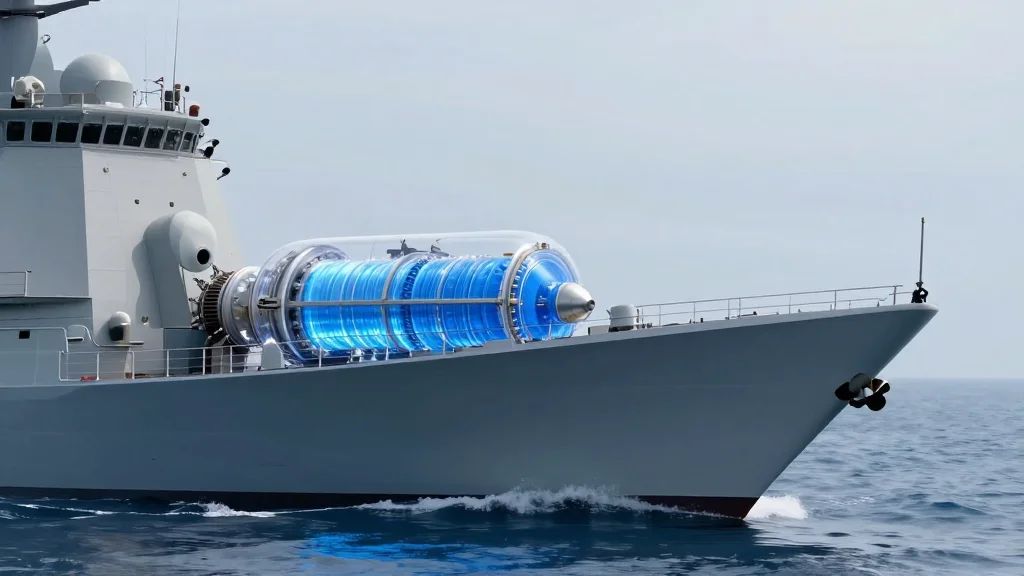
The Maritime Action Plan Could Be a Platform for Nuclear Innovation at Sea
The White House’s Maritime Action Plan (MAP) offers a framework to introduce floating nuclear power plants and nuclear‑propelled vessels into the U.S. fleet, targeting strategic gaps in the Arctic and Indo‑Pacific. MAP’s focus on rebuilding the commercial fleet, modernizing regulations,...

Matchett for War on the Rocks on Threats to Desalination Plants and Preparedness for Attacks in the Gulf
Ginger Matchett warns that Gulf desalination plants—critical for millions—are increasingly vulnerable to kinetic and non‑kinetic attacks, including missiles, drones, cyber intrusions, oil pollution, pipeline sabotage, and power shortages. Such disruptions could precipitate widespread water scarcity, economic distress, and humanitarian crises....
Kroenig Published in The DailyWire on US Options in Iran
Atlantic Council vice‑president Matthew Kroenig appeared on The Daily Wire to argue that the United States has already met its core objectives in the ongoing conflict with Iran. He claims Iran’s military capacity has been significantly weakened over the past...

Iran-Backed Militias Are Destroying Iraq. Baghdad Must Take Them On.
A U.S. drone strike in Baghdad on March 13 targeted Kataib Hizballah leader Abu Hussein al‑Hamidawi, injuring him but missing his primary objective. Since the attack, Iran‑backed militias have intensified drone and rocket assaults on U.S., French, Kurdish and Iraqi facilities, tallying over...

So, What Was President Biden’s Grand Strategy?
The Atlantic Council podcast hosted by Matthew Kroenig features Rebecca Lissner discussing President Biden’s overarching foreign‑policy blueprint. Lissner outlines a strategy built on reinforcing alliances, promoting democratic norms, and countering China’s rising influence. The conversation also probes whether former President...

Ukraine’s Military Success Is Exposing the Myth of Inevitable Russian Victory
Ukraine regained more territory than it lost in February 2026, marking the first net gain since the invasion began. Russian advances in 2025 yielded less than one percent additional land and now cost casualties that outstrip Moscow’s replenishment capacity. Kyiv’s...
Jordan’s Regional Connectivity Begins in Riyadh
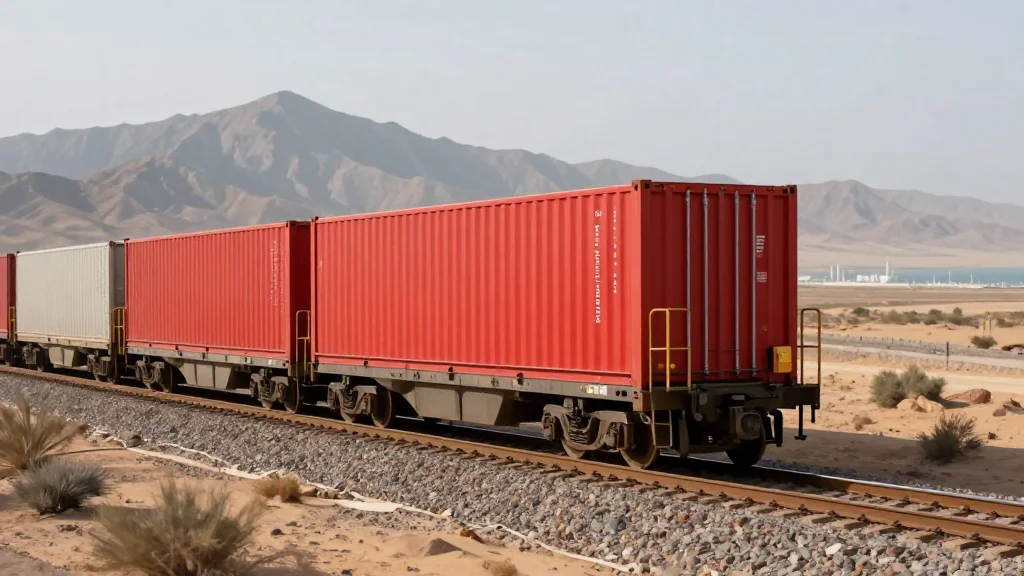
Jordan is positioning itself as a regional trade hub by leveraging deepening Saudi investment, which now exceeds $15 billion, and a series of bilateral agreements signed in Riyadh. Trade between the two countries grew 19% in the first half of 2025,...

Could Turkey Help Mediate an End to the Iran War?
Amid the escalating Iran‑Israel conflict, Turkey is actively promoting itself as a regional stabilizer and potential mediator. Ankara has hosted Iranian officials, engaged Gulf states, and highlighted its ability to talk to all parties, while the EU Commission and the...
By Alienating Its Intelligence Partners, the US Risks Losing More than Trust
U.S. intelligence leaders have largely omitted allies from the 2026 Threat Assessment, reflecting an administration that has publicly criticized NATO, Japan, South Korea and Australia. Recent actions—such as suspending intelligence support to Ukraine and launching Operation Epic Fury without notifying partners—signal a...

Securing Cloud Infrastructure for AI
The brief warns that AI workloads running in cloud environments create novel attack surfaces that existing vulnerability‑management frameworks cannot adequately protect. Nation‑state actors are accelerating discovery and exploitation cycles, while public resources like the National Vulnerability Database are overwhelmed by...

Europe Needs a 21st-Century Containment Strategy Toward Russia
Europe is debating whether to resume diplomatic talks with Russia as several EU capitals, notably France, Germany and Belgium, signal openness to engagement. At the same time, NATO is reshaping its command and burden‑sharing model, urging European allies to assume...

How the Dominican Republic Can Escape the ‘Middle-Income Trap’
The Dominican Republic has leveraged three decades of political stability and institutional continuity to transition from an agrarian economy to a diversified, open market that now grows at roughly 5% annually—well above the Latin American average. This steady growth has...

The Future of Energy Geopolitics Is Written in Patents
The International Energy Agency’s State of Energy Innovation 2026 report finds energy‑related patents now account for roughly 10 percent of all global patents, with batteries alone representing about 40 percent of those filings in 2023. China has captured close to two‑fifths of...

How the West Lost the Post-Cold War Era
The collapse of the Soviet Union sparked a wave of confidence that the West had won the ideological battle, leading to expansive trade deals, democratic promotion, and defense cuts. Over the next three decades, populism, xenophobia, and economic inequality eroded...
How NATO Can Integrate AI to Prevail in Future Algorithmic Warfare
NATO’s next decade hinges on embedding artificial intelligence across its digital backbone, turning AI‑driven decision‑support and autonomous platforms into core combat tools. While AI does not introduce fundamentally new vulnerabilities, it amplifies the risk of human error and miscalculation under...
Deterrence in a Two-Peer World Requires Prudence
The United States must reshape its nuclear strategy as China accelerates toward a 1,000‑warhead force by 2030 and Russia continues modernizing its arsenal, while the New START treaty has lapsed. Washington’s current deployment of 1,550 warheads and 700 delivery systems...

Why US Strategic Nuclear Forces Must Expand After New START
With the New START treaty now expired, U.S. defense planners argue the strategic nuclear force must grow to roughly 2,400 operationally deployed warheads and become more flexible to influence adversary decision‑making at every crisis stage. The brief cites Russia’s heightened...
The Eastern Mediterranean Won’t Replace Russian or Gulf Gas—But It Can Be Europe’s Energy Shock Absorber
Europe has cut Russian gas imports by 90% since 2021 and aims to end them by November 2027. To replace the lost volume, the continent now relies on LNG, exposing it to global shipping chokepoints. The Eastern Mediterranean basin, with...
What Iran’s Attacks on Turkey Reveal About NATO’s Future
Iran launched three ballistic missiles toward Turkish airspace, all intercepted by NATO air defenses, including an explosion near Incirlik Air Base. In response, NATO reinforced Turkey’s defenses by deploying a U.S. Patriot system near the Kürecik radar site. The incidents...

Israeli Settler Terrorism Demands a Tougher US Response
Extremist Israeli settlers have intensified attacks across the West Bank, with 867 incidents reported in 2025—a 27% rise from the previous year and severe incidents up over 50% since 2023. High‑profile killings and mass assaults in February and March have...
After Maduro: Latin America’s Policy Community Reassesses the US-China Balance
The United States captured Venezuelan President Nicolás Maduro and his wife, prompting a hard‑power display that many Latin American analysts view as a game changer for regional geopolitics. The move reinforces U.S. coercive dominance while exposing China’s limited military reach,...
Kroenig Published in The Wall Street Journal on Rogue States
On March 25, Atlantic Council vice‑president Matthew Kroenig authored a Wall Street Journal op‑ed asserting that the Trump administration is on the brink of eliminating the world’s rogue states. He warns that even as traditional threats recede, a resurgence of great‑power rivalry...

Kafafy for Foreign Policy: Empty Words Don’t Open Straits
The Atlantic Council piece critiques recent U.S. rhetoric, especially former President Trump’s aggressive language toward Iran, for offering no tangible solutions to tensions in the Strait of Hormuz. While Tehran threatens to disrupt the roughly $100 billion daily oil flow, Washington’s...

The Economic and Political Traps Awaiting Aging Societies
Aging populations are converging across high‑income and middle‑income nations, while low‑income countries contend with a burgeoning youth cohort. Advanced economies face soaring old‑age dependency ratios, and emerging economies are poised for a faster, sharper workforce decline than the West experienced....

In the Iran Crisis, the IMF’s Voice Is Urgently Needed
The IMF has been slow to deliver a comprehensive analysis of the Iran crisis and the de‑facto blockade of the Strait of Hormuz, despite its mandate to safeguard global financial stability. Standard IMF publications such as the World Economic Outlook...

Oil Waivers Risk Sustaining Russia’s War Effort Amid the Iran War
U.S. Treasury Secretary Scott Bessent announced a short‑term general license allowing the purchase of Russian crude already on board vessels, effective March 12 through April 11. The waiver follows a similar 30‑day exemption for India and aims to dampen market turbulence caused...

Vershbow in RealClearDefense: Why We Must Not Ignore Havana Syndrome
Alexander Vershbow argues that Havana Syndrome remains an urgent security challenge, citing a surge in unexplained health incidents among U.S. diplomats and allied personnel. He warns that dismissing the phenomenon risks underestimating a potential hostile capability, possibly linked to Russian...

Temnycky in Forbes: Georgian Dream Drifts From NATO and EU as Opposition Seeks Integration
Georgia’s ruling Georgian Dream party is increasingly distancing itself from NATO and EU integration, according to a Forbes analysis by Temnycky. Recent policy reversals, reduced joint exercises, and a rhetoric of neutrality illustrate the shift. In contrast, the opposition coalition...
Federal Agencies Under Pressure Need Smarter Systems, Not Tougher People
Federal security agencies face chronic overwork that erodes judgment and retention, yet most resilience programs target individual coping rather than systemic flaws. Roundtables convened by the Atlantic Council reveal that wellness training merely shifts responsibility onto employees while the underlying...
Shedd in the Washington Times: Baltic Security Initiative an Investment in US Defense
The Washington Times reports that the Baltic Security Initiative (BSI) represents a strategic infusion of U.S. defense resources into the Baltic states. The plan earmarks roughly $1.5 billion for modernizing air defenses, cyber capabilities, and joint training facilities. By deepening NATO’s...
Putin Is Counting on Western Disunity to Hand Him Victory in Ukraine
Russian President Vladimir Putin sees victory in Ukraine hinging on growing disunity among Western allies. Despite stalled battlefield gains, he maintains maximalist demands, rejecting any peace that leaves most of Ukraine independent. Recent shifts—including U.S. aid cuts under President Trump,...
Kaluderovic in Foreign Policy: The Drone Attrition Tap
Clara Kaluderovic’s recent Foreign Policy piece highlights the accelerating attrition of Iranian drones deployed across the Middle East. While Iran continues to mass‑produce low‑cost loitering munitions, battlefield losses are outpacing its output, forcing Tehran to tap deeper into regional supply...
Kaluderovic in Fox News: Trump’s Strike on Iran Deals a Major Blow to Putin’s War Machine in Ukraine
President Trump ordered a precision strike against Iranian facilities believed to be supplying drones and missiles to Russia. The attack destroyed key stockpiles in Syria, cutting off a significant portion of Tehran’s arms flow to Moscow’s war effort in Ukraine....