
Motion to Compel Forensic Image of Cell Phone: Granted in Part; Denied in Part
The California district court partially granted Ticketmaster’s motion to compel a forensic image of plaintiff Michelle Madrigal’s cell phone, finding the data highly relevant to her alleged deceptive‑pricing claims. While approving the request, the court imposed strict limits: the examination may last no more than six hours and must focus on July 2022 through February 2025, covering dates surrounding each ticket purchase. Ticketmaster will bear all costs, and Madrigal may select the forensic examiner, with a privilege review before any production. The ruling hinges on the proportionality analysis under Federal Rule 26(b)(1).

Court Refuses to Enter Fed.R.Evid. 502(d) & “Clawback” Order Without Agreement; Also Refuses to Order Production of Responsive Documents That...
In Medal v. Amazon.com Services, the Western District of Washington held that a Federal Rule of Evidence 502(d) confidentiality order and a procedural clawback provision cannot be imposed without the parties’ consent. The court also declined to compel production of...

Incomplete ESI Protocol Negotiations Do Not Justify Delay in Production
The U.S. District Court in Northern California held that unfinished ESI protocol negotiations cannot justify postponing electronic evidence production. Citing Pinchi v. Mullin, the judge stressed that discovery is not a tit‑for‑tat process and parties must continue production while negotiations...

From Training to Execution: Embedded Safeguards for Responsible AI Use in Legal Practice
Artificial intelligence is now entrenched in legal practice, with 69% of professionals using generative AI tools, yet 54% of firms still lack formal AI training and 43% have no governance policy. The rapid evolution of AI capabilities creates a gap...

Cite Checking to Find Hallucinated Cases Deemed Insufficient
Recent appellate opinions warn that relying on generative AI to draft legal briefs and then merely cite‑checking them is inadequate. In Williams v. Honl, the Oregon court likened the practice to abandoning the reflective judgment essential to law. A Seventh...
Trial Presentation Checklist: The Roadmap to a Winning Argument
Nextpoint has published a trial presentation checklist that walks lawyers through every step of preparing courtroom evidence, from selecting the right technology to crafting minimalist slides and integrating video depositions. The guide stresses dynamic software like Nextpoint Theater, real‑time exhibit...

Illumination Zone: Episode 230 | Jeff Shapiro of HaystackID Sits Down with Mary Mack and Holley Robinson
Jeff Shapiro, Managing Director for Europe at HaystackID, joins EDRM’s Illumination Zone podcast to discuss his eDiscovery career and the looming EU e‑Evidence Regulation deadline. He explains how the new rule forces law firms and service providers to adapt quickly...

No Right to a “Hit Report” For Facially Overbroad Search Terms?
The U.S. District Court for the Eastern District of California in United Farm Workers v. Noem rejected a blanket entitlement to “hit reports” when a party proposes facially overbroad search terms. While acknowledging that early hit reports can aid term...

Deponent’s Use of A.I. to Answer Deposition Questions Barred; ChatGPT Was Not an Attorney
In Jones v. Delta Air Lines, the Eastern District of Michigan barred a pro se deponent from using ChatGPT to answer deposition questions, holding that the AI tool is not protected by attorney‑client privilege. The court ordered the deponent to...

Request for Broad “Apex” Executive Discovery Replaced by Phased Discovery Order
In Tripp v. Perdue Foods, a Fair Labor Standards Act collective action sought broad ESI from seven senior executives and 300 search terms, prompting a $1.5 million cost estimate. The district court approved a phased approach, limiting Phase I to a 25%...

A.I. Protective Orders Are Becoming Routine
Protective orders that prohibit the use of generative AI for litigation data are rapidly becoming standard in U.S. courts. Recent rulings—including Stansfield v. IBM, Jeffries v. Harcros, Morgan v. V2X, and Warner v. Gilbarco—explicitly forbid uploading confidential or even non‑confidential...

Trial Preparation Checklist: A Tactical Workflow From Discovery Through Verdict
Nextpoint unveiled a detailed trial‑preparation checklist that guides litigators from discovery through post‑verdict reflection. The workflow stresses early narrative development, theme‑based document coding, and coordinated e‑discovery protocols. It also outlines software criteria—evidence management, timeline builders, deposition tools—to streamline evidence handling....

Illumination Zone: Episode 229 | Jim Sullivan of HaystackID’s eDiscovery AI Sits Down with Mary Mack and Holley Robinson
Jim Sullivan, founder and CEO of eDiscovery AI, discusses his company’s recent acquisition by HaystackID on the Illumination Zone podcast. He explains why eDiscovery AI remains a stand‑alone entity while embedding into existing discovery workflows. The conversation delves into validation methods, privilege‑review...
It Is Improper and a “Perilous Shortcut” To “Outsource” Discovery Positions to A.I.
A federal court in Indiana held that Plaintiff’s counsel improperly relied solely on artificial intelligence to flag discovery deficiencies in White v. Walmart. The judge emphasized that AI‑generated lists do not satisfy the duty to meet and confer, and that...
Where Oh Where Did My Data Go? A Data Broker?
In Roberson v. Acxiom LLC, a Virginia federal court dismissed a class‑action suit against data‑broker Acxiom, accepting the complaint’s allegations for the purpose of the motion‑to‑dismiss. Acxiom claims to hold personal data on roughly 260 million U.S. residents and 2.6 billion people...

Legalweek’s 2026 Lifetime Achievement Honorees: Domino Mentors
Legalweek’s 2026 Lifetime Achievement awards spotlight four industry veterans—Florinda Baldridge, Shannon Bales, David Greetham and Mary Mack—who together embody the “Domino Mentor” model. The honorees illustrate four pillars shaping legal technology: scalability, education, innovation and interoperability. Their collective work spans...

Inadvertent Production of Work Product Did Not Waive Protection; However, Recipient Showed Substantial Need and Overcame That Protection
A federal court in the Middle District of Florida held that Aerosonic’s inadvertent production of work‑product documents did not waive privilege under Fed. R. Evid. 502, but found that Joby demonstrated a substantial need that overcame the qualified protection. The court affirmed the...

Relativity and Wickard.ai Partner to Bring Hands-On Legal AI Training to U.S. Law Schools
Legal data intelligence firm Relativity has partnered with AI education specialist Wickard.ai to deliver hands‑on legal AI training to U.S. law schools. The collaboration integrates Relativity’s RelativityOne platform into Wickard.ai’s curriculum at no cost to participating institutions, covering AI application,...
From Competence to Judgment: How AI Compresses Litigation Work and Why That Makes Judgment More Important
Artificial intelligence is rapidly compressing litigation workflows, turning labor‑intensive tasks like document review, chronology building, and issue identification into algorithmic processes. This shift reduces the advantage of sheer scale, allowing small, disciplined teams to achieve analytical results that previously required...

Court Suggests That Opposing Counsel Also Failed to Check Citations
The Seventh Circuit rebuked counsel for copying AI‑generated, non‑existent citations in Dec v. Mullin and, unusually, criticized opposing counsel for not catching the errors. The court warned that modern tools make citation verification easy and that failure to do so may...

Categorical Privilege Logs Are Not Disfavored
In Thompson v. Seattle Public Schools, the Western District of Washington held that categorical privilege logs are permissible under Federal Rule of Civil Procedure 26(b)(5)(A)(ii) and are not disfavored by the courts. The defendant’s request for a court order to...

HaystackID Named Finalist for Intelligent Insurer’s Cyber Insurance Awards USA 2026 in Two Categories
HaystackID has been named a finalist in two categories of Intelligent Insurer’s Cyber Insurance Awards 2026, recognizing its VALID™ suite and overall cybersecurity solutions. The awards, now in their third year, spotlight firms that help insurers and insureds manage escalating...

Hallucination or Old-Fashioned Error? It Doesn’t Matter
The Southern District of Ohio ruled in Quandel Construction Group v. Hunt Construction that a mistaken citation—whether caused by an AI hallucination or a simple error—requires a full, sworn explanation from the attorneys involved. The court allowed a corrected brief...

Suggested A.I. Rule – Proposed Amendment to Maryland’s Computer-Generated Evidence Rule
Maryland’s Standing Committee on Rules of Practice and Procedure has drafted an amendment to Rule 2‑504.3, the state’s computer‑generated evidence rule, to expressly cover generative AI exhibits. The proposal mandates prior notice, full disclosure of training data and methodology, a pre‑trial...

From Digital Investigations to Business Resilience: Key Private Sector Trends for 2026
Cellebrite’s 2026 private‑sector report shows digital investigations have become a core business capability, supporting risk management, data protection, and continuity. eDiscovery remains the top use case at 54%, but data‑theft and network‑exploit investigations are also rising, reflecting cross‑functional demand. The...
Does Disclosure of Litigation Hold Directive to Preserve “Texts” Waive Privilege?
In Brandes v. Steven Madden, the Eastern District of New York held that merely acknowledging a litigation hold directive’s inclusion of text messages does not waive attorney‑client privilege over the hold notice. The court also rejected the plaintiff’s attempt to...
Nonsensical Spellings and Fabricated Authority Signal Improper Use of Artificial Intelligence
U.S. District Court in California dismissed the plaintiff’s copyright‑infringement complaint after finding that the filings were likely produced using generative AI. The court highlighted nonsensical spellings in AI‑generated images and “hallucinated” citations to nonexistent cases as clear indicators of artificial‑intelligence...

Illumination Zone: Episode 228 | Jon Robins of Level Legal Sits Down with Mary Mack and Holley Robinson
Jon Robins, CTO and VP of eDiscovery at Level Legal, joins EDRM’s Mary Mack and Holley Robinson on the Illumination Zone podcast to discuss the firm’s system‑building philosophy. He stresses the importance of asking the right initial questions and maintaining...
HaystackID CoreFlex Wins 2026 Artificial Intelligence Excellence Award for Advancing GenAI-Driven Legal Workflows
HaystackID announced that its CoreFlex platform has won the 2026 Artificial Intelligence Excellence Award from the Business Intelligence Group, recognizing its generative‑AI‑driven legal and investigative workflows. CoreFlex provides a cloud‑native interface that consolidates matter management, data ingestion, reporting and automation,...

The M&A Risk of Confusing Market Velocity with Marketing Capability
Rob Robinson warns that technology M&A teams often mistake rapid market momentum for durable marketing capability. When a product arrives at the right moment, its novelty can generate brand‑like awareness without a solid marketing org, inflating acquisition premiums. As the...
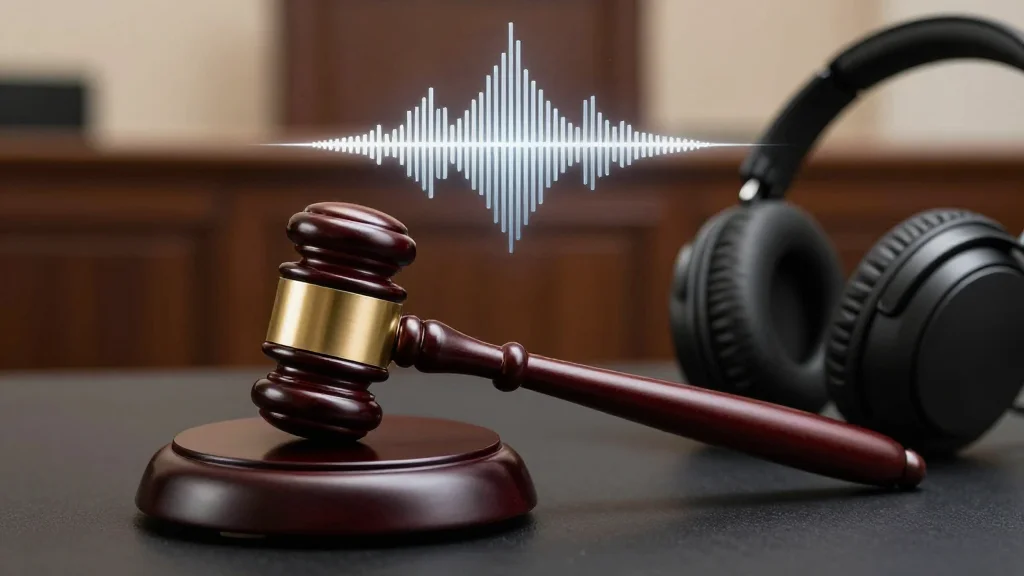
Evidence Sufficient to Demonstrate that Audio Recording Was Not a Deepfake
In Burnley v. Valentin, the Eastern District of Virginia ruled that an audio recording alleged to be a deepfake was authentic and admissible. The court relied on sworn declarations from Walburn and Roskam to satisfy Federal Rule of Evidence 901(a)...

Plaintiff Sold Her Cell Phone After Litigation Commenced
Ms. Jennifer L. Hernandez sold her cell phone after filing a harassment suit, despite counsel’s warning to preserve electronically stored information (ESI). The court held that all five Rule 37(e) threshold requirements were met, finding her actions unreasonable and the missing...

Litigation Strategy Moves at the Speed of Insight
Relativity has introduced aiR for Case Strategy within its FedRAMP‑authorized RelativityOne Government platform, leveraging generative AI to surface narrative patterns, key actors, and structured summaries from massive litigation data sets. The tool accelerates early case insight, allowing agencies to scope...

Example of a Proper Use of GenAI
The 11th Circuit in Edwards v. Grubbs (2026) accepted a generative‑AI diagram illustrating a 30‑40° embankment and a 24‑foot drop as part of the record. The AI‑created exhibit helped the court visualize the scene where Officer Grubbs tasered a fleeing, unarmed...

Relativity Reinforces Its Role in Legal Data Intelligence with Brand Refresh at Legalweek 2026
Relativity unveiled a refreshed brand identity at Legalweek 2026, signaling its evolution from a pure e‑discovery provider to a broader legal data intelligence platform. The company highlighted that more than 55 percent of RelativityOne’s data now stems from non‑litigation workflows, underscoring the...

A Complete Analysis of the Winter 2026 eDiscovery Pricing Survey
The Winter 2026 eDiscovery Pricing Survey of 53 practitioners reveals stable forensic collection rates at $250‑$350 per hour, while data processing and hosting are increasingly commoditized except for analytics‑enabled tiers. Document review pricing remains anchored at $0.50‑$1.00 per document, but GenAI‑assisted...

December 2025 Privilege Protection Amendments to Fed.R.Civ.P. 16 and 26
The Federal Rules of Civil Procedure were amended on December 1, 2025, adding a new subsection to Rule 16 and revising Rule 26(f)(3)(D). The changes require parties to address privilege and protection issues, including timing and method for complying with Rule 26(b)(5)(A), in their discovery...

The Purpose of an ESI Protocol
The California court clarified that an Electronic Stored Information (ESI) protocol is designed to promote reasonable electronic discovery, curb costs, and ensure preservation of relevant data. In Plata v. Lands’ End, the plaintiff sent a draft protocol, the defendant proposed...

“The Fire and BPA’s Preservation of Evidence”
The District Court in Oregon held Bonneville Power Administration (BPA) liable for willful spoliation of both physical evidence and electronically stored information after the September 2020 Holiday Farm fire. BPA moved and destroyed trees at the ignition site despite a preservation...

Weekly Letter to Our EDRM Global Community – 03 March 2026
The Electronic Discovery Reference Model (EDRM) announced it has been named the #1 eDiscovery firm in JD Supra’s 2026 Readers’ Choice Awards, marking its fourth consecutive win. The letter also highlighted HaystackID’s acquisition of eDiscovery AI to accelerate client‑driven generative AI workflows...

Illumination Zone: Episode 226 | Greg Moreman of Level Legal Sits Down with Mary Mack and Holley Robinson
Level Legal’s partner Greg Moreman discussed the firm’s AI integration strategy on EDRM’s Illumination Zone podcast. He highlighted the need for defensible, outcome‑driven models and stressed that an expert human must remain in the loop. Moreman advised starting with small...

Survey: Nearly 90% of Legal and Tech Pros Say Operational Gaps, Not Regulation, Threaten Defensibility
Exterro’s latest survey of over 400 legal, IT, data‑governance and security professionals reveals that operational shortcomings, not regulatory uncertainty, now pose the greatest threat to defensible eDiscovery. Nearly 90% of respondents flagged budget limits, skill gaps and fragmented governance as...

Privilege Waived Because Pre-Production Measures Were Not Shown to Be Reasonable
In Wilson Aerospace LLC v. Boeing, the Western District of Washington held that Wilson waived attorney‑client privilege and work‑product protection by failing to demonstrate reasonable pre‑production safeguards. The court noted Wilson’s reliance on a vague “second‑layer” filter without specific search...
Time of Production of Substantive and Impeachment Video Vis-À-Vis Date of Deposition
The D. Md. court in Frankhouse v. Jobe ruled that a cell‑extraction video with both substantive and impeachment relevance must be produced before the plaintiff’s deposition. The decision hinged on Federal Rule 34, which grants the requesting party the right...

EDRM Earns JD Supra’s Readers’ Choice Award for 2026
The Electronic Discovery Reference Model (EDRM) was named JD Supra’s #1 firm in eDiscovery for 2026, marking its fourth straight year at the top. The award reflects reader‑driven data from 2025, highlighting the firm’s extensive author network and high‑engagement content. Individual...

Illumination Zone: Episode 224 | Timothy Conlon of DarrowEverett Sits Down with Mary Mack and Holley Robinson
Timothy Conlon, a DarrowEverett partner, discusses his transition from family law to eDiscovery on the Illumination Zone podcast, highlighting his new book *Electronic Evidence for Family Law Attorneys*. He explains how smartphones act as “supercomputers in a pocket,” storing self‑disclosed...

Something Big Is Happening — But Not What You Think
Ralph Losey challenges Matt Shumer’s viral claim that AI will soon replace white‑collar workers, arguing that while capability is accelerating, progress is jagged and domain‑specific. He highlights persistent hallucinations in legal AI, the limited relevance of benchmark curves, and the...

Plaintiffs’ Failure to Timely Raise Lack of Defendant’s Privilege Log Defeats Waiver Claim
The Nevada district court rejected plaintiffs’ motion to deem all privileges waived because the insurer’s privilege log was filed late. While the court affirmed the ongoing duty to supplement disclosures under Rule 26(e), it declined to impose a strict 30‑day rolling...

HaystackID Launches AI Governance Services to Help Organizations Operationalize Responsible, Defensible AI Oversight
HaystackID announced the launch of HaystackID® AI Governance Services, a portfolio designed to help enterprises move from AI policies to an execution‑ready governance operating model. The offering arrives as the EU AI Act has been in force since February 2025 and...

Possession, Custody, or Control – Need for a Uniform National Standard – Part II
In L.S. v. Bolduan, the Western District of Washington applied the “legal control” test and held that defense counsel’s possession of State‑court documents did not automatically give the federal defendants possession, custody, or control of those records. The court emphasized...