
Wireless Battery-Management System Untangles EV Batteries
Texas Instruments unveiled a wireless battery‑management system (wBMS) that replaces the heavy copper wiring traditionally used in EV packs. The solution hinges on the CC2662R‑Q1 wireless MCU and a proprietary time‑slotted, frequency‑hopping protocol delivering 99.999 % network availability and sub‑2 ms latency. By eliminating pounds of cabling, the wBMS can free space for additional cells, boost driving range, and cut assembly and repair costs. TI also positions the technology for second‑life battery applications, offering a software‑free licensing model.

Scoping Out Scopes
The article "Scoping Out Scopes" underscores the oscilloscope’s role as a versatile test instrument for electrical engineers, linking to the popular TechXchange guide that covers scope types, probe choices, and measurement techniques. It stresses that selection goes beyond bandwidth, involving...

Chart: How ROHM, Toshiba, Mitsubishi Tie-Up Could Reshape the Power Sector
ROHM Semiconductor, Mitsubishi Electric and Toshiba have signed an MOU to explore merging their power‑semiconductor divisions, which together hold about 11% of the global market. The combined entity would become the world’s second‑largest supplier of power devices, trailing only Infineon’s...

Hydrogen Sensors Help Detect Explosive Conditions in Batteries
Lithium‑ion batteries can suffer thermal runaway, a chain reaction that leads to fire or explosion. Posifa Technologies introduced the MEMS‑based PGS5100 hydrogen sensor, which detects hydrogen concentrations from 0% to 25% with a 100 ms response time and 200 ms warm‑up. Because...

How To Control Brushless Motors (Part 4): Current Control
Current‑control loops are essential for brushless DC (BLDC) motors, ensuring precise torque and protecting windings from damaging spikes. The industry standard for high‑performance applications is a PI current‑loop, often auto‑tuned, while field‑oriented control (FOC) adds a rotation‑independent frame for higher...

Eval Board Simplifies GaN-Based BLDC Motor-Drive Design
Efficient Power Conversion unveiled the EPC91121 evaluation board at APEC 2026, a compact 79 × 80 mm three‑phase inverter built around its Gen‑7 EPC2366 40‑V eGaN transistor. The board delivers up to 70 A peak (50 A RMS) from 18‑30 V inputs and supports 150 kHz PWM, enabling...
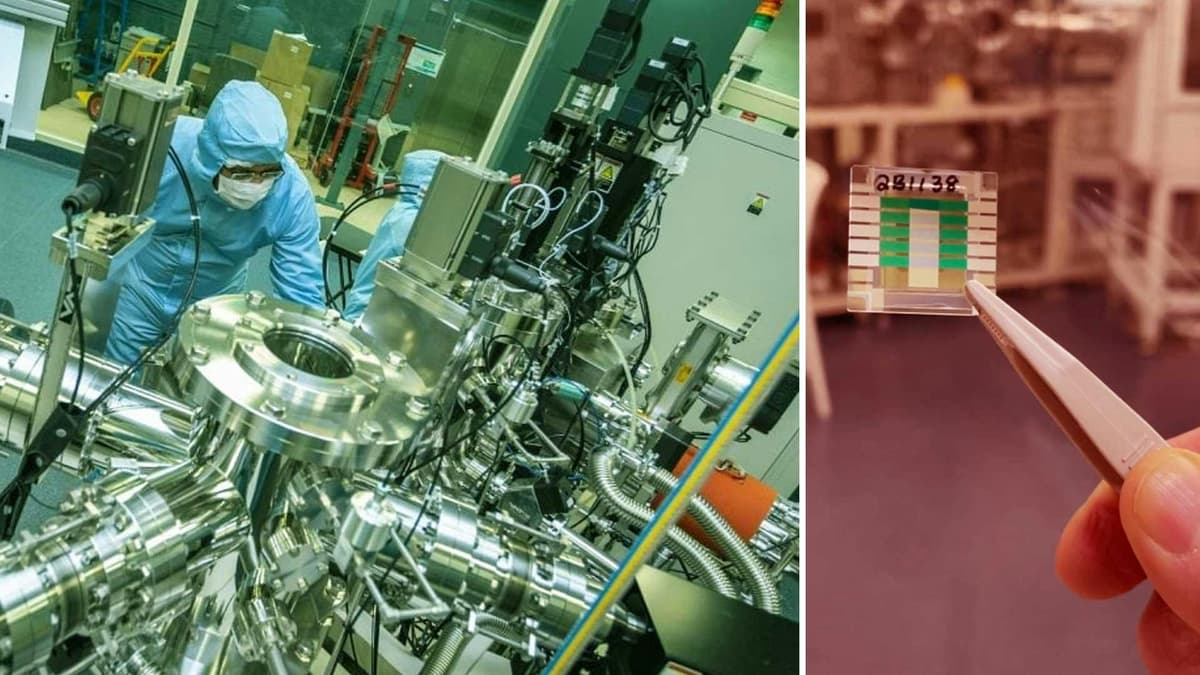
Quantum Battery Defies Conventional Physics
Australian researchers from CSIRO, RMIT University and the University of Melbourne have built a proof‑of‑concept quantum battery that can be wirelessly charged with a laser and deliver a full charge‑discharge cycle. The device uses a layered microcavity tuned to copper...
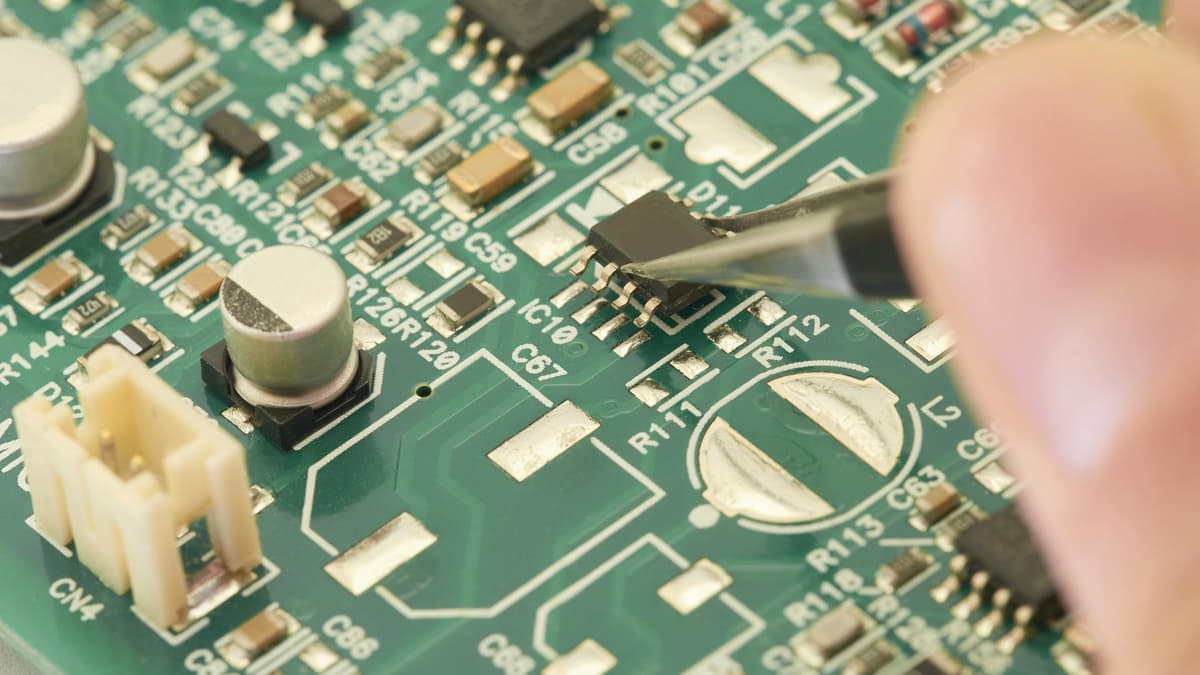
Wide-Input Op Amps Deliver Precision Signal Conditioning
STMicroelectronics introduced the dual TSB192 precision op‑amp, targeting sensor‑heavy applications such as industrial automation, medical equipment, and electric‑vehicle battery‑management systems. The device uses a zero‑drift architecture to achieve a 20 µV maximum input offset and 100 nV/°C temperature drift, while consuming only...

Compact 3-A Buck Converter Powers Smart Meters, Consumer Appliances
STMicroelectronics introduced the DCP3603, a monolithic 3‑amp buck converter, at APEC 2026. The tiny 3 × 1.6 mm device operates from 3.3‑ to 36 V input and offers fixed 500 kHz or 1 MHz switching frequencies with forced‑PWM or pulse‑skipping modes. It integrates power switches and compensation, requiring...

Advancing the Chiplet Ecosystem
Arm unveiled its Chiplet System Architecture (CSA), a set of partitioning and connectivity standards designed to unify the emerging chiplet ecosystem. Chiplets enable modular SoC designs that can mix CPUs, GPUs, NPUs, memory and I/O, delivering higher performance with lower...

How to Control Brushless Motors (Part 3): Commutation
The article explains how brushless DC (BLDC) motors achieve precise motion through electronic commutation, comparing three main techniques: trapezoidal (six‑step) commutation with Hall sensors, sinusoidal commutation using high‑resolution encoders, and sensorless commutation that extracts rotor angle from back‑EMF. It details...

Cool-Running Solutions Meet AI Core, AI Factory, and Industrial Power Challenges
At APEC 2026, Alpha and Omega Semiconductor (AOS) unveiled a suite of power‑management products aimed at AI‑core, AI‑factory and industrial‑power applications. The lineup includes the 16‑phase AOZ73216QI controller for high‑performance GPUs, SiC and GaN MOSFETs for ultra‑low‑loss DC‑DC conversion, and integrated...

Haptics Adds Touch to Augmented Reality
Wearable haptics are emerging as the missing sensory layer for augmented‑reality (AR) experiences. At CES 2026, Weart unveiled the TouchDiver glove, co‑developed with TDK, that delivers pressure, texture and temperature feedback through piezo‑electric PowerHap actuators. The glove can generate forces up...

Formal Verification: Vital for Safety- and Security-Critical Software
Designers of space, defense, and other mission‑critical systems are turning to formal verification to guarantee software reliability and security. Traditional testing can only sample a fraction of possible execution paths, leaving rare timing and extreme input scenarios unchecked. Formal verification...

Cabling for Next-Gen Quantum Computing Infrastructures
Quantum computing’s growth hinges on reliable, low‑thermal I/O infrastructure. Delft Circuits’ Cri/oFlex superconducting cables replace traditional wiring inside cryostats, delivering higher channel density and reduced heat transfer. The solution bridges warm control electronics with ultra‑cold quantum processors, supporting the high‑frequency...

Digital Signal Controllers Zero in on AI Data Center Power Supplies
Microchip Technology unveiled the dsPIC33AK256MPS306, a 200 MHz 32‑bit digital signal controller designed for AI‑driven data‑center power supplies and motor‑control applications. The device packs a double‑precision floating‑point unit, 40 MSPS 12‑bit ADCs, sub‑100 ps PWM timing, and high‑speed comparators, enabling deterministic control loops...

Novel Solid-State Transformer Supports 800-V DC Power in AI Data Centers
Navitas Semiconductor and EPFL unveiled a 250‑kW solid‑state transformer (SST) that converts 3.3 kV AC to 800 V DC, targeting AI‑driven data centers. The device uses a single‑stage modular bridge‑rectifier topology and Navitas’s ultra‑high‑voltage SiC MOSFETs, eliminating bulky low‑frequency transformers. Demonstrated at...

U.S. Grid-Scale Battery Production to Support 100% of Renewable Generating Capacity
The United States has rapidly built grid‑scale battery manufacturing capacity, reaching roughly 70 GWh of finished storage systems in 2025—enough to meet the entire storage demand of wind and solar generation. Companies such as Fluence, LG Energy Solution, Samsung SDI, SK On and...

Opto Devices Extend to Fulfill Automotive, Harsh-Environment Apps
Toshiba Electronic Devices & Storage Corp. introduced a new line of optoelectronic components designed for harsh automotive and industrial environments. The flagship TLX9920 photovoltaic‑output photocoupler, housed in a thin SO6L package, delivers 5 kV isolation, operates from –40 °C to 125 °C, and...

Clock Domain Crossing and Synchronizers (Part 2): Best Practices
As chip designs incorporate dozens of asynchronous clocks, reliable clock‑domain crossing (CDC) becomes critical. Designers mitigate metastability by chaining flip‑flops into synchronizers, typically a two‑stage configuration, though higher‑speed designs may use three or four stages. Maximizing mean time between failure...

California Initiative May Accelerate Adoption of Bidirectional EV Charging
The California Energy Commission unveiled a roadmap to accelerate bidirectional EV charging, targeting vehicle‑to‑grid (V2G) and vehicle‑to‑home (V2H) deployments across residential, commercial and industrial sites. It highlights the state’s 2.1 million‑vehicle fleet, which holds an estimated 18.5 GW of latent storage—exceeding existing...

Demonstrating SPARK with a Mars Rover (Part 1): Cyber-Physical Systems
AdaCore showcased how SPARK can certify a Mars‑rover cyber‑physical system by building a unified hardware abstraction layer (HAL) and introducing formal contracts. The HAL enabled the entire rover software to pass SPARK Silver, proving the absence of run‑time exceptions. A...

More Extended-Range EVs Soon to Hit the Road
Automakers are accelerating the rollout of extended‑range electric vehicles (EREVs) that pair a modest gasoline generator with an electric drivetrain to eliminate range anxiety. Renault’s new RGEV medium 2.0 platform can deliver up to 1,400 km total range, while Volkswagen’s ID. Era 9X...

This Week in PowerBites: Amateur Physicist Exploits, “Electric” Airshows, and SiC/GaN Advances
The latest PowerBites issue spotlights a surge of electric‑propulsion demonstrations at Sun ’N Fun and Flite Fest, underscoring the rapid maturation of fossil‑free aviation. An amateur physicist’s DIY rig, built from 28,000 lb of car batteries and copper, produced discharges that...

Fuzzing: What Are the Latest Developments?
Fuzz testing has moved from a niche security tool to a mainstream assurance technique, now covering cloud‑native, embedded, and safety‑critical systems. Innovations such as grammar‑based, hybrid, and AI‑assisted fuzzers boost coverage and efficiency, while emulation‑based approaches enable early testing of...

How Dummy Silicon Helps Drive 3D Chip Innovation
The semiconductor industry relies on purpose‑built test vehicles and daisy‑chain testing to validate 3D IC manufacturing processes. Test vehicles act as dummy silicon platforms that replicate critical interconnects, allowing engineers to probe thermal, mechanical and electrical reliability before full‑scale production....

TI Breaks Down High-Voltage DC Power in Data Centers
NVIDIA is championing a move to 800‑V high‑voltage DC (HVDC) distribution in AI‑driven data centers, pushing power per rack beyond 100 kW toward 500 kW. The strategy relocates AC‑DC conversion to external sidecar modules, freeing rack space and improving efficiency by up...

Transparent Conductive Film Provides Electromagnetic-Wave Shield
Panasonic Industry introduced FineX, a high‑transparency, low‑resistance flexible transparent conductive film designed for electromagnetic‑wave shielding. The product uses ultra‑fine copper‑mesh microfabrication to deliver ultra‑low electrical resistance while maintaining high optical transmissivity. Supplied in roll format with a pre‑applied optical clear...

Designing and Testing a Home Energy Management System
Global electricity demand is rising about 4% annually, driven by EVs and AI data centers, straining grid capacity. Home Energy Management Systems (HEMS) coordinate grid power, renewables, batteries, and loads to cut costs, improve resilience, and act as distributed energy...

The Evolving Role of Silicon in Power Electronics
Silicon power devices are not on the brink of extinction; iDEAL Semiconductor’s SuperQ RESURF MOSFET architecture demonstrates renewed vigor. By expanding the conduction area and trimming on‑resistance, the new silicon MOSFET rivals wide‑bandgap rivals while preserving silicon’s manufacturing and supply‑chain...

Embedded World 2026: Boards and Modules (Part 3)
Embedded World 2026 showcased five new edge‑AI boards and modules aimed at industrial and IoT markets. Variscite’s VAR‑SMARC‑MX8M‑PLUS brings a 2.3 TOPS NPU and dual Gigabit Ethernet, while congatec’s Conga‑SMX95 pairs an NXP i.MX 95 CPU with a 2 TOPS eIQ Neutron accelerator...

Isolated Current Probe Tip Takes on Temperature Extremes in EVs
Tektronix unveiled a new isolated current probe tip for its IsoVu TICP series, capable of accurate current measurement from –40 °C to 125 °C. The tip maintains up to 700 MHz bandwidth and handles currents from microamps to kiloamps, using a shunt and...

650-V Bidirectional GaN Could Rewrite the Power-Conversion Playbook
Renesas introduced the TP65B110HRU, a 650‑V bidirectional GaN switch, at APEC 2026. The device merges a d‑mode GaN chip with silicon MOSFETs, offering 110 mΩ on‑resistance, a 3‑V gate threshold, and ±20‑V gate margin. Its true bidirectional operation enables single‑stage 500‑W solar...

Classic Temperature Sensor Stabilizes Photonic Laser Cavity
Columbia University researchers repurposed a thin‑film platinum resistor, already used as a microheater, to function simultaneously as an on‑chip temperature sensor for a high‑Q photonic microcavity. By closing the loop with a second identical resistor as a heater, they achieved...

Curved Video Screen to Replace Conventional Auto Windshield — and More
A working group proposes replacing traditional laminated glass windshields with a large, curved video screen that can display forward‑view video, side‑mirror feeds, and dynamic data tiles. The screen would switch to a transparent mode or be manually shattered if electronics...

Re-Injection System Rejuvenates Damaged Electronics
Lirpa Labs announced a prototype “re‑injection” system that captures the so‑called magic smoke released when electronic components fail and injects it back into the damaged parts, promising near‑original performance. The method uses specialized capture cells and injector needles, supplemented with...

Hybrid Data/Detention Centers to Provide Green Power for AI and Cost-Effective Security
A public‑private partnership in Randolph, New Jersey will convert a 470,000‑square‑foot warehouse into a hybrid data‑detention facility. The project pairs Planeteer’s AI data center with a 1,500‑bed detention center, where detainees power treadmill generators to supply most of the server farm’s...

Urgency Sensors Enable Reliability as a Service for EVs
Urgency‑sensing circuits (USCs), once common in 1970s office equipment, are being revived for electric vehicles. A partnership between BOTCH and YoYo Dyne has produced programmable, single‑chip USCs with CAN‑bus and OTA capabilities, allowing automakers to modulate reliability on demand. BMW...

A New Kind of Geosynchronous Orbit
The article introduces On‑Earth Orbit (OEO), a proposed satellite architecture that operates at ground level while remaining geosynchronous, promising near‑zero latency for internet services. By staying close to users, OEO eliminates the 300 ms lag typical of GEO and avoids the...

High-Power Current Probe Captures Up to 1,000 A with 1.5 MHz of Bandwidth
Teledyne LeCroy unveiled the CP1000, a 1,000‑A RMS current probe with a 1.5 MHz bandwidth, 33‑mm split‑core aperture and contactless AC/DC measurement. The probe combines transformer‑based and Hall‑effect sensing and integrates via ProBus to display amperes and compute watts automatically. Designed for...

Phase-Shift Control ICs Squeeze More Efficiency From Resonant Converters
STMicroelectronics has launched two phase‑shift control ICs, the STNRG599A and STNRG599B, targeting resonant‑converter power supplies and lighting drivers. The devices operate up to 750 kHz, provide zero‑voltage switching, and improve no‑load efficiency while offering built‑in safety features such as X‑capacitor discharge...

Accelerator-Equipped MCU Brings Greater Access to AI in Cars
STMicroelectronics introduced the Stellar P3E, an automotive microcontroller that embeds a Neural‑ART accelerator for on‑chip AI inference. The MCU consolidates multiple ECUs, features six Cortex‑R52+ cores up to 500 MHz, and includes high‑density xMemory. By offloading machine‑learning tasks to the NPU, the...

High-Voltage Power Diodes Offer Higher Current Capacities, Faster Recovery Times
Dean Technology has launched two new high‑voltage diode families, the FH and SH series, expanding its medium‑power portfolio. The FH series delivers a reverse‑recovery time as low as 40 ns, a substantial improvement over the legacy 2CL line’s 100 ns, while supporting...

Secure Tomorrow’s Data Centers with Platform Firmware Resiliency
The National Institute of Standards and Technology released SP800‑193, a framework for platform firmware resiliency (PFR) that guides data‑center operators in protecting, detecting, and recovering from firmware attacks. The standard distinguishes secured boot, which blocks untrusted code, from measured boot,...

600-V Superjunction MOSFET Targets EVs, SMPS, and Solar Inverters
Alpha & Omega Semiconductor (AOS) launched the AOTL037V60DE2, a 600‑V superjunction MOSFET built on its new MOS E2 platform. The device offers a low 37 mΩ on‑resistance, a robust intrinsic body diode with reduced reverse‑recovery charge, and a wide safe operating area,...

Engineering on Friday ‘Toon: Enhanced Troubleshooting
Electronic Design’s weekly cartoon, “Engineering on Friday: Enhanced Troubleshooting,” uses humor to highlight the frustrations and creative problem‑solving that engineers face when debugging complex projects. Author and technology editor Cabe Atwell invites readers to share their own “smash‑a‑project” moments, turning...

How to Strengthen Electronic Cable Performance in Harsh Environments
Electronic cables are the lifeline of modern systems, yet standard commercial‑off‑the‑shelf (COTS) cables fail in harsh environments such as aerospace, maritime, and industrial settings. Temperature extremes, chemical exposure, flammability, and mechanical stress demand specialized insulation materials like fluoropolymers, PTFE, and...

Rugged 600-V Gate Drivers Come in Multiple Configurations
Microchip Technology has launched a new family of 600‑V gate drivers, offering twelve devices across half‑bridge, high‑side/low‑side, and three‑phase configurations. The drivers deliver fast switching with current‑drive capabilities ranging from 600 mA to 4.5 A and operate on 3.3‑V logic, simplifying integration...