Does the Gas Cartel Pay Enough Taxes?
The article questions whether Australia’s gas cartel is contributing sufficient tax revenue, highlighting that the reported ex‑royalties are not actual taxes. It points out that the Petroleum Resource Rent Tax (PRRT) replaces royalties on western offshore gas but does not apply to eastern on‑shore production, creating a distorted fiscal picture. Tables comparing LNG export earnings with east‑coast gas revenues show divergent profit and tax contributions. The author, David Llewellyn‑Smith, argues that the current regime under‑captures the true tax value of gas assets.

Gulf Sealed Tight
The United Arab Emirates announced its exit from OPEC, citing the need to boost output to fund post‑crisis reconstruction. With the UAE’s departure, Saudi Arabia becomes the sole OPEC member prepared to implement substantial production cuts under normal market conditions....
The Most Concerning chart….in the World
The Dallas Federal Reserve’s first‑quarter Energy Survey asked executives from 99 oil and gas firms when they expect Strait of Hormuz traffic to normalize. Twenty percent anticipate a return by May, 39% by August, 26% by November, and 14% see...

Australia Needs More Tradies, Not University Graduates
The Australian Industry Group’s latest report highlights a sharp drop in trade apprenticeship commencements, falling almost 10% in the year to September 2025, while non‑trade traineeships slipped more than 18%. Data from the National Centre for Vocational Education Research confirms...
The Great Auckland Rent Myth Fuels YIMBY Fantasies
The article critiques the YIMBY narrative that upzoning automatically solves housing crises, using Auckland’s 2016 Unitary Plan as a case study. The plan allowed upzoning of roughly 75% of the city’s residential land, and the Grattan Institute attributes a 28%...
Germany’s Energy ‘Own Goal’ a Warning for Australia
Germany’s rapid nuclear phase‑out, completed in 2023, removed roughly 22 GW of capacity that had supplied over 160 TWh of carbon‑free electricity each year. The country has since leaned heavily on solar and wind, but intermittent generation and rising gas imports have...

Oil Returns as a Problem
For the past two weeks sell‑side analysts have largely gone silent on oil, with few new research notes or market commentary. The silence reflects a shift toward unwinding existing oil positions rather than generating fresh investment ideas. This retreat suggests...

The Coming War over the NDIS
Australian Health Minister Mark Butler announced a package of reforms to the National Disability Insurance Scheme (NDIS) aimed at capping program spending at roughly $55 billion AUD (≈$36 billion USD) by year‑end. The changes are projected to save about $22 billion AUD (≈$14.5 billion...

Operation Economic Fury Targets Australian Dollar
Treasury Secretary Scott Bessent is urging Congress to broaden dollar swap lines with Gulf allies as their oil‑linked revenues dwindle, threatening the sale of U.S. Treasuries and equities. The six Gulf nations collectively carry roughly $400‑$500 billion of dollar‑denominated debt, and...
Productivity Commission Ignores Easiest Housing Policy Fix
The Productivity Commission (PC) chair Danielle Wood warned that it will take decades for housing‑supply reforms to meaningfully improve home‑ownership affordability in Australia. She also acknowledged that the Albanese government’s goal of building 1.2 million homes in five years is falling...
Stocks Out of Fuel
Equity markets are hitting a critical resistance level as the price rally loses steam. The inflows that propelled recent gains are fading, leaving the market increasingly dependent on speculative buying. Positioning has become crowded, creating a fragile environment where a...

Are Labor’s NDIS Reforms Too Good to Be True?
The Australian government will overhaul the National Disability Insurance Scheme (NDIS) by introducing stricter eligibility criteria, announced by Health Minister Mark Butler. All 760,000 current participants will be reassessed, with a goal of removing 160,000 people from the program by...
Australia’s New World Order
President Donald Trump has dramatically reshaped global geopolitics, effectively dismantling NATO, pursuing an aggressive “anarcho‑imperial” agenda, and imposing a blockade on Persian Gulf oil exports. These moves have destabilized traditional security structures and strained energy markets worldwide. The article argues...

Australians Conned on the Level of Public Debt
Australia’s federal budget reports two distinct deficit metrics that diverge on how asset sales, loans and off‑budget funds are treated. The headline balance aggregates every cash flow—tax receipts, day‑to‑day spending, capital projects, asset purchases and sales, loan activity, and equity...
Fuel Scab Albo Crushes Gas Tax Hopes
Australian Prime Minister Anthony Albanese is leaning against a proposed gas export tax, citing volatile global fuel markets and the need to preserve diplomatic ties with key LNG partners such as Malaysia, South Korea and Japan. He highlighted that gas...
Bomb, Bomb, Bomb…bomb, Bomb Iran, Again
President Donald Trump ordered U.S. forces to attack vessels planting mines in the Strait of Hormuz, marking a sharp escalation in the Iran‑U.S. standoff. Simultaneously, the U.S. Navy boarded an Iranian‑owned supertanker in the Indian Ocean and seized its cargo...

Stocks Enter the Trump Dimension
The S&P 500 is forging ahead on its own, posting steady gains even as oil, volatility, rates and broader macro data point in opposite directions. David Llewellyn‑Smith describes this as a “Trump dimension” where equities rise independently of fundamentals. The...

The Australia Institute Pumps More Housing Propaganda
The Australia Institute’s senior economist Matt Grudnoff released a new piece attributing Australia’s soaring house prices to the capital gains tax (CGT) discount introduced in 1999. He argues the discount has outpaced income growth, while downplaying the impact of immigration‑driven...
Gas Tax Vital for Democracy
Australian policymakers are debating a gas export levy that currently sits at 25% of revenue, with industry groups warning it could deter investment and push domestic gas prices from the $12 AUD/GJ benchmark (≈$7.9 USD/GJ) to about $15 AUD/GJ (≈$9.9 USD/GJ). The Queensland Resources...

Flash PMI Gives RBA Reason to Hike
The flash PMI released on 23 April 2026 shows Australia’s business activity stabilising after March’s decline. The composite output index rose to 50.1 from 46.6, while the services PMI jumped to 50.3, indicating the sector’s rebound. Manufacturing PMI edged up to 51.0,...

Why Labor’s 5% Deposit Schemes Makes Housing Less Affordable
Australia’s federal government expanded its 5 % home‑deposit assistance scheme on 1 October 2025, positioning it as a tool to improve housing affordability. Early data, however, show that property values in the lowest 25 % price quartile have risen faster than any other segment...

War Rages Amid Countdown to Collapse
Iranian President Masoud Pezeshkian posted that Iran remains open to dialogue despite escalating tensions with the United States. Former President Donald Trump’s recent threats and economic blockades have drawn criticism from senior Iranian officials, who accuse the U.S. of rhetorical...
Jet Fuel Import Flows Collapse
The onset of the Middle East war and the near‑shutdown of traffic through the Strait of Hormuz have slashed global jet fuel exports by roughly half. Persian Gulf shipments, traditionally the largest source, have virtually stopped, while China’s de‑facto ban...
How Long Can Iran Keep Hormuz Closed?
Iran can sustain a Hormuz shutdown for roughly three weeks using its on‑shore storage of about 86 million barrels, which is currently 54% full (≈47 million barrels). Four Iran‑linked VLCCs trapped in the strait could add another 8 million barrels, extending the window...

Will Labor Go ‘Back to the Future’ on Property CGT?
The Albanese government is expected to restore the pre‑1999 capital gains tax (CGT) framework for property investments, taxing real gains—adjusted for inflation—at the investor’s marginal tax rate. This would replace the current system that levies nominal gains at 50% of...
Australian Cities Are Planning to Fail
Australia’s population is projected to exceed 41 million by 2066. The Planning Institute of Australia (PIA) warns that without a coordinated national growth plan, major cities will face mounting housing shortages, longer commutes and heightened disaster risk. Rapid growth is already...
LNG Has Killed Australia
Australia has moved to introduce a gas reservation policy intended to secure domestic LNG supplies, a shift that could reshape the nation’s export landscape. The policy’s principle has been accepted, but its detailed design remains unsettled, leaving exporters uncertain about...

If Labor Cares About Fairness, It Will Cut EV Subsidies
Australian electric vehicle sales surged in March, reaching a record 15,839 units – a 42% jump from February – and EVs made up 14.6% of all new car sales in February. The primary catalyst has been the Fringe Benefits Tax...
Building Industry Rocked by Price Quake
The building sector is facing a sudden cost surge that analysts compare to the COVID‑19 pandemic and the Ukraine war. Rising diesel prices, constrained shipping capacity and a shortage of plastic and timber have driven up input costs across the...

Smaller Lot Sizes Won’t Improve Housing Construction Rates
The Housing Industry Association says outdated minimum lot‑size regulations in planning schemes are blocking new home construction in established suburbs, jeopardizing the National Housing Accord’s goal of 1.2 million homes. HIA Executive Director Sam Heckel warns that governments set housing targets...

Why Do APS Executives Earn More than the PM?
Australian public service (APS) executives continue to receive sizable pay packages despite a deepening cost‑of‑living crisis. As of 1 July 2025, secretaries earn between $828,550 and $1,035,690 Australian dollars (approximately $547,000‑$683,000 USD), with most clustered around $880,340‑$983,910 AUD ($581,000‑$649,000 USD). The highest‑paid...

Is the Market or Trump the Crazier?
The latest market chatter pits a wildly volatile tech sector against former President Donald Trump’s erratic public statements. Tech stocks have surged and slumped on thin fundamentals, with AI‑driven valuations soaring despite mixed earnings. Simultaneously, Trump’s unpredictable commentary on policy...

War Continues
Iranian officials privately signal readiness to resume U.S. peace talks, yet publicly remain skeptical of Washington’s commitment. Spokesman Esmail Baghaei declined to confirm participation in a second Islamabad round, while President Masoud Pezeshkian warned that the United States appears to seek Iran’s...
Albo’s Fart of the Deal Strikes Down Gas Tax
Australian Prime Minister Anthony Albanese said any new gas export tax under consideration will not affect existing liquefied natural gas contracts. He and Malaysia’s Prime Minister Anwar Ibrahim pledged a "no surprises" approach to energy trade, reinforcing bilateral supply commitments....

Global Tensions Add Pressure to Major City Housing Markets
Global geopolitical tensions, highlighted by the US‑Israeli war with Iran, are tightening pressure on major city housing markets. In Sydney, the early‑March auction weekend delivered a clearance rate of just 45.9%, the weakest since SQM Research began tracking data in...

Trumpgod Strikes Down Australia
President Donald Trump announced that the United States and Iran are close to a permanent cease‑fire, claiming Tehran has agreed to abandon its nuclear weapons ambitions and hand over nuclear material. He also said a cease‑fire between Israel and Lebanon...
Old Farts Burn Through Fuel Like Prune Juice
Australian household spending surged 2.9% in March, propelled by a 22.9% jump in transport costs as fuel prices spiked amid Middle East tensions. Excluding transport, overall spending still rose 1.0%, with modest gains in recreation, hospitality, utilities and insurance. The...
WA Establishes 2 Hour Strategic Diesel Reserve
Western Australia announced a strategic diesel reserve, signing a deal with Cambridge Gulf Ltd. to purchase and store 4 million liters of diesel, enough for roughly two hours of the state’s daily consumption of 25 million liters. The initial stock is slated to arrive...

Gojeerah Takaichi Cometh to Destroy Gas Tax
Japanese Prime Minister Sanae Takaichi is set to visit Australia amid a surge in Asia‑wide energy diplomacy. Japan relies on Australian LNG for 40% of its power generation and holds roughly $39 bn USD in equity across 13 LNG projects, while...

Unemployment Climbs
Australian labour market data released by Roy Morgan shows total unemployment and under‑employment combined at 3.4 million in March 2026. Real unemployment fell by 28,000 to 1.693 million, representing 10.5 % of the workforce, a 0.1 percentage‑point decline. Under‑employment also slipped, dropping 205,000 to...
Australia’s Diesel Problem Is Bigger than You Think
Australia is the world’s most diesel‑dependent economy, using 7.7 barrels per person in 2024 – about 80% more than the United States and eight times China’s level. The Commonwealth Bank of Australia (CBA) reports diesel makes up roughly 9% of...

Greens Celebrate the NDIS Economy
Federal Greens leader Larissa Waters warned on X that cutting the National Disability Insurance Scheme would be "bad economics." She referenced a Per Capita think‑tank report that each Australian dollar spent on the NDIS generates $2.25 in economic output. The...

Labour Market Holds Together in March
Australia’s wage growth held steady in March 2026, according to CommBank Wage Insights. Quarterly wages rose 0.8%, keeping annual growth at 3.1% across a sample of about 400,000 employee accounts. The rate has plateaued at 3.1‑3.2% since mid‑2025 despite global...
Aussie Consumer Sentiment Crashes
Westpac’s consumer sentiment index fell to 80 in April, the lowest reading since the COVID‑19 pandemic began. The drop reflects a sharp rise in fuel prices and heightened inflation concerns among households. Near‑term expectations have slipped back to the 2022‑23...
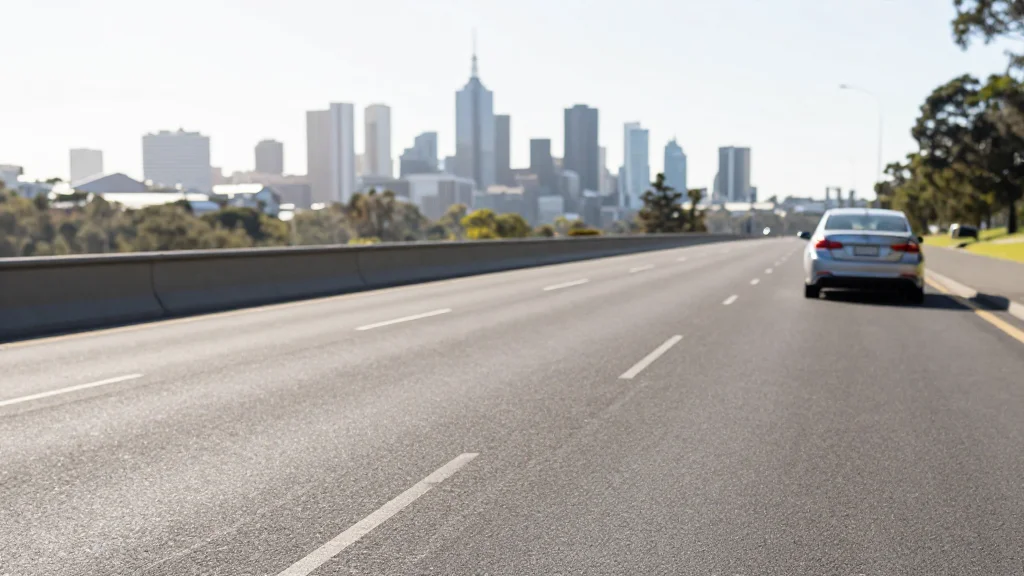
The Surprising Upside of Expensive Fuel: Less Traffic
Rising fuel prices in Australia, spurred by the Middle East conflict, have sharply cut road traffic in Melbourne and Sydney. Government data shows a measurable decline in vehicle volumes on major corridors. Higher‑income commuters, less sensitive to fuel costs, benefit...
Aussie Gas Hippopotomus Plugs the Tax Pipe
Australian Labor backbenchers are urging Treasurer Jim Chalmers to raise taxes on gas exporters as voter anger over resource profits grows. Resources Minister Madeleine King defended the existing tax regime, citing billions of dollars of private investment in LNG projects....
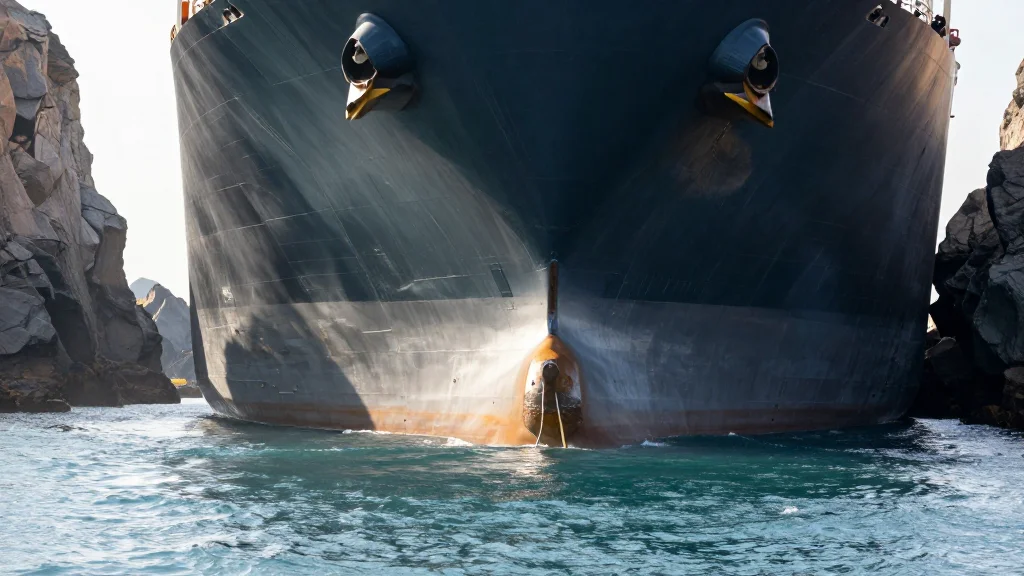
Six Weeks to No Fuel at All
The Strait of Hormuz has been effectively shut since late February, and the last tanker that cleared the waterway on February 28 is expected to arrive around April 20, ending the flow of pre‑closure oil stocks. Once those inventories are exhausted, global...

President Trump’s ‘Psychological Evaluation’
The article argues that the psychology of national leaders, especially Donald Trump, is a decisive factor in shaping geopolitical outcomes. It places Trump’s behavior within a historical tradition where leaders’ mental make‑up has steered wars, alliances, and economic shifts. By...

New Data Shows How the 5% Deposit Scheme Inflated Home Prices
Australian ABS data shows first‑time buyer mortgages hit AUD 19.31 billion (≈ US$12.7 billion) in the Dec 2025 quarter, a 16% rise from the prior quarter and the strongest level since Q1 2021. The average loan size also jumped 8.3% to AUD 607,500 (≈ US$401,000), a record high....
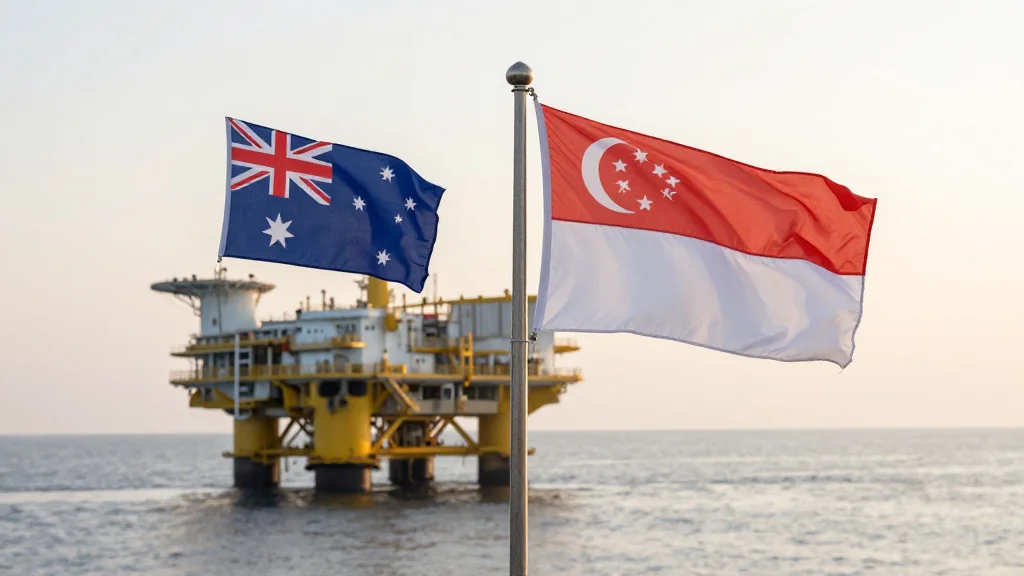
Australia Bends Asia over LNG Barrel
Australian Prime Minister Anthony Albanese announced plans to expand domestic gas production but stopped short of ruling out higher taxes on LNG exports in the upcoming May budget. Singapore’s Prime Minister Lawrence Wong warned that rising Australian energy costs could...