
5 Areas of Your Home to Renovate Before Retiring
Most U.S. seniors prefer to stay in their own homes, but many older houses lack age‑friendly features. Experts recommend focusing renovations on high‑impact areas such as bathrooms, kitchens, entryways, flooring, and overall layout before mobility declines. Affordable upgrades like grab bars, curbless showers, wider hallways, and custom fixtures can prevent falls and accommodate wheelchairs. Costs range from a few hundred dollars for simple modifications to $70,000 for a residential elevator, prompting many retirees to tap home‑equity financing or specialized grants.

Fees for Financial Advice Are Climbing. A New Study Finds It’s Worth the Cost
New research from the TIAA Institute confirms that households employing financial advisors hold an average net worth of $800,000, more than double the $388,000 of those who go solo, and exhibit stronger saving habits. A separate Envestnet MoneyGuide study shows...

How to Add Gold to a Retirement Portfolio Using the Bucket Strategy
The three‑bucket retirement strategy divides assets into short‑term cash, medium‑term income, and long‑term growth holdings. Adding gold is recommended for the third bucket, where it can act as an inflation hedge and diversify against stock volatility. Experts advise beginners to...

Co-Signed a Loan for an Adult Child? Here’s How It’s Affecting Your Credit — and How to Fix It
Parents often co‑sign loans for adult children to secure better rates or qualify for credit. The co‑signed loan appears on the parent’s credit report, so missed payments can lower the parent’s score and raise their debt‑to‑income ratio. This liability can...

New Student Loan Repayment Plan Launches Soon. Here’s What Borrowers Can Expect
The U.S. Department of Education will roll out the Repayment Assistance Plan (RAP) on July 1, replacing most existing income‑driven repayment (IDR) options for new federal student loan borrowers. RAP ties monthly payments to adjusted gross income, with rates from 1%...

Apple to Pay Out $250 Million in iPhone AI Settlement. Here’s Who’s Eligible
Apple has agreed to a proposed $250 million class‑action settlement over allegations that its Apple Intelligence features were misrepresented. Eligible iPhone 15 and 16 models purchased between June 10 2024 and March 29 2025 could receive a presumptive $25 per device, with actual payouts ranging...

Why Credit Scores Often Drop in Retirement — and 5 Ways to Stop the Bleeding
Retirees often see their credit scores dip, not because retirement itself lowers the score, but due to shifts in credit mix, utilization and payment patterns. Paying off a mortgage or closing old cards reduces the diversity and length of credit...

Berkshire Hathaway Just Used a Warren Buffett Deepfake to Warn About AI
At Berkshire Hathaway’s 2026 annual meeting, CEO Greg Abel introduced a deep‑fake video of Warren Buffett to illustrate the growing cybersecurity threat posed by advanced AI. The synthetic clip, which showed Buffett speaking at a podium, was created without any...

The 3 Money Personalities — and Why Yours Determines Whether You’ll Retire Comfortably
The article outlines three "money personalities"—spender, saver, and avoider—and explains how each influences retirement readiness. It highlights that Social Security alone won’t fund a comfortable retirement, so understanding personal habits is crucial. Practical tips include automating 401(k) contributions, using high‑yield...

What Jim Cramer’s Investing Misses Can Teach You
Jim Cramer’s high‑profile buy‑and‑sell calls illustrate why active stock picking rarely outperforms the market. Over the past 15 years, only about 12% of U.S. large‑cap active funds beat the S&P 500, underscoring the difficulty of his approach. The article extracts three...

Kevin O’Leary’s ’90-Day Number’ Rule Could Change How You Think About Retirement
Kevin O’Leary’s “90‑day number” asks savers to total income and expenses over the past 90 days, then subtract the two. A positive result shows surplus cash that can be funneled into a 401(k), IRA or other retirement vehicle, while a...

The 3 Bank Fees Retirees Pay Without Realizing — And How to Eliminate Every One
Retirees often overlook small bank fees that can erode their fixed incomes, with typical costs running a few hundred dollars each year. The three most common charges are monthly maintenance fees, overdraft or non‑sufficient‑funds (NSF) fees, and out‑of‑network ATM or...

7 Ways Retirees Can Save Money at Costco
Costco’s executive membership adds a $65 annual fee but returns 2% cash back on purchases, breaking even after $3,250 of annual spend. Retirees can also tap Costco’s lower‑priced pharmacy, travel bundles, gas stations, and in‑store hearing‑aid and eyeglass centers for...

‘Saver’s Paralysis’: Why Having Too Many Options Is Keeping You From Growing Your Wealth
The article warns that an abundance of savings and investment options can trigger "saver's paralysis," where consumers delay any allocation of funds. This inaction leaves money stuck in low‑yield checking accounts, eroding purchasing power as inflation bites. It stresses the...

Why Keeping More Than $250,000 in One Bank Account Could Put Your Money at Risk
Saving large cash balances in a single bank can expose more than $250,000 to uninsured risk. The FDIC and NCUA each insure deposits up to $250,000 per depositor per institution, and any amount above that is not protected if the...

Starting to Invest in Your 40s? Here’s What It Could Take to Catch Up
Investing in your 40s may feel late, but time remains a powerful ally when contributions are consistent. Most employers (over 80%) offer a 401(k) match averaging just under 5%, essentially free money that can boost early savings. A modest $50...

Sell in May and Go Away? Why the Old Investing Adage Doesn’t Hold Up in 2026
April 2026 delivered the strongest monthly gains for the S&P 500 and Nasdaq since 2020, prompting fresh scrutiny of the age‑old “sell in May and go away” adage. Research from LPL Financial shows the traditional six‑month May‑October window has historically...

How Elon Musk’s SpaceX Could Supercharge the Next IPO Frenzy
Elon Musk’s SpaceX has confidentially filed for an IPO, targeting a $2 trillion valuation and a $50‑$75 billion capital raise. The filing arrives after a steep 83% drop in IPOs in 2022 and a sluggish 154 listings in 2023, sparking speculation that...

Roth or Traditional IRA at 60: What’s the Smartest Move?
For investors turning 60, the choice between a Roth and a traditional IRA hinges on tax timing, required minimum distributions and income limits. Both accounts share the same annual contribution cap, but a traditional IRA offers a tax deduction now...

Medicare Won’t Cover It: 5 Common Health Expenses That May Blindside Retirees
Medicare leaves significant gaps that can surprise retirees, especially for routine dental, vision and hearing services that are largely excluded from Original Medicare. The most costly omission is long‑term care, with a 65‑year‑old needing roughly $135,000 to cover future expenses,...

How Retirees Can Enjoy Small Luxuries Without Draining Their Savings
Retirees can enjoy a sense of luxury without eroding their nest egg by focusing on affordable experiences, quality purchases, and strategic use of loyalty programs. The article suggests swapping costly vacations for local winery tours, buying high‑quality linens once, and...

Is Debt Settlement a Good Idea?
Debt settlement lets consumers negotiate reduced payments on unsecured debts, often cutting balances by about half. The process typically involves stopping payments, building a savings pool, and working with a for‑profit relief company that charges fees only after a settlement....

The Real Cost of Ozempic, Wegovy and Other GLP-1 Drugs — With and Without Insurance
GLP‑1 drugs such as Ozempic, Wegovy and Zepbound command list prices north of $1,000 per month, making them among the most expensive outpatient medications. Insurance can dramatically lower out‑of‑pocket costs, with copays ranging from $25 to $50 for many enrollees,...

Will Polymarket Refund Users After Soldier’s Insider Trading Arrest?
Polymarket and rival Kalshi disclosed multiple insider‑trading incidents, the most notable involving U.S. special‑forces soldier Gannon Ken Van Dyke, who allegedly earned about $400,000 by betting $33,000 on Venezuelan‑related events. Both platforms said they are cooperating with regulators but have...

A Beginner’s Guide to Owning Bitcoin, Ethereum and Solana
Money.com’s beginner guide walks new investors through the fundamentals of buying Bitcoin, Ethereum and Solana, explaining how each token works and why they differ. It outlines the two main custody options—exchange‑based storage and self‑custody via hot or cold wallets—highlighting the...

What Happens to Your Brokerage Account When You Die — And Why Many People Haven’t Set It Up Right
When a brokerage account owner dies, the fate of the assets hinges on how the account is titled. A Transfer‑on‑Death (TOD) designation or joint ownership can move the holdings to heirs instantly, avoiding probate. Without a beneficiary, the account enters...

Crypto Curious? Here’s a Step-by-Step Guide to Buying Bitcoin for the First Time
Bitcoin has moved from niche hobby to mainstream investment within a decade, but its volatility and technical hurdles still intimidate newcomers. Financial advisors typically recommend limiting exposure to no more than 5% of a portfolio, often starting with as little...

StubHub to Refund $10 Million in Fees: Do You Qualify?
The Federal Trade Commission sued StubHub for concealing mandatory fees at checkout, prompting a settlement that includes a $10 million refund to affected buyers. The refund covers U.S. ticket purchases made between May 12 and May 14, 2025, and will be issued automatically within...

These 3 Strategies Can Help Retirees Avoid a Big Portfolio Risk
Retirees face heightened sequence‑of‑returns risk, where early‑career market drops force premature withdrawals that can cripple long‑term portfolio recovery. The article recommends three tactics: holding one to three years of liquid cash, rebalancing to a more conservative asset mix before exiting...

How to Travel in Retirement While Cutting Costs: The Slow Travel Strategy Gaining Popularity
Retirees are turning to the "slow travel" model, staying longer in fewer destinations to cut airfare and lodging costs. Hilton’s 2025 travel trends report confirms the approach is gaining traction among older travelers. By booking off‑peak, securing month‑long rentals, and...

Retirees Are a Prime Target for Identity Theft. This 15-Minute Checkup Could Save You Thousands
Retirees are increasingly targeted by identity thieves, with the FBI reporting an average loss of $38,500 per victim in 2025. The article outlines a four‑step, 15‑minute checkup—credit monitoring, Social Security review, Medicare statement audit, and password hygiene—to curb fraud. It...

CIT Bank High-Yield Savings Accounts Review for 2026
CIT Bank’s Platinum Savings account delivers a competitive 3.75% APY for balances of $5,000 or more, while balances under that threshold earn only 0.25%. The product requires a $100 opening deposit, imposes no monthly fees, offers unlimited transactions and daily...

One of Warren Buffett’s Final Shareholder Letters Had a Warning Most People Missed
In Berkshire Hathaway’s 2024 shareholder letter, Warren Buffett warned that "fiscal folly"—government policies that weaken currencies—could erode the value of paper money. He emphasized that fixed‑coupon bonds offer little protection against such currency erosion and reiterated Berkshire’s commitment to deploying...

From AI to Energy, ‘Thematic’ ETFs Make It Easy to Invest in Hot Market Trends
The U.S. ETF universe has now eclipsed the number of listed stocks, with roughly 4,630 ETFs versus 4,200 equities. This expansion fuels the rise of thematic ETFs that let investors target fast‑growing trends such as AI‑driven data‑center infrastructure, volatile energy...

Workers Want Help Managing Their Money. Should Employers Step In?
Employers spend roughly $90 billion annually on wellness programs, yet financial health remains a blind spot for many workers. New data shows 85% of adults want to improve their finances, but only about half of large firms and a third of...

The IRS Statute of Limitations on Tax Debt: What Expires and When
The IRS has a ten‑year Collection Statute Expiration Date (CSED) that begins when a tax liability is assessed, not when the return is filed. Certain actions—bankruptcy filings, offer‑in‑compromise applications, installment agreements, CDP hearings, or six‑month foreign stays—temporarily suspend the clock....

The Hidden Tax Trap Waiting Inside Your Inherited IRA
Inheriting a traditional IRA triggers a 10‑year distribution rule for non‑spouse beneficiaries, often accompanied by required minimum distributions (RMDs). Withdrawals are treated as ordinary income, potentially pushing heirs into higher tax brackets and affecting other benefits. Roth IRA inheritances avoid...

Why Paying Just Minimum Credit Card Payments Can Be Dangerous in Retirement
The article warns retirees that relying on minimum credit‑card payments can quickly erode a fixed income because APRs typically sit between 20% and 30%. While the minimum keeps accounts current, interest compounds, turning modest balances into costly debt. It advises...

How Much Money You Should Really Keep in Your Checking Account — and Why
Keeping too much cash in a checking account sacrifices potential investment returns, while too little can leave you vulnerable to unexpected expenses. Financial experts recommend a buffer of one to two months of regular spending plus an additional 30 percent...

The ‘First Year of Retirement’ Spending Trap That Can Catch Anyone
Retirees often stumble into a "first‑year spending trap" as they shift from a steady paycheck to drawing down savings, Social Security and investment accounts. The transition brings unexpected costs—home repairs, new hobbies, travel, and taxes on withdrawals—that can trigger either...

The 5-Minute Money Habit That Helps Prevent Costly Oversights
A five‑minute daily financial check‑in helps prevent costly oversights by turning routine tasks into a habit. The method splits into five one‑minute steps: confirm received income, scan upcoming bill due dates, review a single savings goal, commit to one actionable...

When Both Spouses Claim Social Security at 62, Here’s How Much They Leave on the Table
Social Security benefits can be claimed at age 62, but doing so caps monthly payments at $2,969 per spouse, far below the $5,181 maximum at age 70. For a married couple, early claiming yields $5,938 combined monthly, versus $8,304 at...
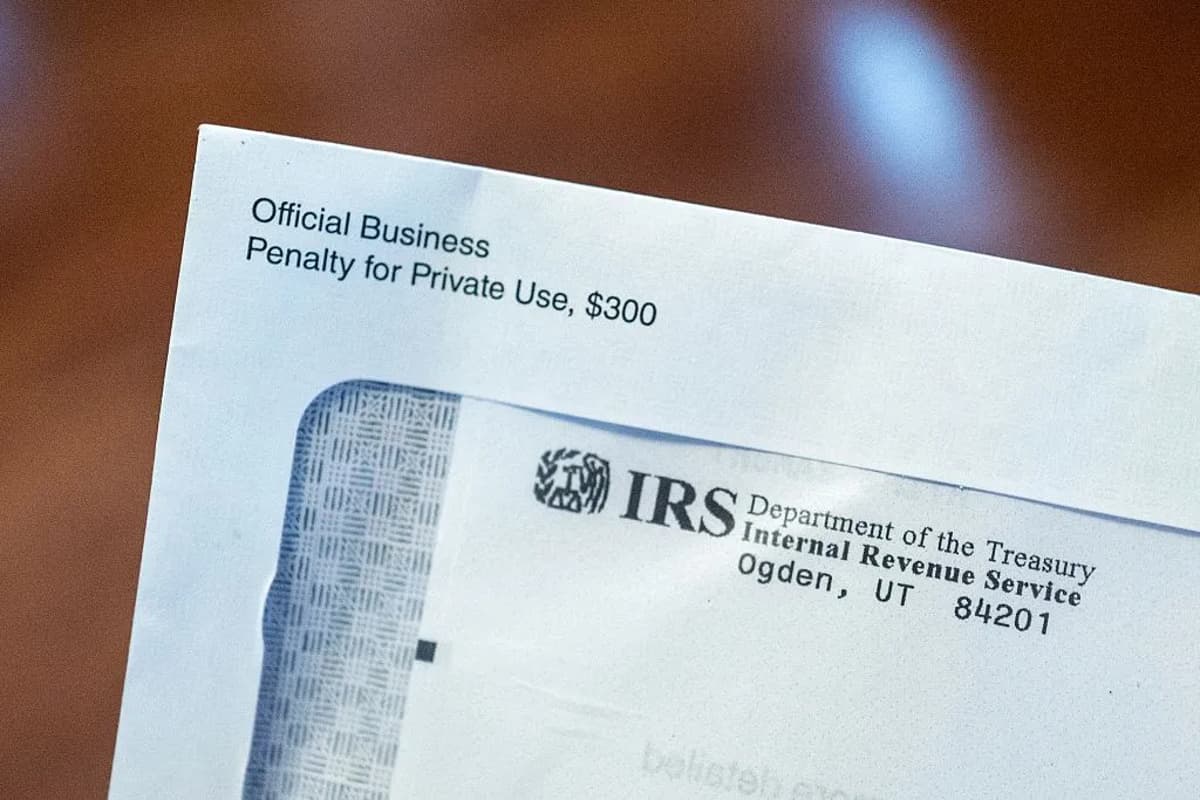
5 IRS Letters That Mean You’re Running Out of Time (and What to Do About Each One)
The IRS issues a series of five letters—CP14, CP501, CP503, CP504, and LT11—to alert taxpayers of unpaid balances and escalating enforcement actions. A CP14 starts the process by stating the amount due, while CP501 and CP503 serve as reminders before...

Warren Buffett’s Boring Stock Picks — and Why They Keep Winning
Investor Warren Buffett has consistently outperformed the S&P 500 by avoiding flashy growth stocks and concentrating on fundamentals. His playbook centers on three pillars: companies with durable moats, predictable cash flow that fuels dividends and buybacks, and continuous self‑investment. The...

The ’24-Hour Rule’ That Keeps Retirees From Blowing Their Savings on Impulse Buys
Impulse buying remains a pervasive habit, with 89% of shoppers admitting to spur‑of‑the‑moment purchases and the average consumer spending $282 per month on such items in 2024. Retirees, who rely on fixed incomes and savings, are especially vulnerable; a modest...

How Downsizing Your Closet Can Get You Closer To Retirement
Retirement planning now includes a practical, low‑cost tactic: decluttering your closet. By selling unused clothing, electronics, and collectibles, retirees can generate immediate cash that can be parked in a high‑yield savings account or invested in the S&P 500 for potential long‑term...

The Hidden Reason So Many Retirees Run Out of Money
A Fidelity Investments study projects that a 65‑year‑old retiring in 2025 will spend roughly $172,500 on health‑care and medical expenses throughout retirement, up from $80,000 in 2002. The estimate reflects accelerating health‑care inflation that outpaces general consumer prices and excludes...

5 Little-Known Rules That Can Increase Your Social Security Payments
The article outlines five lesser‑known Social Security rules that can materially boost retirement income. It explains that the earnings test disappears at full retirement age, allowing previously reduced benefits to be restored. It also highlights the ability to pause benefits...

‘Own the Haystack, Not the Needle.’ Jack Bogle’s Investing Rules Everyone Over 50 Should Follow
Jack Bogle’s investing philosophy urges investors over 50 to favor broad market exposure over individual stock picking. By using low‑cost index funds that track the S&P 500, retirees can capture the index’s roughly 10 % historical return while minimizing fees. Bogle also...

What Happens to Your Social Security If Your Spouse Dies?
Losing a spouse can dramatically reshape a retiree’s income, but Social Security offers survivor benefits that can cushion the loss. A surviving spouse may begin receiving reduced benefits at age 60, with full benefits—up to 100% of the deceased partner’s...