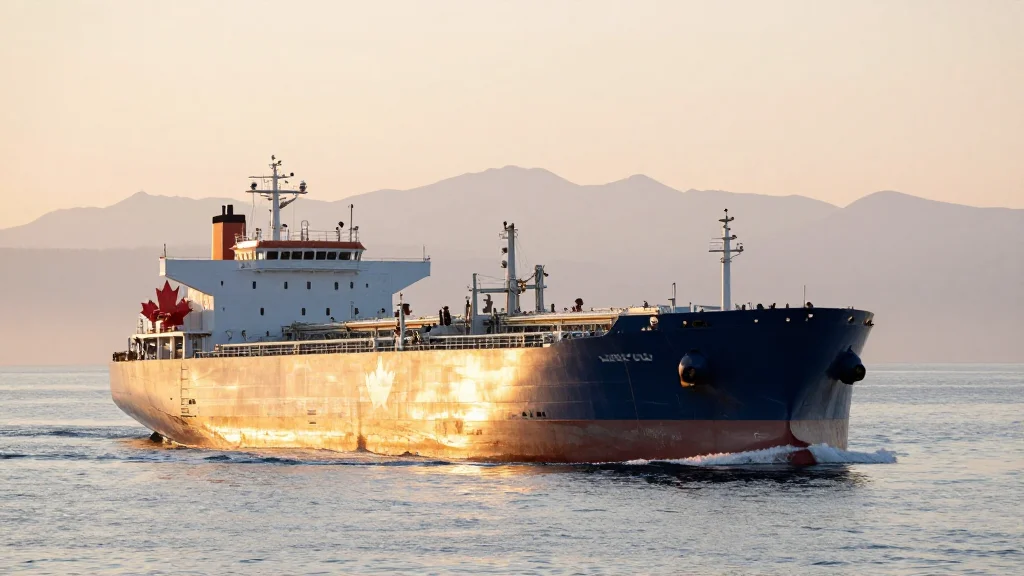
South Korea Has An Oil Problem. Canada Is Helping To Fix It
The Strait of Hormuz blockade has forced South Korea to look beyond the Middle East for crude, and Canada’s Trans‑Mountain Expansion (TMX) now ships oil to the Pacific, letting Korean refiners buy Western Canadian Select at about $10 per barrel cheaper than Saudi or U.S. grades. Since TMX entered service in May 2024, Canadian exports to South Korea surged from zero to CAD $411 million (≈ US $304 million) and 4.5 million barrels by September 2025. The shift curtails a potential 74% jump in Korean electricity costs and validates the CAD $34 billion (≈ US $25 billion) pipeline investment, reshaping global oil flows away from the United States.

Trump’s Waiver Of Jones Act Fails To Cool Oil Prices
President Trump issued a 60‑day Jones Act waiver hoping to shave a few cents off U.S. fuel costs, but oil prices remain elevated as global supply disruptions and rising crude costs dominate. Brent fell 4.2% to $95.09 per barrel and...

Oil Pulls Back as IEA Cuts Demand Outlook
Oil prices slipped below $100 a barrel as the International Energy Agency sharply reduced its 2026 demand‑growth forecast, marking the first annual demand decline since the pandemic. The cut, combined with a lull in U.S.–Iran confrontations, has shifted market focus...

How the Iran War Is Disrupting Gulf Economies: 5 Key Effects
The Iran‑U.S./Israel war has effectively shut the Strait of Hormuz, cutting global oil flows by roughly 8 million barrels per day and driving war‑risk insurance premiums up to 1,000 %. Gulf Cooperation Council economies are confronting steep GDP declines—up to 14 % in...

Colombia’s Energy Crisis Deepens as Oil Output Falls and Imports Rise
Colombia’s oil production slipped to 734,924 barrels per day in February, a 2.7% year‑over‑year decline and the lowest level since July 2021. Natural‑gas output also fell, pushing imports to roughly 20% of total consumption, up from under 4% a year earlier....

How Iran’s Dark Fleet Is Quietly Keeping Oil Markets Afloat
Iran’s “dark fleet” of opaque tankers is quietly sustaining oil flows through the Strait of Hormuz despite a visible collapse of more than 90% in regulated traffic. By using shell‑company ownership, AIS deactivation and ship‑to‑ship transfers, Iran moves roughly 1.5‑1.7 million...

Three Energy Stories That Actually Matter Right Now
The Tennessee Valley Authority’s partnership with GE Hitachi to build a 300 MW small modular reactor is projected at $5.4 billion, roughly $18 million per megawatt—significantly higher than traditional nuclear projects. Chinese AI providers are undercutting U.S. firms by charging $2‑3 per million output...

Global Energy Shortages Drive Renewed Reliance on Coal
Disruptions to oil and gas flows, especially the closure of the Strait of Hormuz, are prompting Asian and European nations to revive coal as a quick‑fix energy source. Global coal consumption has risen by roughly 1.3 billion tons since 2020, driven...

India’s Nuclear Bet Is Starting To Pay Off
India’s 500‑megawatt fast‑breeder reactor in Tamil Nadu reached criticality this month, becoming self‑sustaining and only the world’s second commercial breeder plant. The milestone advances India’s ambition to expand nuclear capacity from roughly 9 GW today to 100 GW by 2047, bolstering its clean‑energy...

Strait of Hormuz Constraints Keep Oil Prices Elevated
Oil prices hover near $100 per barrel despite the U.S.–Iran cease‑fire, because the Strait of Hormuz remains tightly controlled by Iran’s IRGC. Traffic through the chokepoint is limited to managed routes, preventing a return to normal commercial shipping. Analysts from...

Standard Chartered: Oil Price Correction Is Likely Overdone
Standard Chartered warns that the recent oil‑price correction may be too deep, noting Brent crude at $95.57/bbl and WTI at $96.99/bbl after the steepest drop since the Iran war began. The bank’s Q2 forecast still targets Brent around $98 and...

Shale Play Pushes Argentina Oil Output To All-Time High
Argentina’s oil output surged to 847,000 barrels per day, a 16% year‑over‑year rise driven by the Vaca Muerta shale play. Production in the Neuquén Basin jumped 30%, positioning the country as Latin America’s fourth‑largest oil producer. The government targets 1 million barrels...

Europe’s Gas Market Faces a Brutal Storage Refill Season
Europe’s gas market has cooled from March’s three‑year highs, but analysts warn the relief is fleeting. Storage levels sit at just 29% of capacity, well below the 35% benchmark from a year ago, leaving the continent exposed as it races...

Tehran Takes the Strait — and the Premium
Iran maintained roughly 1.9 million barrels‑per‑day of crude exports in March, even as rival Gulf shipments were curtailed. By restricting Hormuz traffic to vessels linked to Tehran, the country turned the strait into a de‑facto gatekeeper, limiting eastbound supply. This scarcity...

Petrostates Without Oil Export Routes Take the Hardest Hit
The February‑March closure of the Strait of Hormuz eliminated roughly 11 million barrels per day of crude and fuel exports from the Middle East, forcing Iraq, Kuwait and Bahrain to slash output dramatically. By contrast, Saudi Arabia, the UAE and Oman...

How China Positioned Itself to Win the Global Energy Crisis
China entered the Iran‑War with extensive oil and gas stockpiles and a clean‑energy infrastructure that outpaces any other nation. The conflict has throttled Hormuz shipments, prompting a rapid global shift toward renewables where China already dominates solar panels, wind turbines,...

Why Pressure Toppled Caracas but Not Tehran
U.S.‑backed political transition in Venezuela, led by acting president Delcy Rodríguez, has stabilized the country and revived oil production, with exports topping 1 million barrels per day in March. Polls show nearly 80% of Venezuelans feel conditions are the same or...

$2B Investment Drives Expansion of U.S.-Canada Oil Flows
Bridger Pipeline LLC announced a $2 billion, 650‑mile pipeline from the U.S.–Canada border to Wyoming, capable of moving up to 1.13 million barrels per day, with an initial flow of 550,000 bpd and optional tie‑ins to the Bakken shale. The line is positioned...

A Global Oil Crisis Is Giving Suriname’s Offshore Dreams New Life
Suriname’s offshore Block 58 is gaining momentum as the 2026 global oil shock pushes buyers toward non‑Middle‑East sources. TotalEnergies says the $10.5 billion Gran Morgu project is 50% complete and aims for 220,000 barrels per day by 2028. The basin could hold up...

Why the Power Boom Could Break the Grid
U.S. electricity demand, spurred by rapidly expanding AI data centers, is projected to outpace new generation and transmission capacity, raising concerns of shortages and reliability lapses. Short‑term measures such as keeping aging polluting plants online, encouraging self‑generation, or tolerating degraded...

U.S. Moves to Secure Venezuela’s Gold as Influence Deepens After Intervention
The U.S. has shifted from sanctions to commercial deals, securing a $100 million shipment of Venezuelan gold—the first in over 20 years—under a limited Treasury licence. Trafigura is set to purchase 650‑1,000 kg of doré bars from state miner Minerven, with the...

What Beijing Is Learning From Operation Epic Fury
Beijing is closely analyzing the United States' Operation Epic Fury, the air campaign against Iran, to gauge American precision‑strike capacity, munitions depletion and decision‑making under the Trump administration. Analysts note that while the U.S. can project overwhelming force, its ability...

U.S. Auto Industry Proposes Vehicle Fee to Replace Gas Tax
The Alliance for Automotive Innovation proposes replacing the 18.4¢ per‑gallon federal gas tax with a weight‑based vehicle fee to sustain the Highway Trust Fund. EVs now represent 2.5% of U.S. light‑duty vehicles and accounted for 9.6% of new sales in...

The Two-Week Window That Could Break Global Commodity Markets
A fragile web of commodity chains—oil, gas, naphtha, fertilizer, helium and logistics—is shifting from price volatility to deliverability risk. Physical shortages are surfacing even as paper markets appear stable, and the next two weeks could see cascading disruptions that spark...

Trump Loses Grip as Oil Surge Signals Deeper Crisis
Oil prices surged past $140 a barrel as renewed U.S.-Iran tensions reignited market bullishness, pushing WTI and Brent to levels not seen since 2008. OPEC+ is weighing a 206,000‑barrel‑per‑day production increase for May, despite most members having cut output amid...

Big Oil Returns to Exploration as Reserves Dwindle
Big Oil is reviving upstream exploration after years of underinvestment, targeting new basins in Namibia, Guyana, Brazil and other regions to replace dwindling reserves. European majors BP, Shell and TotalEnergies have expanded acreage and increased spending, while U.S. supermajors Exxon...

Saudi Arabia Trades Oil Barrels for Batteries
Saudi Arabia is accelerating its shift from oil to energy storage, earmarking $64 billion in mining revenue by 2030 and targeting 48 GWh of domestic battery capacity. The kingdom aims to challenge China’s dominance by developing lithium‑metal technology and exploiting its own...

How A Magnet Shortage Could Bring The $10 Trillion Tech Sector to a Halt
Rare‑earth permanent magnets, essential for defense, automotive and consumer tech, are overwhelmingly produced in China—90% of processing and 93% of magnet manufacturing. A 2025 export restriction caused Ford to halt Explorer production, highlighting the fragility of the supply chain. REalloys...

Why Nuclear Won’t Shield Europe From Energy Price Shocks
Europe’s existing nuclear fleets, exemplified by France, blunt gas‑price spikes but cannot fully insulate electricity markets. New nuclear builds such as the UK’s Hinkley Point C are delayed to 2030 and now cost roughly $61 billion, far higher than the original $22.5 billion...

Data Center Spending Is About to Rival the World’s Biggest Energy Markets
Data center capital expenditure hit $770 billion in 2025, surpassing upstream oil‑and‑gas and solar‑PV investments. About 40 % of the spend went to IT hardware while the remainder funds cooling, power‑distribution and other utilities, matching global solar‑PV capex. The United States accounts for...

China Pushes Electric Vehicles Toward the Five-Minute Charge Era
Chinese EV makers are accelerating ultrafast charging, with BYD unveiling 1.5 MW Flash Chargers that can replenish a battery from 10% to 70% in five minutes, promising up to 600 miles of range. The technology relies on a new lithium‑manganese‑iron‑phosphate chemistry...

Why Africa Must Build Energy Capacity Fast
Africa still has 600 million people without electricity, and demand will surge as the population is set to double by 2050. To meet needs, the continent must increase power‑generation capacity ten‑fold by 2065 and upgrade grid infrastructure. Financing gaps are acute;...

Drillers See Triple-Digit Crude and Hit the Brakes
Brent crude has surged past $100 a barrel and WTI topped $90, creating a price environment that comfortably exceeds shale breakeven levels. Yet U.S. oil drillers remain hesitant, citing the ongoing Middle East conflict as a major obstacle to investment...

Is It Time for Energy Rationing to Return?
The International Energy Agency (IEA) has urged governments and consumers to slash energy use as the U.S.–Israeli attack on Iran fuels the biggest oil disruption in history, with the Strait of Hormuz closed for weeks. To blunt price spikes, the...

Why Spain Is Weathering Europe’s Energy Crunch Better Than Most
Spain’s electricity market is insulated from the current European energy crunch thanks to a renewable‑heavy mix—almost 60% of its power comes from solar, wind and nuclear—keeping the average price at about €14/MWh (≈$15) versus over €100/MWh (≈$107) in Italy, Germany...

The Cushion Is Gone and the Oil Market Is Now Exposed
The global oil market absorbed the shock of the largest supply disruption in history – the closure of the Strait of Hormuz – thanks to pre‑war inventory cushions. For roughly four weeks, prices remained muted as surplus stocks and strategic...
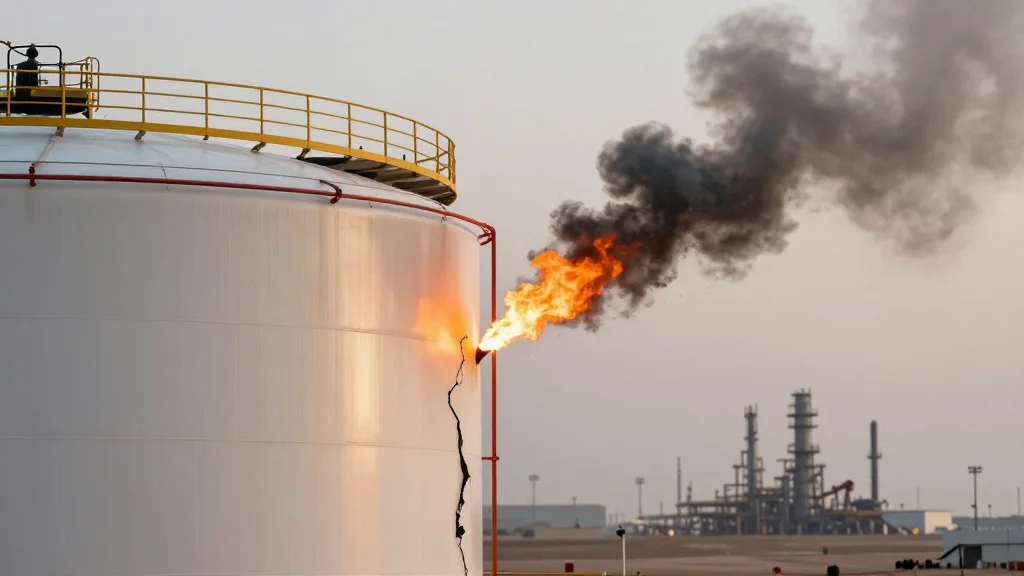
The Iran War Has Already Unleashed a $25 Billion Energy Repair Bill
The ongoing Iran conflict has already generated an estimated $25 billion in energy‑sector repair costs, according to industry analysts. Damage to key oil refineries, pipelines and the strategic Kharg Island hub is forcing Iran to divert resources toward emergency reconstruction. The...

Will the Iran War Revive Russia’s Power of Siberia 2 Pipeline?
The Iran‑Israel war has shut the Strait of Hormuz, driving up Asian LNG prices and prompting Beijing to reconsider its heavy reliance on maritime energy imports. Analysts say the disruption revives interest in the stalled Power of Siberia‑2 pipeline, a...

Ecuador’s Broken Oil Industry Faces Violent Headwinds
Ecuador’s oil output is collapsing as landslides, aging pipelines and a wave of sabotage slash production. The country’s role as a transshipment hub for roughly 70% of the world’s cocaine has sparked a 20‑fold surge in fuel theft and violent...

Can India Afford to Quit Coal?
India remains heavily dependent on coal, which supplies roughly three‑quarters of its power, even as the economy expands at 7.5% annually and electricity demand surges. Solar capacity has exploded from 4 GW to 140 GW in a decade, putting the country on...

Nuclear in the Spotlight Amid Oil, Gas Crunch
The ongoing Middle East oil‑gas disruption is reviving interest in nuclear power as a low‑carbon baseload source. European leaders, including Ursula von der Leyen, have pledged €200 million for innovative small modular reactors and urged member states to extend existing plant...

Big Oil Flocks to Alaska in Record-Setting Petroleum Lease Sale
The National Petroleum Reserve‑Alaska held its first lease sale in seven years, generating a record $163.7 million in high bids and awarding 187 leases across 1.33 million acres. Major oil companies such as ExxonMobil, ConocoPhillips, and a Repsol‑Shell consortium secured tracts, marking...

The Startup That Cracked the Code for Commercial Thermal Batteries
Fourth Power, founded by MIT professor Asegun Henry, announced a breakthrough thermal‑battery design that uses molten metal as the heat‑transfer medium stored in carbon bricks. The system operates at 1,900‑2,400 °C, delivering markedly higher power density and allowing the unit to...

Oil Whipsaws as War Risk and Emergency Supply Measures Collide
Oil prices swung sharply this week as escalating war risk in the Middle East collided with a series of emergency supply measures. WTI fell to $94.13, down 3.98%, after traders weighed tanker delays in the Strait of Hormuz against strong...

The Race to Stabilize Oil Markets as the Iran War Expands
The Iran‑Israel conflict is spilling into global oil markets as strikes target both the Hormuz corridor and Iran’s Kharg Island export hub. U.S. officials have responded with a Jones Act waiver, Strategic Petroleum Reserve drawdowns, and the prospect of releasing...

Venezuela’s Security State Hardens as Sanctions Relief Lifts Oil Hopes
Venezuela has reshuffled its security leadership, appointing intelligence chief Gustavo González López as defense minister, signaling tighter military and surveillance control. The change coincides with limited U.S. sanctions waivers that have eased pressure on PDVSA, prompting a rally in PDVSA‑linked bonds...

Standard Chartered Predicts Oil Prices Will Remain Higher For Longer
Standard Chartered raised its 2026 Brent forecast to $85.50 a barrel, up from $70, citing a 7.4‑8.2 million bpd supply cut from the Middle‑East war and limited off‑ramps. The bank projects quarterly Brent prices ranging from $78 in Q1 to $98...

How the Iran War Could Trigger a Global Credit Crunch
The Iran‑Israel war has shut the Strait of Hormuz, cutting off a vital source of petro‑capital that Gulf sovereigns traditionally channel into global finance. This disruption threatens the $1.4 trillion of assets held in UAE financial hubs and has already forced...

Why Taking Over Utilities Won’t Deliver Cheap Electricity
Renewable energy’s rapid cost declines are outpacing traditional utility models and municipalization efforts aimed at lowering consumer rates. The authors argue that buying outdated utility assets carries financial risks, including overpaying, stranded‑asset exposure, and uncertain savings despite cheaper municipal debt....

U.S. Intervention in Venezuela Could Help Solve Colombia’s Energy Crisis
Colombia’s natural‑gas output fell to a multi‑decade low of 683 mmcf/d in January 2026, a 17 % drop year‑over‑year, forcing the government to lean heavily on costly LPG imports that now cover about 30 % of domestic gas demand. The shortfall threatens electricity...