
Ultrafast Laser Pulses Bring Diamond-Based Quantum Internet Closer to Reality
Researchers at Humboldt‑Universität and the Ferdinand‑Braun‑Institut have demonstrated the SUPER (Swing‑UP of the quantum EmitteR population) method for generating single photons from diamond tin‑vacancy (SnV) centers. The technique employs two precisely timed femtosecond laser pulses to excite the qubits while cleanly separating the control light from the emitted photons. Experiments show that SUPER efficiently produces high‑purity photons and preserves the internal spin state, a prerequisite for entanglement across quantum network nodes. The work, published in Nature Communications, moves diamond‑based quantum repeaters and distributed quantum computing closer to practical deployment.

New Microscope Offers Sharper View Into Momentum Space
Researchers at Forschungszentrum Jülich have unveiled a home‑built momentum microscope that uses a tabletop UV laser instead of large accelerator facilities. The new electron‑optics design delivers sharper momentum‑space images and captures spin, orbital and temporal information in a single measurement....
Quantum Computers Must Overcome Major Technical Hurdles Before Tackling Quantum Chemistry Problems
A new Physical Review B feasibility study finds that both the variational quantum eigensolver (VQE) and quantum phase estimation (QPE) algorithms face prohibitive technical barriers for quantum chemistry. VQE demands error rates far below today’s noisy devices and can require decades...

Local Droplet Etching Yields More Symmetric Quantum Dots for Integrated Photonics
Researchers at Johannes Kepler University and the State University of Campinas have demonstrated a local droplet etching (LDE) technique to fabricate InGaAs quantum dots embedded in AlGaAs with unprecedented symmetry and low surface density. The dots exhibit radiative lifetimes around...
Stacked Quantum Materials Enable Precise Spin Control without External Magnetic Fields
Researchers at Chalmers University have demonstrated precise control of electron spin by stacking a perpendicular magnetic layer with a topological van der Waals material. The heterostructure switches magnetization using very small electrical currents and operates at room temperature without external magnetic fields....
Scalable Quantum Batteries Can Charge Faster than Their Classical Counterparts
Researchers from Shenzhen International Quantum Academy and Spain's CSIC have built a superconducting‑qubit quantum battery that charges faster than a comparable classical device under equal energy constraints. The experiment, published in Physical Review Letters, demonstrates a quantum charging advantage using...

Ultrafast Computing: Light-Driven Logic Tops 10 Terahertz in WS₂
A recent Nature Photonics paper demonstrates that ultrashort light pulses can execute logical operations in a tungsten disulfide (WS₂) platform at frequencies exceeding 10 terahertz. The experiment shows that photons, rather than electrons, can drive logic gates, delivering speeds potentially...

Researchers Create a Never-Before-Seen Molecule and Prove Its Exotic Nature with Quantum Computing
An international team led by IBM and top universities synthesized the first half‑Möbius molecule, C₁₃Cl₂, whose electrons follow a corkscrew‑like path. The exotic electronic topology was confirmed experimentally with scanning tunneling microscopy and validated using a high‑fidelity IBM quantum computer...
What's Going on Inside Quantum Computers? New Method Simplifies Process Tomography
Researchers from Tohoku University, NAIST and Vietnam National University have introduced compilation‑based quantum process tomography (CQPT), a new framework that streamlines the characterization of quantum operations. CQPT trains a reversible compiler to force the output state back to the known...
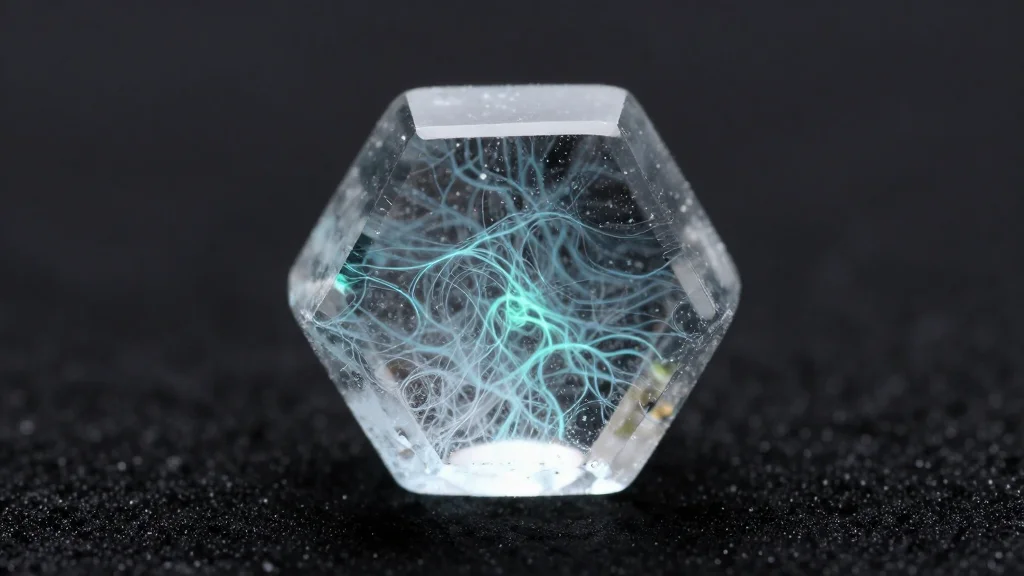
Dynamical Freezing Can Protect Quantum Information for Near-Cosmic Timescales
Cornell physicists have quantified how long dynamical freezing can protect quantum information, showing it can persist for timescales approaching the age of the universe. Using a new Floquet flow‑renormalization framework, they demonstrated that a precisely tuned periodic drive cancels chaotic...
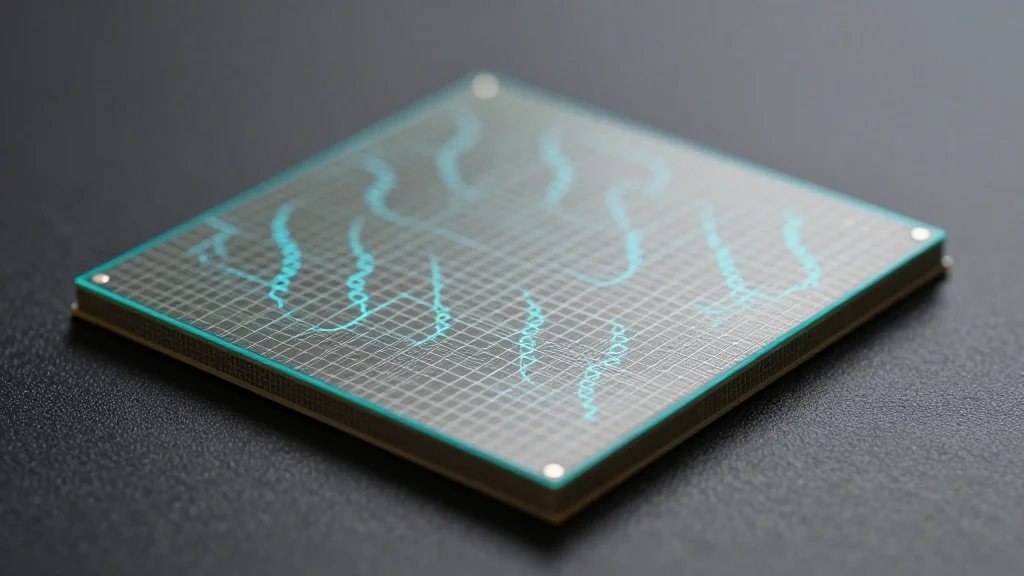
A Robust New Telecom Qubit Identified in Silicon
Researchers at UC Santa Barbara have identified a new silicon defect, the carbon‑nitrogen (CN) center, as a robust telecom‑band qubit. Unlike the previously studied T center, the CN center contains no hydrogen, making it structurally stable and easier to fabricate....
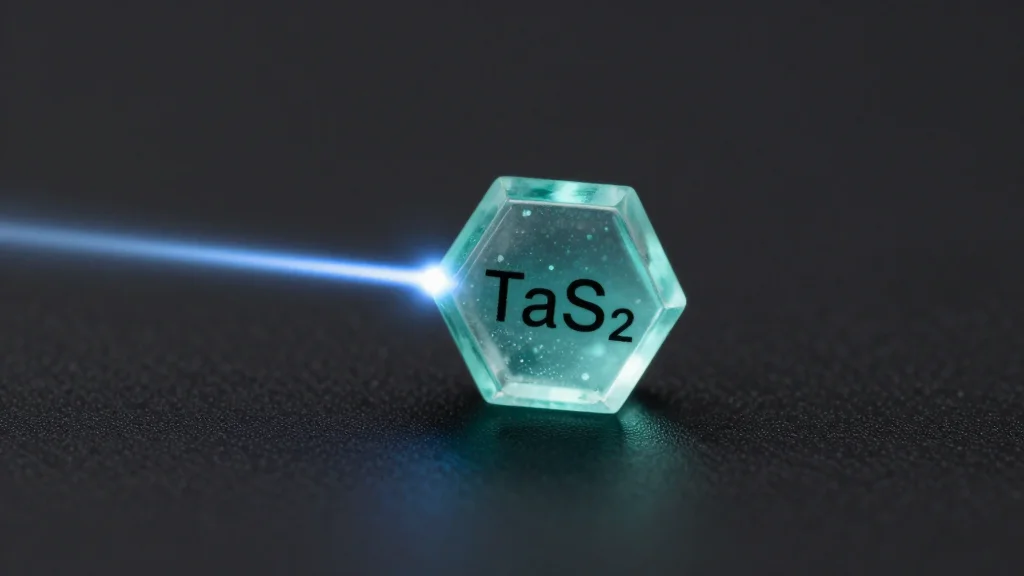
Ion Bombardment Triggers a Reliable Quantum Switch in Tantalum Disulfide Crystals
A collaborative team from TU Wien and Kiel University demonstrated that a single highly charged ion impact reliably flips the electronic chirality of 1T‑TaS₂ crystals, acting as a deterministic quantum switch. The ion‑induced disturbance drives the material out of equilibrium,...

A Protocol to Realize Near-Perfect Atom-Photon Entanglement
Researchers at Academia Sinica and Harvard have refined the state‑carving (SC) protocol, enabling near‑perfect atom‑photon entanglement by letting a single photon interact twice with atoms inside an optical cavity. The revised method eliminates the 50 % success ceiling of the original...
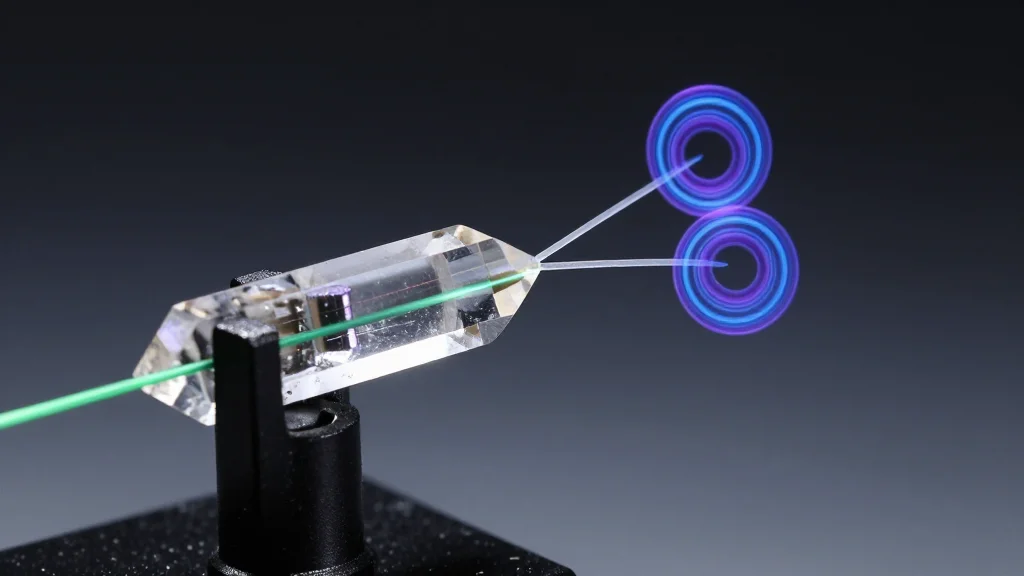
Quantum Computers Go High-Dimensional with a Four-State Photon Gate
A joint effort by TU Wien and Chinese researchers has demonstrated a heralded quantum logic gate that operates on two photons each encoded in four distinct quantum states, or qudits. The gate leverages the photons' orbital angular momentum rather than...
Quantum Algorithm Beats Classical Tools on Complement Sampling Tasks
Researchers at Quantinuum and QuSoft have introduced a quantum algorithm that solves the complement sampling problem using a single quantum sample, a task that classically requires on the order of N samples when the subset size is half the universe....
Quantum Reservoir Computing Peaks at the Edge of Many-Body Chaos, Study Suggests
University of Tokyo researchers demonstrated that quantum reservoir computing (QRC) achieves its highest accuracy when operating at the edge of many‑body quantum chaos. By applying random‑matrix theory to the Sachdev‑Ye‑Kitaev (SYK) model, they identified two distinct chaos boundaries—in the time...

Quantum Entanglement Could Link Distant Telescopes for Sharper Images
Researchers from the University of Arizona, University of Maryland and NASA have proposed a quantum‑entanglement‑based long‑baseline interferometry method that eliminates the need for fragile optical links between distant telescopes. By sharing pre‑distributed entangled qubits and using spatial‑mode sorters at each...

Triplet Superconductivity—Physicists May Have Found the Missing Link for Quantum Computers
Physicists led by Jacob Linder at Norway’s NTNU claim to have observed intrinsic triplet superconductivity in a niobium‑rhenium (NbRe) alloy. The discovery, published in Physical Review Letters, suggests NbRe can carry spin‑polarized Cooper pairs without resistance, a property absent in...
Quantum Simulator Reveals Statistical Localization that Keeps Most Qubit States Frozen
Researchers at Duke University used a neutral‑atom Rydberg quantum simulator to observe statistical localization, a phenomenon where most qubit configurations remain frozen despite quantum evolution. The effect, first theorized in 2020, was demonstrated in a one‑dimensional chain of rubidium atoms...

Simplifying Quantum Simulations—Symmetry Can Cut Computational Effort by Several Orders of Magnitude
Physicists Guido Burkard and Joris Kattemölle introduced a symmetry‑based method that slashes the computational effort of quantum simulations by over a thousandfold. By treating repeating lattice patterns as single tiles, the approach replaces thousands of point‑by‑point mappings with a few...

Microscopic Mirrors for Future Quantum Networks: A New Way to Make High-Performance Optical Resonators
Harvard SEAS researchers have introduced a micro‑fabrication technique that creates some of the smallest, smoothest mirrors ever made for photon control. By thermally oxidizing silicon, stripping the oxide, and applying a stress‑engineered dielectric stack, the film buckles into a precisely...
Measuring Chaos: Researchers Quantify the Quantum Butterfly Effect
Chinese researchers led by Yu‑Chen Li have, for the first time, precisely quantified the exponential growth of chaos in a quantum many‑body system during a time‑reversal protocol. Using solid‑state nuclear magnetic resonance, they measured out‑of‑time‑ordered correlators (OTOCs) and applied a...

New Amplifier Design Promises Less Noise, More Gain for Quantum Computers
RIKEN researchers have unveiled a new Josephson traveling‑wave parametric amplifier (JTWPA) that cuts added noise to 0.68 quanta, just 0.18 above the quantum limit, while delivering high gain. The device replaces lossy dielectric with a spiraled, fish‑bone‑like tapered waveguide, simplifying...
Silicon Quantum Processor Detects Single-Qubit Errors While Preserving Entanglement
Researchers have demonstrated a silicon‑based quantum processor that can detect single‑qubit errors while preserving entanglement across a five‑qubit register. Real‑time parity‑check circuits flag deviations with 99 % detection fidelity, and entanglement fidelity stays above 95 % after each detection cycle. The non‑destructive...
Optical Switch Protocol Verifies Entangled Quantum States in Real Time without Destroying Them
Researchers at the University of Vienna have unveiled an optical‑switch protocol that can certify entangled quantum states in real time without destroying them. Traditional quantum state tomography requires repeated destructive measurements, making verification slow and resource‑intensive. The new method routes...
Using Light to Probe Fractional Charges in a Fractional Chern Insulator
Researchers from the University of Washington, NIMS Japan, and ETH Zurich have experimentally detected a new quasiparticle—anyon‑trions—in twisted bilayer MoTe₂, confirming fractional charge excitations in a fractional Chern insulator (FCI). By tuning electron density and employing photoluminescence spectroscopy, they observed...
Quantum Research in Two Ways: From Proving Someone's Location to Simulating Financial Markets
Two Leiden University Ph.D. candidates are defending theses that showcase concrete quantum applications. Kirsten Kanneworff’s work advances quantum position verification by using single‑photon signals to prove a user’s location with tamper‑proof timing. David Dechant explores how noisy quantum computers, simulated...
Time Crystals Could Become Accurate and Efficient Timekeepers
A new mathematical analysis published in Physical Review Letters demonstrates that time‑crystal systems could serve as ultra‑precise quantum clocks, outperforming conventional designs that rely on continuous laser excitation. By exploiting self‑sustaining oscillations, these exotic phases maintain timing accuracy even at...

Cutting Down on Quantum-Dot Crosstalk: Precise Measurements Expose a New Challenge
RIKEN researchers have experimentally quantified charge‑induced energy shifts caused by neighboring quantum dots in silicon spin qubits. The study shows that micromagnets, while improving control, amplify crosstalk that can significantly increase qubit error rates. Direct measurements reveal the magnitude of...
Physicists Develop New Protocol for Building Photonic Graph States
Physicists at the University of Illinois Urbana‑Champaign have introduced an “emit‑then‑add” protocol that creates photonic graph states by heralding each photon before it is added to a virtual graph. The scheme converts the dominant loss problem into a coherence requirement...
Rolling Out the Carpet for Spin Qubits with New Chip Architecture
QuTech researchers unveiled QARPET, a tiled cross‑bar chip that can host up to 1,058 hole‑spin qubits on a 23 × 23 array while using only 53 control lines. The architecture packs two spin qubits and a charge sensor into each repeatable tile,...
Majorana Qubits Become Readable as Quantum Capacitance Detects Even-Odd States
An international team has demonstrated the first direct readout of Majorana qubits using quantum capacitance. By assembling a modular minimal Kitaev chain from two semiconductor quantum dots coupled through a superconductor, they measured the even‑odd parity of the non‑local Majorana...
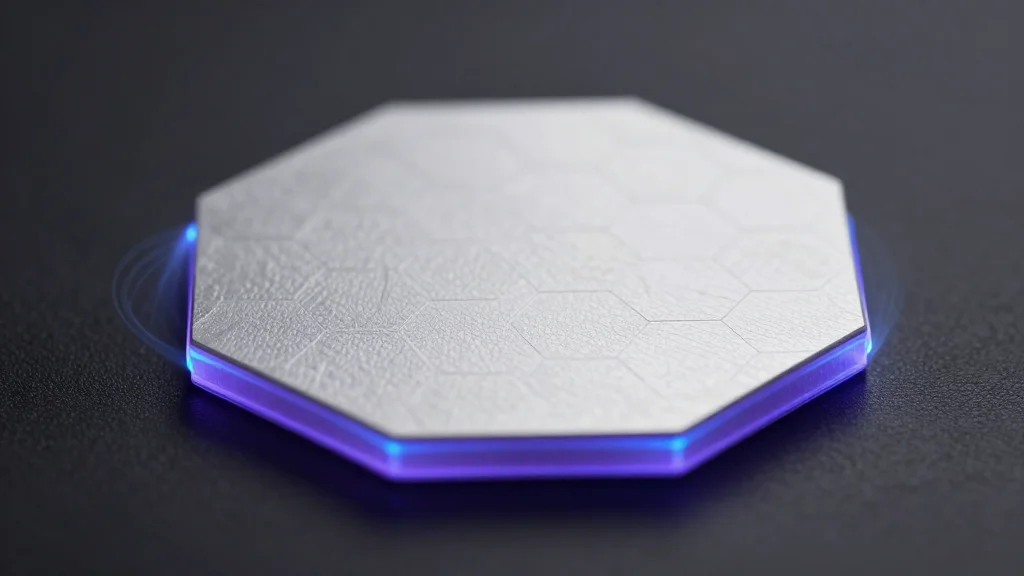
Current Flows without Heat Loss in Newly Engineered Fractional Quantum Material
Researchers at the University of Washington have demonstrated a dissipationless fractional Chern insulator, enabling current to flow along fractional edge states without heat loss. By employing horizontal flux crystal growth and refined twist-angle control, carrier mobility improved over tenfold, eliminating...
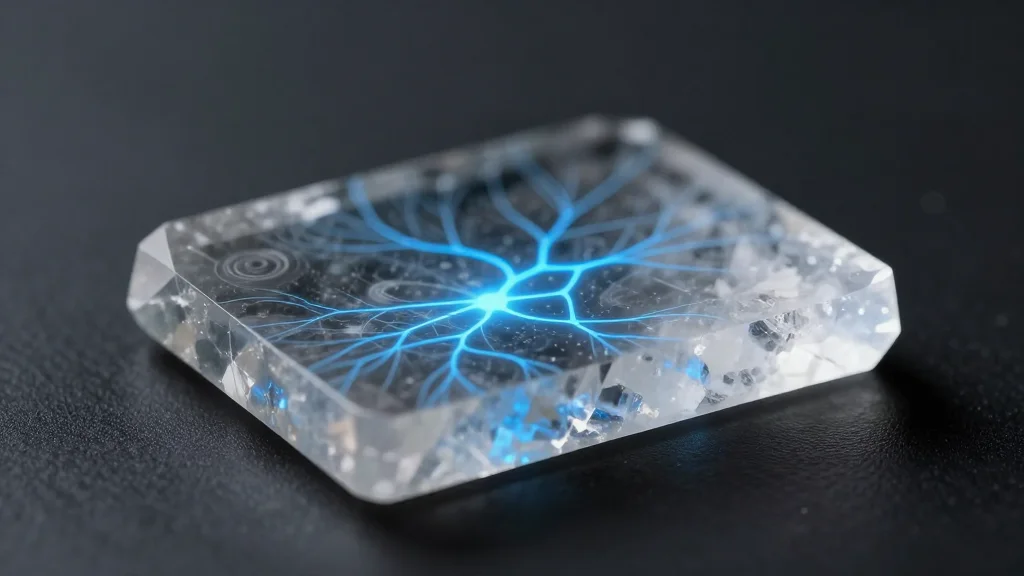
Machine Learning Reveals Hidden Landscape of Robust Information Storage
A team of physicists used neural cellular automata—a machine‑learning representation of local update rules—to uncover dozens of new two‑dimensional many‑body memory mechanisms that go beyond the classic Toom’s rule. In 1,000 training runs, 37 distinct cellular‑automaton rules emerged that preserve...
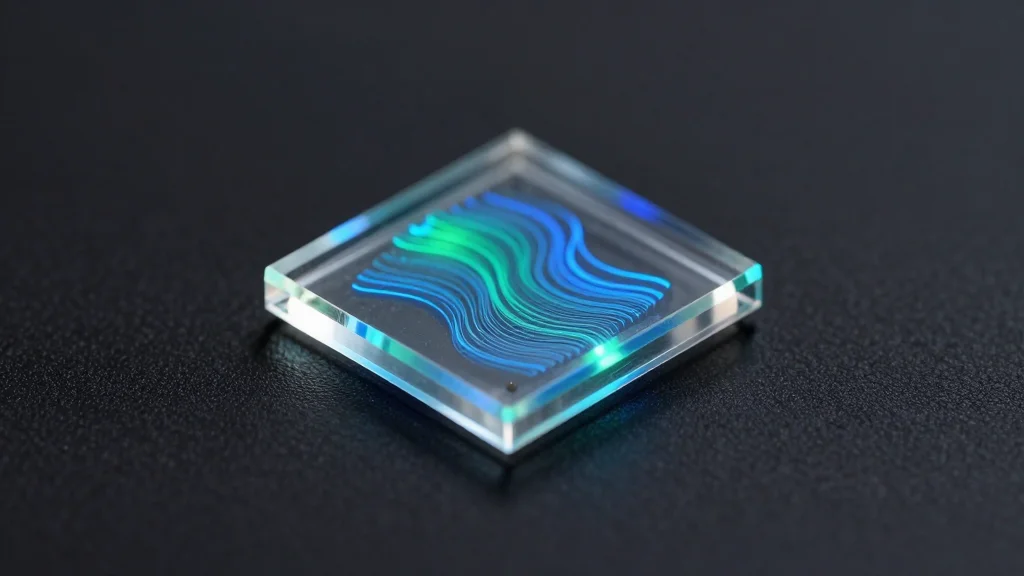
Laser‑written Glass Chip Pushes Quantum Communication Toward Practical Deployment
Researchers at the University of Padua and partners have fabricated a high‑performance quantum coherent receiver directly inside borosilicate glass using femtosecond laser writing. The glass chip delivers ultra‑low insertion loss (~1 dB), polarization‑independent operation, and a 73 dB common‑mode rejection ratio, outperforming...
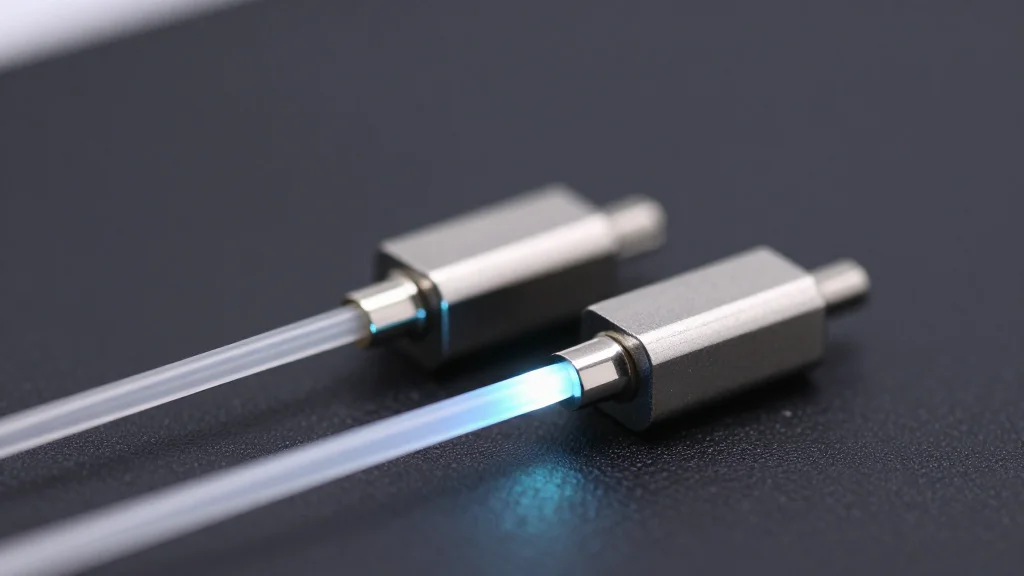
Quantum Encryption Method Demonstrated at City-Sized Distances for the First Time
Researchers in China have demonstrated device‑independent quantum key distribution (DI‑QKD) across 100 km of optical fiber, marking the first city‑scale implementation. By leveraging single‑photon interference and quantum frequency conversion, the team achieved high‑fidelity atom‑atom entanglement and maintained CHSH Bell inequality violations...

Three-Way Quantum Correlations Fade Exponentially with Distance at Any Temperature, Study Shows
A RIKEN researcher has mathematically proven that genuine three‑way quantum correlations vanish exponentially with distance in any thermal equilibrium state, regardless of temperature. The proof relies on conditional mutual information to quantify correlation strength and shows that distant regions become...

Study Reveals Microscopic Origins of Surface Noise Limiting Diamond Quantum Sensors
A new theoretical study from the University of Chicago and Argonne National Laboratory pinpoints the microscopic mechanisms that cause surface‑related noise to degrade the quantum coherence of shallow nitrogen‑vacancy (NV) centers in diamond. By coupling density‑functional‑theory surface models with quantum...
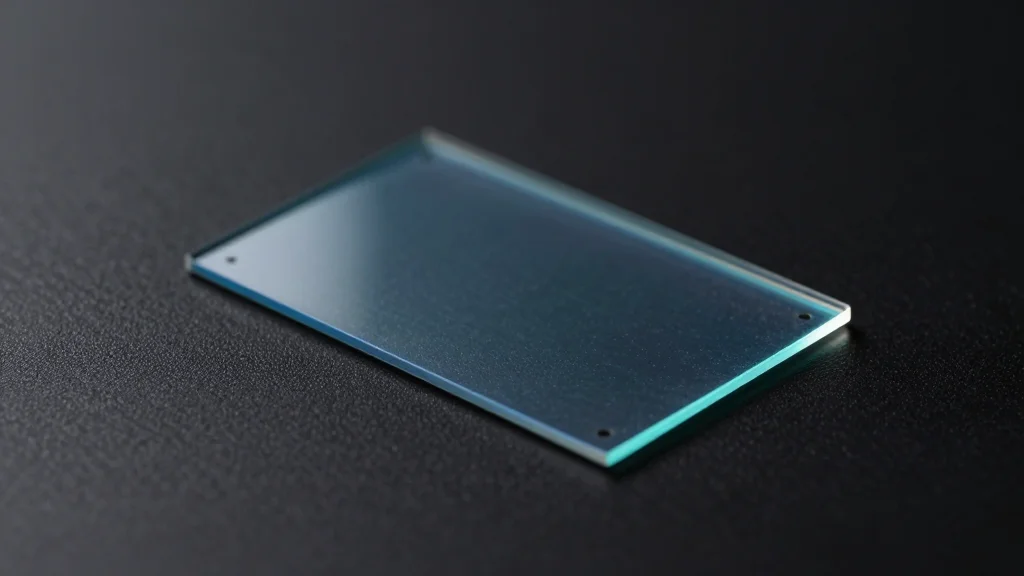
Tuning Topological Superconductors Into Existence by Adjusting the Ratio of Two Elements
Researchers at the University of Chicago and West Virginia University demonstrated that thin‑film iron telluride selenide can be transformed into a topological superconductor by precisely adjusting the tellurium‑to‑selenium ratio. The study, published in Nature Communications, shows that changing this ratio...

Electron-Phonon 'Surfing' Could Help Stabilize Quantum Hardware, Nanowire Tests Suggest
UCLA researchers discovered that electrons can "surf" phonon waves in quasi‑one‑dimensional nanowires, causing flicker noise to drop as current rises. The effect was demonstrated in tantalum‑based and niobium‑based nanowires, with noise falling below measurable limits even at room temperature. This...
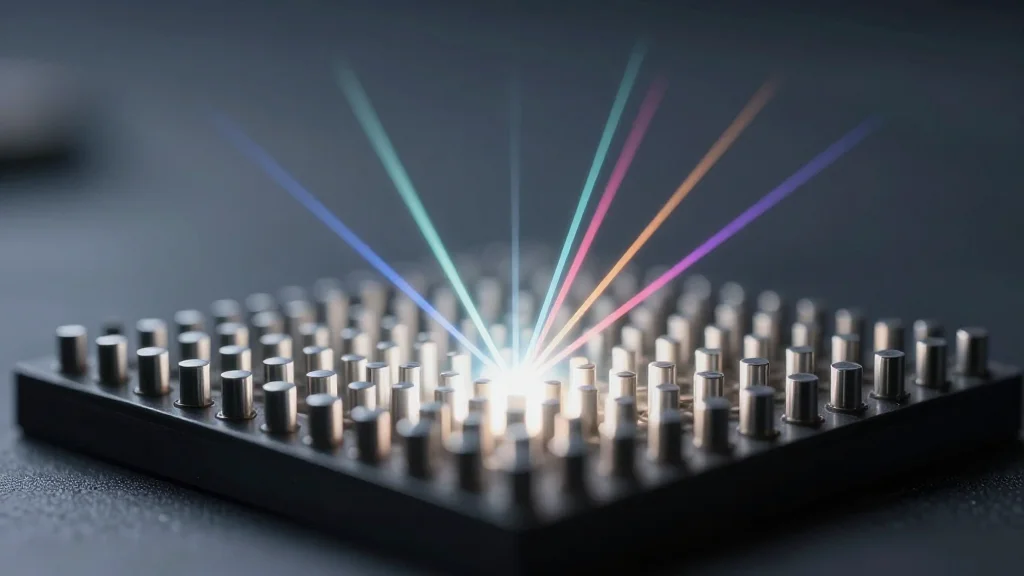
Ultra-Thin Metasurface Can Generate and Direct Quantum Entanglement
Researchers at Nanjing University and the University of Science and Technology of China have demonstrated an ultra‑thin metasurface that both creates and routes polarization‑entangled photon pairs. The nanostructured silicon‑pillar array converts two orthogonal photons into Bell‑state entanglement across multiple output...

Niobium's Superconducting Switch Cuts Near-Field Radiative Heat Transfer 20-Fold
University of Michigan engineers have demonstrated that a thin niobium film, when cooled below its superconducting transition at 7.4 K, suppresses near‑field radiative heat transfer by a factor of 20 compared with its normal metallic state. The team built a scanning...
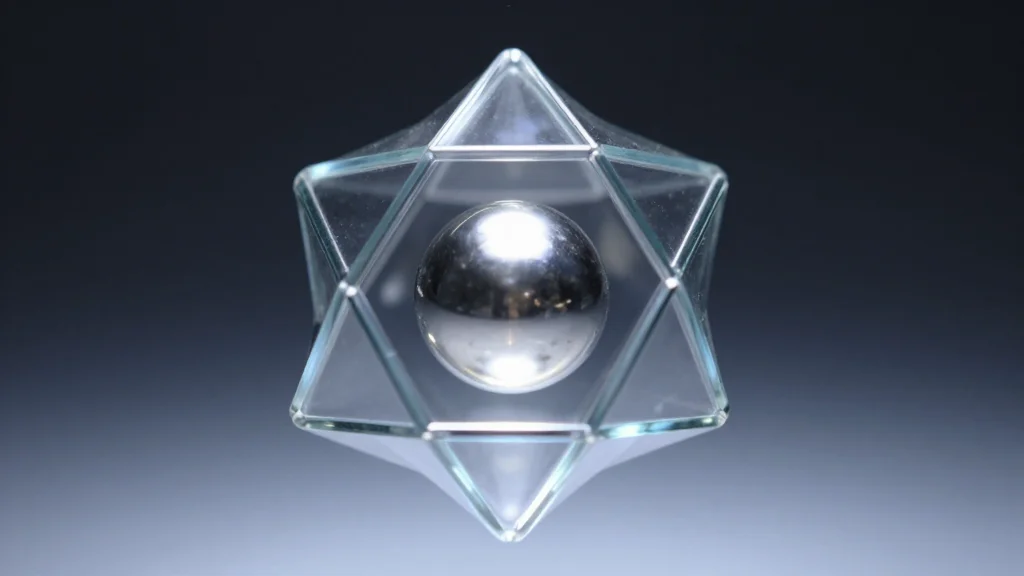
Using Duality to Construct and Classify New Quantum Phases
A multinational team led by Weiguang Cao, Masahito Yamazaki and Linhao Li used duality transformations to map non‑invertible symmetry‑protected topological (SPT) phases onto familiar spontaneously broken symmetry (SSB) phases. This mapping allowed them to classify non‑invertible SPT phases in arbitrary...
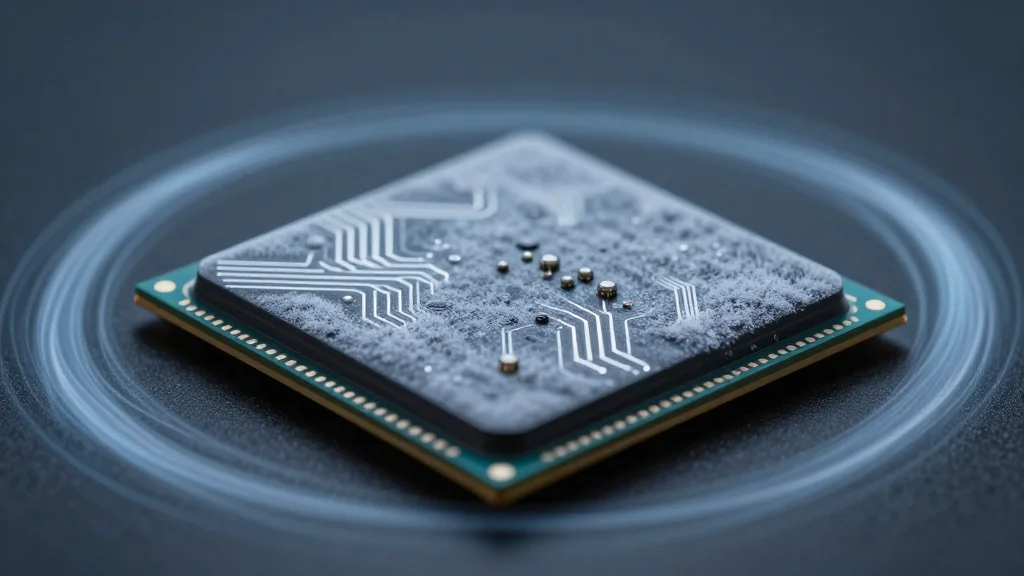
91-Qubit Processor Accurately Simulates Many-Body Quantum Chaos
A team using a 91‑qubit superconducting quantum processor has accurately simulated many‑body quantum chaos. They employed dual‑unitary circuits to model a kicked Ising system and applied tensor‑network error mitigation (TEM) to correct noise in post‑processing. The error‑mitigated results closely follow...
Collaboration of Elementary Particles: How Teamwork Among Photon Pairs Overcomes Quantum Errors
Researchers at the University of Rostock have demonstrated that encoding information in pairs of photons—rather than single photons—dramatically reduces quantum‑error rates. Using a high‑power laser‑written waveguide chip, they showed that photon‑pair holonomies remain stable even when device parameters shift by...
AI Makes Quantum Field Theories Computable
Researchers at TU Wien, together with U.S. and Swiss teams, have used a custom neural network to optimize lattice formulations of quantum field theories. The AI‑driven approach parameterizes the action on coarse lattices while preserving fixed‑point properties, yielding errors far...
Superconducting Nanowire Memory Array Achieves Significantly Lower Error Rate
MIT researchers have demonstrated a 4 × 4 superconducting nanowire memory array that operates at 1.3 K and delivers a bit‑error rate of roughly 10⁻⁵, a ten‑fold improvement over earlier designs. The cell architecture combines temperature‑dependent switches with a kinetic inductor, enabling precise...
Particle Permutation Task Can Be Tackled by Quantum but Not Classical Computers, Study Finds
Researchers at the Autonomous University of Barcelona and CUNY’s Hunter College have shown that quantum computers can determine the even‑odd parity of particle permutations without labeling each particle, a task impossible for classical computers. By preparing qubits in entangled states...
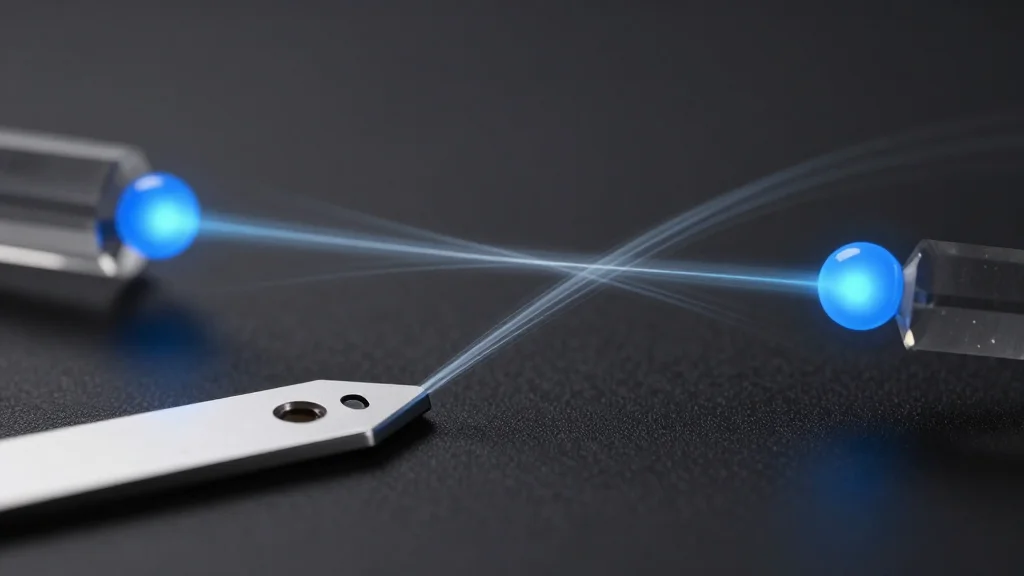
Entangled Atomic Clouds Enable More Precise Quantum Measurements
Researchers at the University of Basel and France's Laboratoire Kastler Brossel have demonstrated that three spatially separated atomic clouds can be entangled to perform multiparameter quantum measurements with unprecedented precision. By first creating a collective spin‑squeezed state and then dividing...

3D-Printed Surfaces Help Atoms Play Ball to Improve Quantum Sensors
Scientists at the University of Nottingham have 3D‑printed titanium alloy surfaces with intricate hexagonal and conical textures that steer gas particles away from quantum sensors. By integrating these patterns into a surface‑based vacuum pump, they achieved a 3.8‑fold increase in...