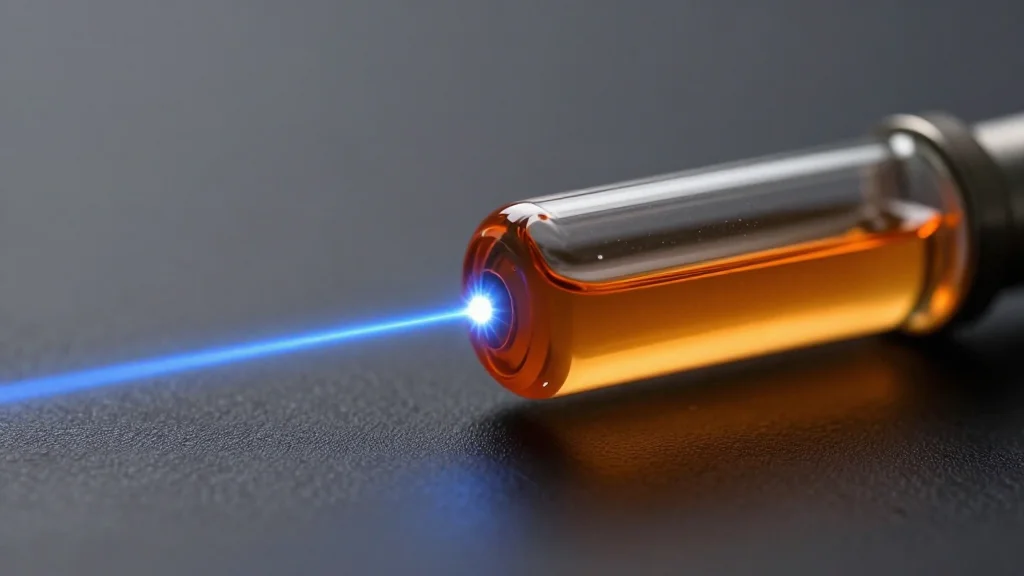
Quantum Light Gives a 20-Fold Boost to Ultrafast Laser Processes
Researchers at East China Normal University demonstrated that bright squeezed vacuum (BSV) quantum light can amplify nonlinear laser processes by more than 20 times without increasing average power. Using a 300‑nanojoule BSV pulse, they achieved tunneling ionization of sodium atoms equivalent to that of a much stronger conventional laser pulse. The experiment shows that quantum fluctuations in photon number can deliver intense bursts capable of driving strong‑field interactions. This breakthrough opens a pathway to safer, more precise control of ultrafast optics and attosecond science.
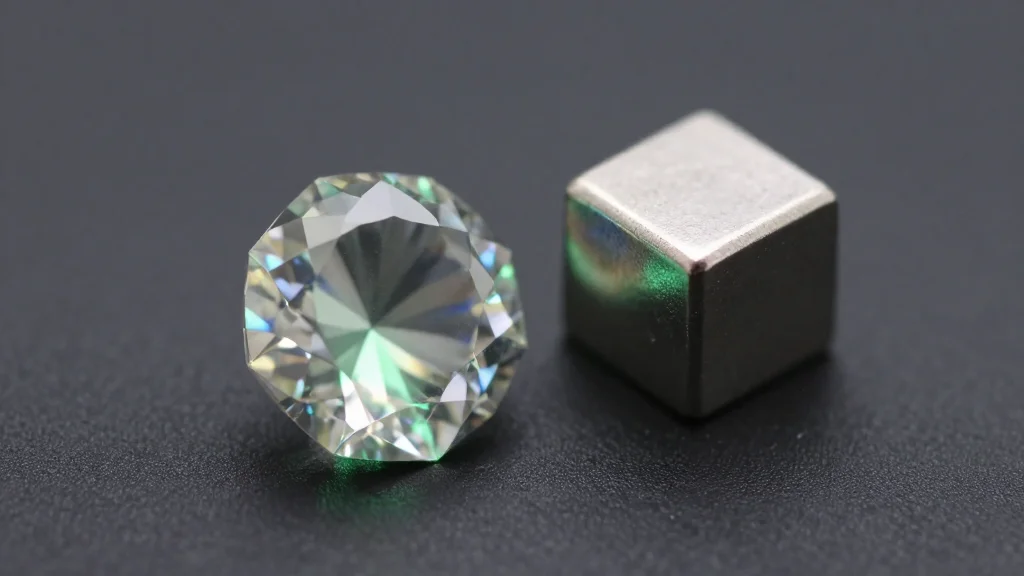
Diamond Quantum Sensor Could Reveal Elusive Altermagnets
University at Buffalo physicists have proposed a quantum‑sensing method that uses nitrogen‑vacancy (NV) centers in diamond to detect altermagnets, a newly identified magnetic class that blends ferromagnetic control with antiferromagnetic speed. The approach measures how the NV defect’s spin relaxes...
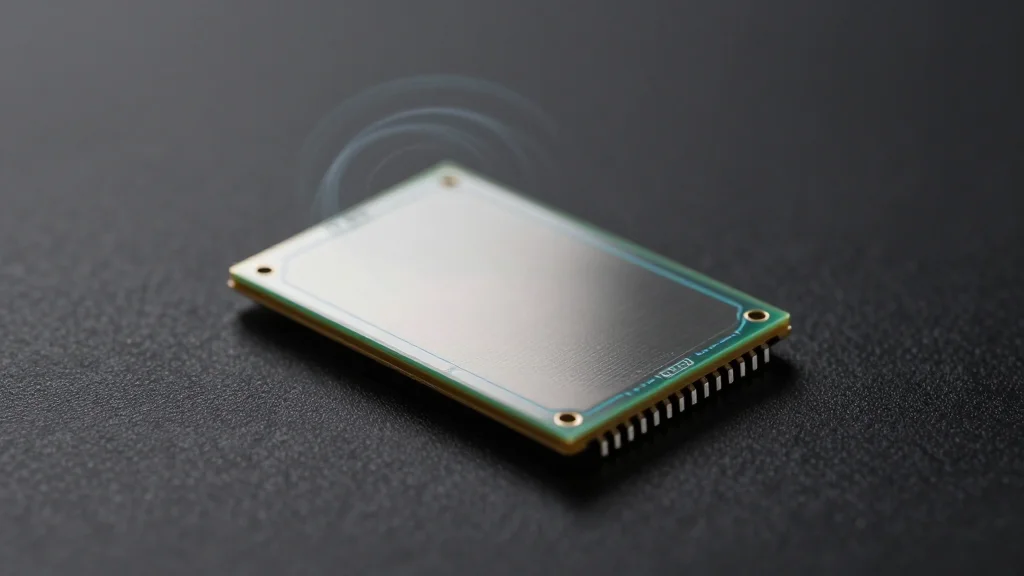
Topological States Emerge in Quantum Hall-Superconductor Devices with Multiple Channels
Researchers at the Autonomous University of Madrid have theoretically designed a hybrid quantum Hall‑superconductor nanodevice that supports multiple edge channels. Their analysis shows that inter‑channel coupling creates previously unseen topological phases, enabling perfect electron‑to‑hole conversion and the emergence of charge‑neutral...
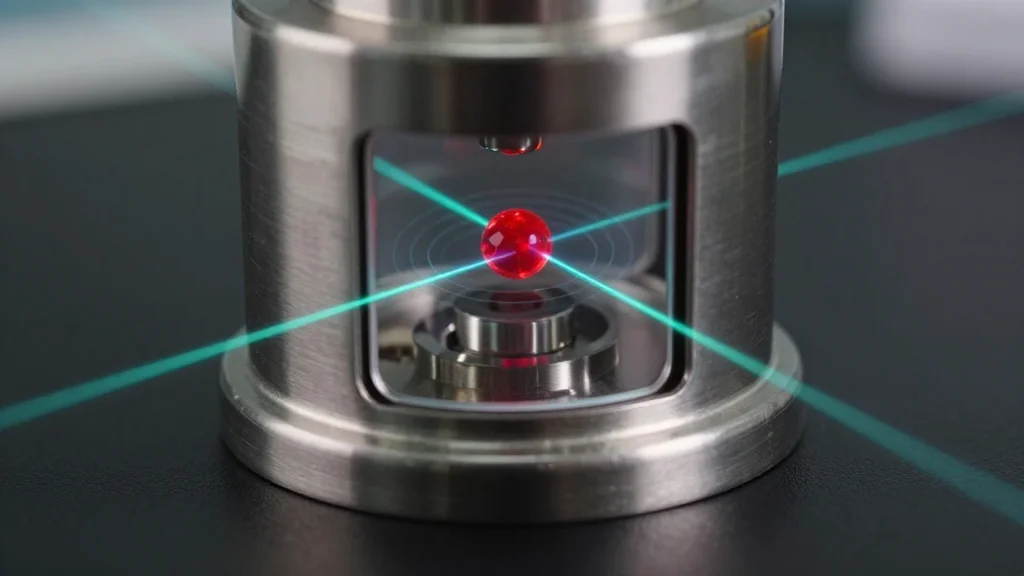
'Atom Camera' Maps Laser Light at Nanoscale Using a Single Ultracold Atom
Researchers at Japan's Institute for Molecular Science have unveiled the "Atom Camera," a super‑resolution microscope that uses a single ultracold rubidium atom trapped in an optical tweezer to scan and map laser light fields. By measuring spin‑dependent energy shifts, the...

Quantum Vibronics Research Points to Future Energy and Computing Technologies
Scientists at UC Riverside’s Center for Quantum Vibronics in Energy and Time (QuVET) have demonstrated precise electric‑field control of quantum wave functions across atomically thin layered materials. The work, published in three high‑impact papers, shows that wave functions can be...

Quantum Pendulum Clock Overcomes Classical Accuracy Limits and Sheds Light on Quantum to Classical Transitions
Researchers have built a quantum pendulum clock that uses a single atom as an escapement mechanism to drive a microscopic mirror, mimicking a classic grandfather clock. The device operates autonomously, emitting photons that sustain mechanical oscillations, and demonstrates accuracy that...

The Generation of Massive Schrödinger Cat States Using Ultracold Atoms
Researchers at Southern University of Science and Technology and the Quantum Science Center have experimentally generated massive Schrödinger cat states by tunneling clusters of up to seven ultracold atoms through high barriers. By engineering weakly bound atomic clusters and exploiting...

Q&A: How Researchers Are Building Next-Gen Quantum Computers
Researchers at Lawrence Berkeley National Laboratory’s Advanced Quantum Testbed are advancing a holistic quantum‑computing stack that integrates superconducting qubits, ultra‑cold dilution refrigeration, and the open‑source QubiC control system. They stress that scaling challenges—such as low‑noise wiring and error‑correction—require tight coordination...

Perfect Randomness Realized for the First Time
Researchers at ETH Zurich have demonstrated the first certified generation of perfect randomness using quantum‑physics techniques. By linking two superconducting qubits over a 30‑meter cryogenic channel, they performed a high‑rate Bell test that eliminates bias in the output bits. An...
Hydrogen Puts Quantum Wormhole Conjecture to the Test
Physicists from the University of New Brunswick used the hydrogen atom’s ultra‑precise hyperfine spectrum to test the ER = EPR conjecture, which links quantum entanglement to microscopic wormholes. By modeling a tiny leakage of the electron’s electric field into a putative wormhole,...

Randomization Can Improve Quantum Computer Performance in Presence of Noise
University of New Mexico researchers have demonstrated that a randomized version of dynamical decoupling can suppress quantum noise more effectively than any deterministic method. Led by Ph.D. candidate Leeseok Kim, the study—published in Physical Review Letters and presented at QSim 2025—shows...

Supercharging Solar Cells: Quantum Dot-Molecule Hybrid States Enable Near-Maximum Efficiency
Researchers at Osaka University and collaborators have demonstrated that hybrid electronic states formed between tetracene molecules and cadmium telluride quantum dots can drive singlet exciton fission with efficiencies approaching the theoretical limit. Using ultrafast laser spectroscopy and quantum‑chemical modeling, they...

Tuning Into Quantum Sounds: Acoustic Devices Simplify Quantum Sensors
Physicists at Caltech and Stanford have engineered nanoelectromechanical systems (NEMS) that exhibit intrinsic quantum nonlinearity by harnessing material‑native two‑level defects. This eliminates the need for external superconducting qubits, allowing a single NEMS device to operate at the single‑phonon level. The...

Quantum Metasurface Boosts Terahertz Detection Sensitivity by Exploiting In-Plane Photoelectric Effect
Researchers at Cambridge and Swansea have created a compact terahertz detector that merges a quantum in‑plane photoelectric effect with a metasurface array. The metasurface concentrates incoming 1.9 THz radiation into sub‑wavelength gaps, where photoelectric tunable‑step (PETS) elements generate current without external...

'Designer' Superconducting Diamond: Researchers Uncover Path to Multi-Modality Quantum Chips
Researchers from Penn State, the University of Chicago and DOE’s Q‑NEXT have identified the microscopic mechanisms that give rise to superconductivity in boron‑doped diamond. By isolating electronic signatures, they discovered a granular “puddle” network that can be tuned with magnetic...