
Laser Method Unlocks 3,000-Kelvin Thin-Film Synthesis for Quantum Materials
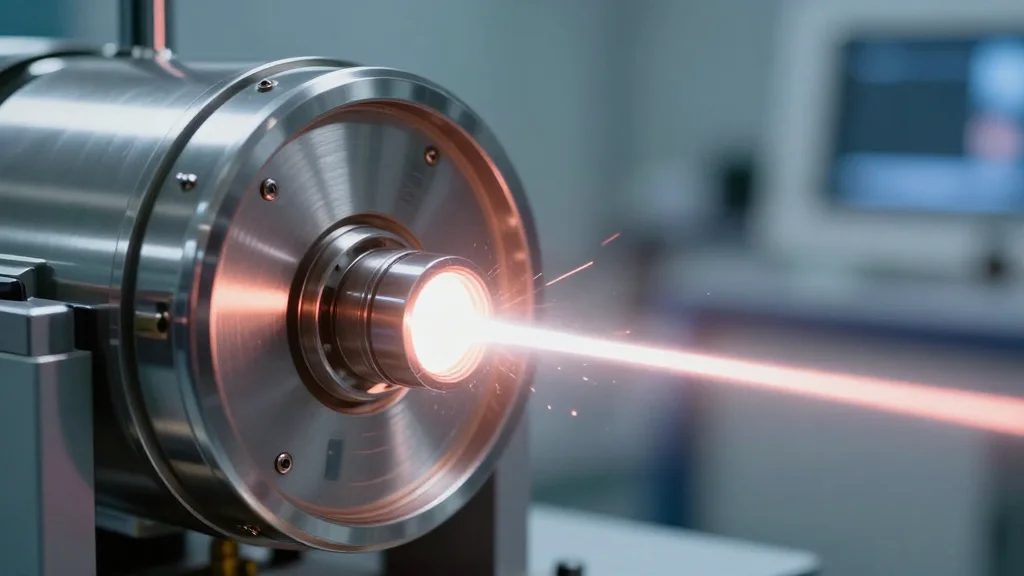
Caltech researchers have unveiled a laser‑based thermal evaporation (TLE) process that can produce thin films of ultra‑refractory materials at temperatures near 3,000 K. By focusing a 1‑kW fiber laser on a small region of a solid pellet, the method vaporizes material without melting the whole target, allowing deposition onto a heated substrate. The team demonstrated the technique with nickel, achieving electrical conductivity comparable to or better than films made by traditional sputtering or evaporation. The breakthrough promises to simplify manufacturing of superconducting components used in quantum computers.

Spatiotemporal Light Pulses Could Secure Optical Communication by Masking Data
Ben‑Gurion University researchers have devised a secure optical‑communication scheme that embeds data within spatiotemporal optical vortices—light pulses whose structure conceals information from conventional detectors. The approach pairs these shaped pulses with a pre‑shared key and decoy‑signal algorithm, allowing only a...
Quantum Simulations Reveal Spin Transport in 1D Materials
Researchers at Oak Ridge’s Quantum Science Center used a 40‑qubit IBM Heron processor to perform the first digital quantum simulations of spin‑transport dynamics in a one‑dimensional Heisenberg model. The study captured ballistic, diffusive and super‑diffusive regimes and validated the results...

Multitasking Quantum Sensors Can Measure Several Properties at Once
MIT researchers have engineered a solid‑state quantum sensor based on nitrogen‑vacancy (NV) centers in diamond that can simultaneously measure multiple physical parameters at room temperature. By entangling two qubits within the sensor, the team extracted amplitude, frequency detuning, and phase...

Mirror-Positioning Method Could Make Quantum Gravity Tests Possible
Researchers at Kyushu University and Caltech have devised a method to boost gravity‑induced entanglement by creating a momentum‑squeezed state in an optomechanical cavity. By continuously measuring laser light and applying optimal filtering, the technique narrows the mirror’s momentum uncertainty while...

Using Atomic Nuclei Could Allow Scientists to Read Time More Precisely than Ever
Physicists have demonstrated a new way to probe the thorium‑229 nuclear transition by detecting internal‑conversion electrons rather than emitted photons. By depositing a thin thorium dioxide layer on a metal substrate and scanning a laser, they identified the precise excitation...

Physicists Discover How to Reverse 'Quantum Scrambling'
Physicists at UC Irvine have unveiled a method to reverse quantum scrambling, a process that spreads and seemingly loses information across qubits. By exploiting the microscopic time‑reversibility of quantum systems, the team engineered a precise backward‑evolution protocol that refocuses dispersed...

Unlocking Unusual Superconductivity in a Lightweight Element
Researchers at Penn State have demonstrated that a three‑atom‑thick gallium film sandwiched between graphene and a silicon‑carbide substrate exhibits Ising‑type superconductivity that endures magnetic fields far above the conventional Pauli limit. The interface‑engineered structure maintains superconductivity at in‑plane fields more...
High-Resolution Imaging Captures Cavity-Induced Density Waves in a Quantum Gas
Physicists have directly imaged cavity‑induced density‑wave order in a unitary Fermi gas using a high‑numerical‑aperture microscope that combines absorption imaging with real‑time photon detection. The technique captures the superradiant phase transition and reveals long‑range atom‑photon correlations across the cloud. This...

Universal Surface-Growth Law Confirmed in Two Dimensions After 40 Years
A Würzburg research team has delivered the first experimental verification of the Kardar‑Parisi‑Zhang (KPZ) universality class on two‑dimensional surfaces. By cooling a gallium‑arsenide semiconductor to –269.15 °C and injecting polaritons with a precision laser, they tracked spatial‑temporal growth that matches KPZ...

Robust Against Noise, Geometric-Phase Swap Gates Bring Stability to Quantum Operations
Researchers at ETH Zurich have demonstrated a geometric‑phase swap gate for neutral‑atom qubits that operates with 99.91% fidelity. The gate exchanges quantum states in under a millisecond and can be applied simultaneously to 17,000 qubit pairs. By relying on a...
Electron–Atom Scattering Encodes the Quantum State of Electron Wave Packets
A new theoretical analysis by RIKEN physicist Yuya Morimoto and collaborators shows that ultrashort, tightly focused electron wave packets imprint their quantum state onto scattering patterns when they encounter atoms. The study demonstrates that varying pulse width and other quantum...

Optical Control of Nuclear Spins in Molecules Points to New Paths for Quantum Technologies
Researchers at the Karlsruhe Institute of Technology have, for the first time, optically initialized, manipulated and read out nuclear spin states in a europium‑doped molecular crystal. By combining laser excitation with high‑frequency radio fields they achieved nuclear‑spin coherence times of...

Quantum Computing without Interruptions
Researchers from Innsbruck, Aachen, and partners have experimentally demonstrated a universal fault‑tolerant quantum algorithm that operates without any mid‑circuit measurements. Using a trapped‑ion processor, they executed Grover’s search on three logical qubits encoded across eight physical qubits. The new method...

Mechanical Inputs Boost Diamond Quantum Sensor States as Q Factor Tops One Million
UC Santa Barbara researchers have demonstrated a diamond optomechanical resonator with a mechanical quality (Q) factor exceeding one million at a 10‑gigahertz frequency, a record for diamond‑based devices. The resonator integrates a telecom‑frequency optical cavity and hosts nitrogen‑vacancy (NV) centers that serve...

Quantum Ground State of Rotation Achieved for the First Time in Two Dimensions
A team from the University of Vienna, TU Wien and Ulm University cooled the rotational motion of a levitated silica nanorotor to its quantum ground state in two orientational dimensions. The rotor, a dumbbell of two 150 nm silica spheres, reached...

Microscopic Mechanism of 'Quantum Collapse' In Real-World Environments Uncovered for the First Time
A research team at DGIST has, for the first time, mapped the microscopic mechanism behind quantum collapse in open‑quantum environments. By extending the Lindblad master equation, they captured both electron‑electron and electron‑environment interactions that drive ultrafast electronic decoherence within 1–2...

A Tiny Detector for Microwave Photons Could Advance Quantum Tech
Scientists at EPFL have demonstrated a semiconductor‑based detector that can continuously sense single microwave photons with up to 70% efficiency. The device integrates a double quantum dot with a high‑impedance superconducting cavity, converting absorbed photons into a measurable electric current....

Small Quantum System Outperforms Large Classical Networks in Real-World Forecasting
Researchers at the University of Science and Technology of China have demonstrated that a quantum reservoir computer built from just nine interacting atomic spins can outperform classical neural networks containing thousands of nodes in real‑world weather forecasting. By encoding input...

The Secrets of Black Holes and the Higgs Mass Could Be Hidden in a 7-Dimensional Geometry
A new study using Einstein‑Cartan gravity in a seven‑dimensional G₂‑manifold proposes that spacetime torsion creates a repulsive force at Planck‑scale densities, halting Hawking evaporation and leaving a stable black‑hole remnant of about 9×10⁻⁴¹ kg. The remnant can encode roughly 1.5×10⁷⁷ qubits,...

Quantum Entanglement Between Electrons and Ions Captured at Attosecond Timescale
Researchers have directly observed quantum entanglement between electrons and ions, marking the first mixed‑particle entanglement captured on an attosecond (10⁻¹⁸ s) timescale. The experiment employed ultrafast laser pulses to trigger and probe the correlated states, allowing scientists to measure the instantaneous...

Gravity From Positivity: Single Massive Spin-3/2 Particle Makes Gravity Logically Inevitable, Study Claims
Researchers at the Institute of Theoretical Physics and the Universitat Autònoma de Barcelona have demonstrated that the mere presence of a single massive spin‑3/2 particle compels the emergence of gravity and supersymmetry. Using only causality and unitarity, they show that...

How Noise Limits Today's Quantum Circuits
A new theoretical study published in Nature Physics shows that realistic noise imposes a strict ceiling on the usable depth of quantum circuits. By modeling two‑qubit operations with per‑gate decoherence, the researchers found that noise erases the influence of early...

World's Largest Quantum Circuit Simulation for Quantum Chemistry Achieved on 1,024 GPUs
A joint team from the University of Osaka and Fixstars Corporation used 1,024 NVIDIA H100 GPUs to run the chemqulacs‑gpu simulator, breaking the 40‑qubit barrier with a 42‑spin‑orbital water calculation and a 41‑qubit iron‑sulfur benchmark. The effort introduced a new...

Ultrafast Quantum Light Pulses Measured for the First Time
Researchers at Technion have, for the first time, directly measured the temporal length of individual bright squeezed vacuum (BSV) pulses, a quantum light state with zero average electric field but massive fluctuations. Using a novel interferometric method, they reconstructed each...

Quantum Magnetism: Spin-Flip Process in Atomic Nucleus Does Not Account for All Magnetic Behavior
Florida State University physicists used the John D. Fox Superconducting Linear Accelerator to study titanium‑50 nuclei and found that the traditional spin‑flip model does not fully explain the observed magnetic dipole strength. By combining neutron‑transfer data with electron, proton, and...

Next-Generation Optical Sensor Can Read Photon Spin Across UV-to-Infrared Wavelengths
Researchers at Daegu Gyeongbuk Institute of Science and Technology (DGIST) have created a quantum‑dot photodiode that can detect the spin of photons—circularly polarized light—across an ultra‑wide spectral range from ultraviolet to short‑wave infrared. By embedding a chiral layer in the...
Stabilized Laser Components Could Shrink Quantum Computers From Room- to Chip-Scale
Scientists at UMass Amherst and UC Santa Barbara have demonstrated chip‑scale stabilized lasers that can control trapped‑ion qubits with high fidelity, replacing bulky optical cavities with photonic chips. Published in Nature Communications, the work shows sub‑kilohertz linewidths and active drift compensation,...
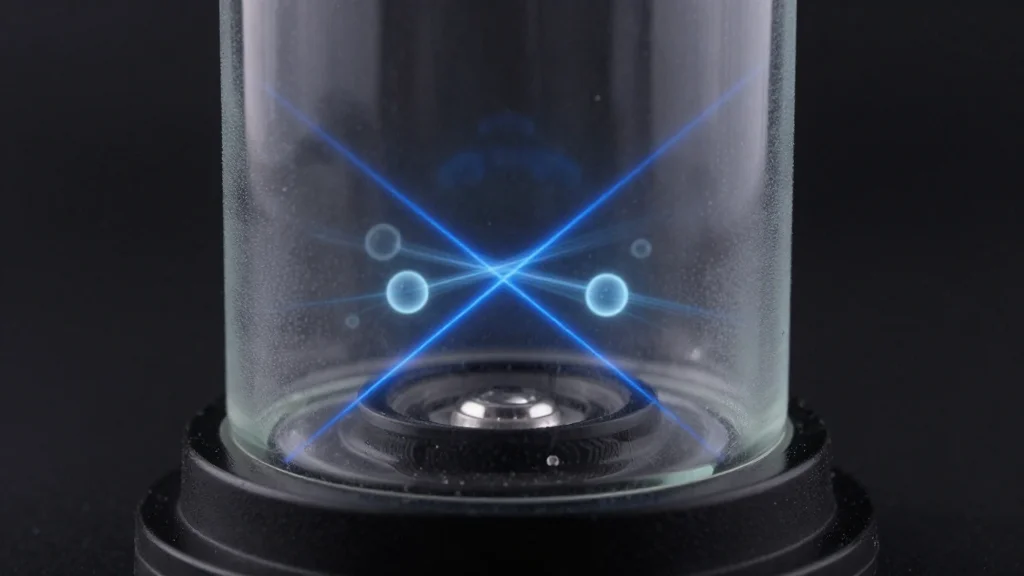
Pairs of Atoms Observed Existing in Two Places at Once for the First Time
Australian National University physicists have, for the first time, observed pairs of helium atoms existing in two locations simultaneously, confirming quantum superposition in massive particles. The experiment created momentum‑entangled helium‑4* atoms using advanced cooling and manipulation, extending earlier photon‑based demonstrations....
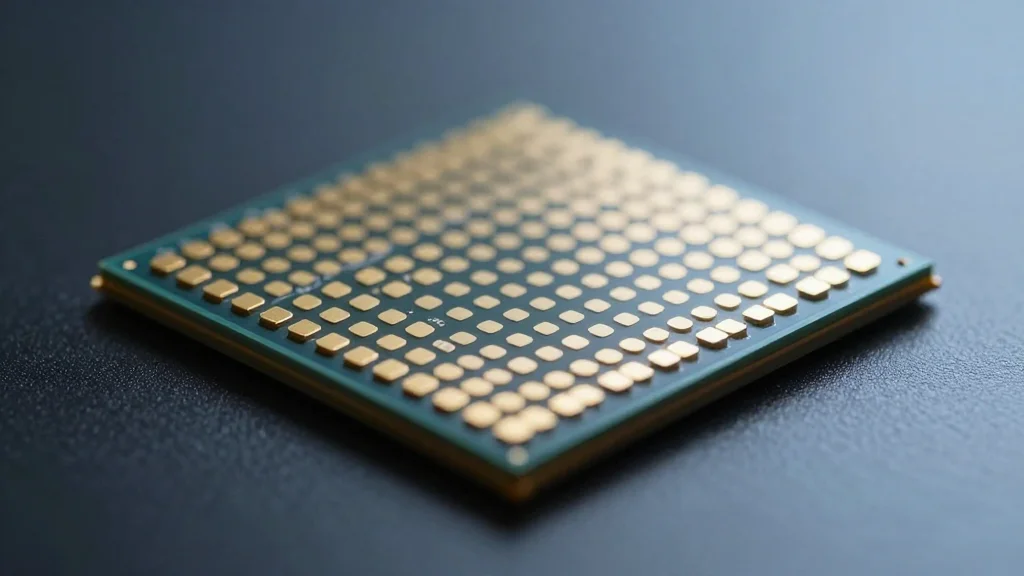
Novel Protocol Reconstructs Quantum States in Large-Scale Experiments up to 96 Qubits
Researchers from Europe introduced a protocol that learns matrix‑product operator (MPO) representations of quantum states directly from randomized measurement data. The method successfully reconstructed a 96‑qubit entangled state on IBM’s Brisbane superconducting processor, far exceeding the previous tomography ceiling of...

A Universal Scheme Can Verify Any Quantum State
Researchers from Université libre de Bruxelles, the University of Gdansk and the Polish Academy of Sciences have unveiled a universal, device‑independent scheme that can self‑test any quantum state or measurement. The protocol embeds the target device in a star‑shaped quantum...

Quadratic Gravity Theory Reshapes Quantum View of Big Bang
Waterloo physicists led by Niayesh Afshordi have introduced a quadratic quantum gravity framework that naturally generates cosmic inflation, eliminating the need for ad‑hoc scalar fields. The model remains mathematically consistent at ultra‑high energies, offering an ultraviolet‑complete description of the Big...

Piezoelectric Materials Enable a New Approach to Searching for Axions
A team of physicists from Perimeter Institute, UNC, Kavli Institute and NYU has unveiled a laboratory technique that uses piezoelectric crystals to both generate and detect QCD axions. By mechanically driving the crystal at nuclear‑spin resonance, the method amplifies axion...

Novel Measurement Confirms a 50-Year-Old Prediction: Dark Points Are Faster than Light
A Technion research team has experimentally confirmed a five‑decade‑old prediction that dark points—optical vortices where light intensity drops to zero—can move faster than light. Using a custom electron‑interferometry setup integrated with a laser, they tracked these vortices in hexagonal boron...

Experimental Evidence Shows How Photons Spread Across Multiple Paths in an Interferometer
A team led by Holger F. Hofmann demonstrated a weak‑measurement technique that directly observes individual photons spreading across both arms of a two‑path interferometer. By applying opposite tiny polarization rotations in each path and monitoring quantum jumps to orthogonal polarizations,...

Unlocking Scalable Entanglement Will Enable Next-Generation Quantum Computing
University of Central Florida researchers have demonstrated a scalable method to generate high‑dimensional topological photonic entanglement. By rearranging silicon photonic waveguide arrays, they entangle protected modes of superlattices without increasing system complexity. The approach yields robust, high‑capacity quantum states that...

Quantum Experiment Shows Events May Have No Fixed Order
A team of Austrian physicists led by Carla Richter has performed the first device‑independent test of indefinite causal order using a quantum‑switch experiment. By sending a single photon through a superposition of two paths, the researchers created simultaneous A‑before‑B and...

Dual-Rail Superconducting Qubits Generate High-Fidelity Logical Entanglement, Study Finds
Researchers in Shenzhen introduced a dual‑rail superconducting processor that encodes each logical qubit across two transmon qubits, achieving high‑fidelity two‑qubit logical gates and generating Bell and GHZ entangled states. The architecture employs erasure detection to flag energy‑loss errors, effectively extending...

Dancing to Invisible Choreography, Quantum Computers Can Balance the Noise
Virginia Tech researchers Evangelos Piliouras, Ed Barnes and Hisham Amer introduced a geometric space‑curve method for shaping quantum‑control pulses that actively suppresses noise in qubits. By casting pulse shapes as shadows of a hidden 3‑D geometry, they derived simple yet...

DNA Origami Precisely Positions Single-Photon Emitters for Quantum Technologies
An international team led by Skoltech scientists used DNA origami to place single‑photon emitters on atomically thin molybdenum disulfide with 13 nm accuracy and over 90% placement yield. The DNA‑crafted triangular scaffolds bind to sulfur vacancies, creating point traps that emit...

Boron Arsenide Semiconductor Sets Record in Quantum Vibrations
Researchers at Rice University and collaborators have demonstrated unprecedented optical phonon coherence in cubic boron arsenide semiconductor. Using isotopically enriched B-11 crystals, they observed phonon vibrations persisting for nearly a thousand cycles at low temperatures, far exceeding typical materials. The...

First Quantum Oscillations Observed in Gallium Nitride Holes
Cornell researchers have, for the first time, observed quantum oscillations in a two‑dimensional hole gas (2DHG) at a GaN/AlN interface. The breakthrough was made possible by ultra‑high‑quality GaN crystals and pulsed magnetic fields at Los Alamos, enabling measurements down to...
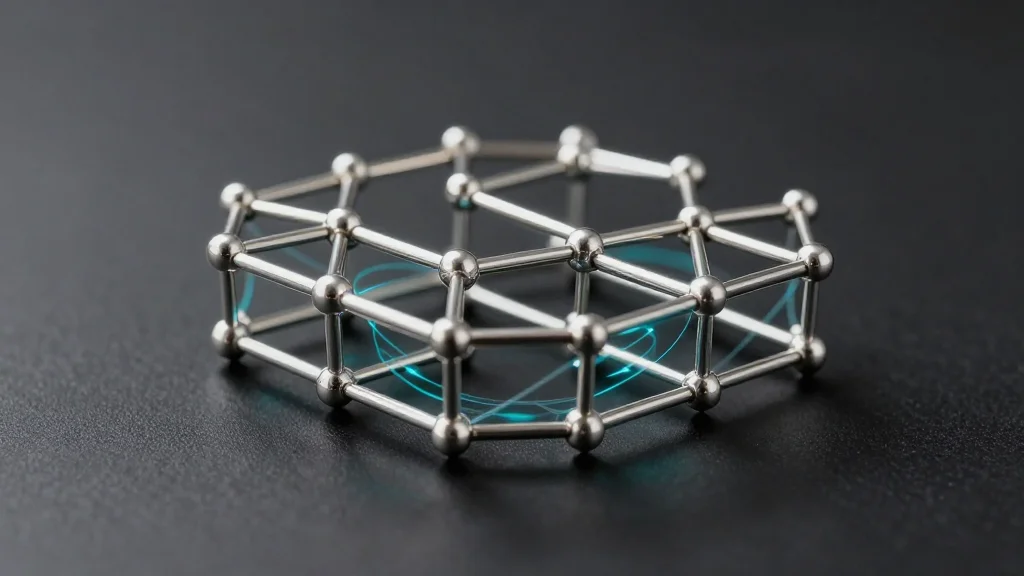
Physicists Find Electronic Agents that Govern Flat Band Quantum Materials
Physicists led by Qimiao Si and Haim Beidenkopf have directly visualized compact molecular orbitals—identified as the electronic agents that drive flat‑band behavior—in the kagome metal Ni₃In. Using atomic‑resolution spectroscopy, they confirmed that these orbitals underpin the material’s quantum‑critical state and...

A New Entanglement-Enhanced Quantum Sensing Scheme
Researchers from the University of Strasbourg and Macquarie University introduced an entanglement‑enhanced quantum‑sensing protocol that manipulates spin ensembles inside an optical cavity using tailored global drive pulses. By generating symmetric Dicke states, the scheme achieves near‑Heisenberg‑limited precision even when realistic...
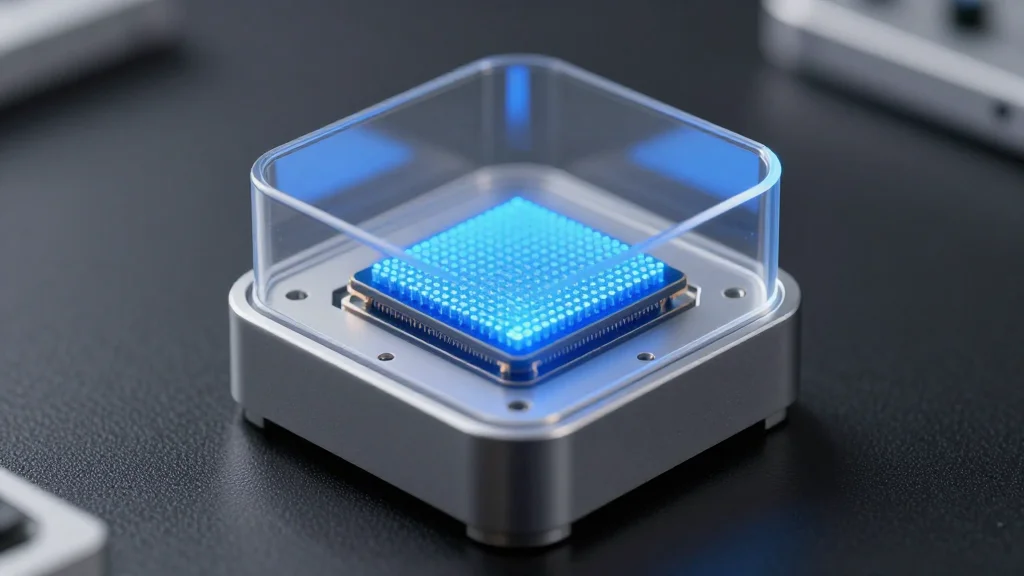
Building Trust in the Future of Quantum Computing
Researchers at Japan Advanced Institute of Science and Technology (JAIST) have launched a formal‑methods program to make quantum computers trustworthy. Their Laboratory on Formal Methods for Quantum Computing has introduced Concurrent Dynamic Quantum Logic (CDQL), a framework that can model...

Microwave Quantum Network Shows Resilience Against Heat-Related Disturbances
Researchers in Shenzhen have built a superconducting microwave quantum network that remains coherent despite thermal noise, using radiative cooling and tunable couplers to purge heat photons. The system transmits quantum states through a channel warmed to up to 4 K and...

Quantum-Inspired Laser System Delivers Distance Measurements with Sub-Millimeter Accuracy
Researchers at the University of Bristol have demonstrated a quantum‑inspired laser ranging system that achieves sub‑millimetre accuracy over distances exceeding 150 metres, even under bright sunlight. By engineering classical laser pulses to emulate energy‑time entanglement, the technique suppresses solar‑induced noise...
Experiment Observes Quantum Radiation Reaction as Electrons Hit an Ultra-Intense Laser
Researchers at the UK Central Laser Facility have, for the first time, directly observed quantum radiation reaction when near‑light‑speed electrons collide with an ultra‑intense laser pulse. The experiment, led by Imperial College London and published in Nature Communications, captured the...

Mathematical Foundations for Noise-Tolerant Quantum Catalysts in Real-World Environments
An international team led by Prof. Seok Hyung Lie mathematically proved that most existing quantum catalyst schemes are highly sensitive to even minimal environmental noise, causing degradation and limiting reusability. They introduced catalytic channels, a quantum operation that restores the...

Perovskite Crystals Can Host Qubits, Challenging Long-Held Assumptions
Researchers at Linköping University have shown that perovskite crystals can host spin qubits, a finding published in Nature Communications. By doping halide double perovskites with chromium and synthesizing them at 480 °C, the team created qubits that operate at temperatures far...