
Superconducting Vortices Moonlight as Controllable Qubits, Turning a Disruption Into a Resource
Researchers at Germany's Karlsruhe Institute of Technology demonstrated that magnetic vortices in granular‑aluminum superconducting films can be harnessed as controllable qubits. By exploiting the material’s nanoscale island structure, vortices form low‑loss two‑level systems that can be coherently manipulated and read out with microwave quantum‑electrodynamics techniques. Measured coherence and relaxation times fall in the microsecond range, matching conventional superconducting qubits. The work, published in Nature, reframes a long‑standing disruption into a viable quantum‑technology resource.
Why the Intrinsic Quantum Effects of Axion Dark Matter Are Completely Undetectable
Physicists from the University of Chicago, Lawrence Berkeley National Laboratory and UC Berkeley published a study in Physical Review Letters showing that intrinsic quantum effects of axion dark matter are effectively undetectable with current technology. By constructing a fully quantum‑mechanical...

Quantum Supremacy Just Ran Into an Unexpected Rival: An Ordinary Laptop Armed with New Math
Physicists at the Simons Foundation’s Center for Computational Quantum Physics and Boston University used a standard laptop and new tensor‑network algorithms to simulate the dynamics of hundreds of interacting qubits, a problem previously touted as achievable only with a quantum...
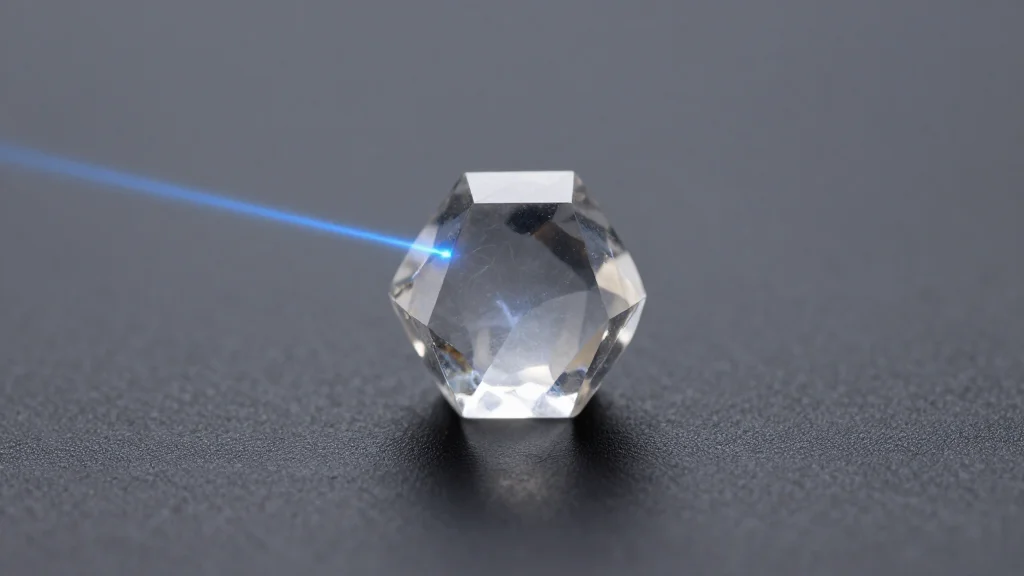
Molecule-in-a-Crystal System Could Boost Quantum Computing via Chemically Engineered Qubits
Researchers at NVision Imaging Technologies have demonstrated a carbene molecule embedded in a ketone crystal that functions as a controllable qubit‑photon interface. The molecular qubit emits bright, frequency‑stable light for over an hour and maintains spin coherence for tens of...
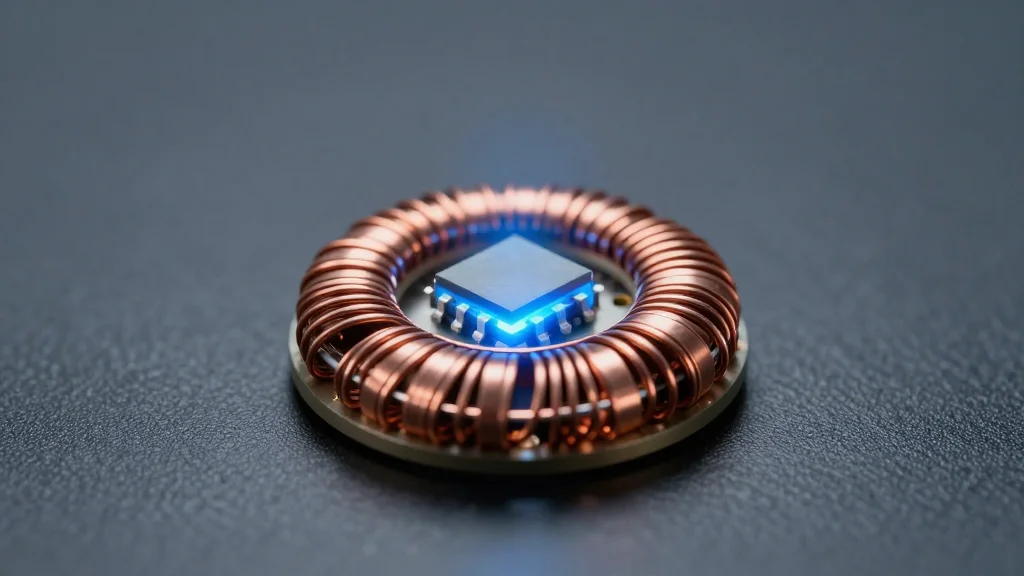
Quantum Sensors Use Atoms, Electrons and Light as Ultra‑steady Rulers
Quantum sensors, which exploit atoms, electron spins, and superconducting circuits, are moving from research labs into real‑world applications. They already power clinical magnetoencephalography (MEG) for epilepsy surgery and are being miniaturized into room‑temperature atomic magnetometers for flexible biomedical use. In...

The Complete Evolution of Spin Glass From Order to Chaos
Researchers at Okinawa Institute of Science and Technology (OIST) have tracked the transition from ordered antiferromagnetism to spin‑glass disorder by gradually doping zinc ferrite crystals with gallium. Using neutron magnetic diffuse scattering, magnetic susceptibility and heat‑capacity measurements, they observed that...

The Quantum Key to Seeing Through Chaos
Researchers at Institut des NanoSciences de Paris, the Kastler Brossel Laboratory, and the University of Glasgow have demonstrated a method that makes a scattering medium transparent only to entangled photon pairs, while remaining opaque to classical light. By optimizing a phase...

New Chip Offers Way to Make Use of Quantum System 'Imperfections'
Researchers at KTH have built an integrated photonic chip that deliberately introduces and controls loss in quantum circuits, enabling realistic simulation of imperfect quantum systems. The device adds a tunable side waveguide that diverts photons, mimicking environmental coupling and allowing...
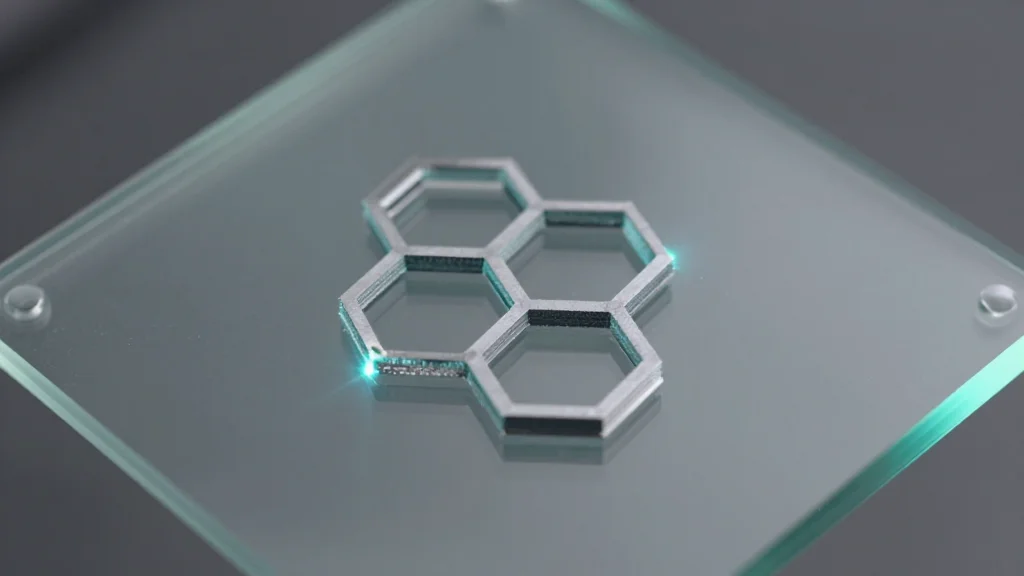
Twisted WSe₂ Reveals Elusive Charge-Neutral Quantum Modes
Researchers at UC Santa Barbara used space‑and‑time‑resolved ultrafast pump‑probe imaging to directly observe charge‑neutral spin‑valley collective modes in twisted bilayer WSe₂. Two distinct propagating excitations were identified—a fast, ballistic‑like mode traveling around 3 km/s and a slower, diffusive mode—matching theoretical Goldstone...
Roadmap Charts Three Paths to Room-Temperature Quantum Materials for Cooler Computing
Researchers from the University of Ottawa and MIT released a comprehensive roadmap in *Newton* that maps three strategic pathways—AI‑driven material screening, thin‑layer heterostructure engineering, and discovery of new magnetic topological families—to achieve room‑temperature operation. The review highlights the quantum anomalous...
Physicists Create Hybrid Light-Matter Particles that Interact Strongly Enough to Compute
Physicists at the University of Pennsylvania have engineered exciton‑polaritons—hybrid light‑matter quasiparticles that combine photon speed with strong matter interactions—to perform all‑optical switching. The team demonstrated signal switching using merely 4 × 10⁻¹⁵ joule per operation, far below the energy required by conventional electronic...

In Quantum Gravity, the Cosmological Constant May Behave Similar to the Quantum Hall Effect
Physicists have shown that the cosmological constant in loop quantum gravity can be quantized, mirroring the quantum Hall effect. Using the Chern‑Simons‑Kodama state, the new study demonstrates that Λ adopts discrete values that are resistant to secondary quantum fluctuations. This...

Quantum Geometry Provides Theoretical Limits on Measurable Properties of Solids
Two physicists at Japan’s RIKEN Center for Emergent Matter Science have used quantum‑geometry concepts to set theoretical limits on three measurable properties of solids. By analyzing the quantum geometric tensor—a matrix describing distances and curvature in the space of quantum...
Atomic Bands in Two Transition Metal Dichalcogenides Hint at Long-Theorized Quantum State
Researchers at Princeton/DIPC and Columbia have provided the first direct experimental evidence of obstructed atomic insulators in two transition‑metal dichalcogenides, NbSe₂ and WSe₂. Using scanning tunneling microscopy combined with first‑principles calculations and symmetry‑based modeling, they mapped electronic weight to empty...
New Quantum Protocol Breaks Distance and Speed Barriers in Fiber Networks
Scientists at the University of Science and Technology of China have unveiled Xinghan‑2, a multi‑mode quantum relay network that establishes matter‑matter entanglement over 14.5 kilometers. The system combines a time‑measurement protocol with multi‑mode quantum memory, delivering entanglement fidelity of 78.6 % and...

Method for Measuring Energy Amounts Less than a Trillionth of a Billionth of a Joule Could Boost Quantum Computing
Researchers at Aalto University, in partnership with IQM and VTT, have demonstrated a calorimeter capable of detecting energy as low as 0.83 zeptojoules—one trillionth of a billionth of a joule. The device uses a hybrid of superconducting and normal metals,...
Researchers Find Coherent Ferrons—Polarization Waves with Potential Across Quantum and Telecom Applications
Columbia University researchers have observed coherent ferrons—polarization‑carrying quasiparticles—in the 2D ferroelectric material NbOI₂, marking the first experimental detection of these waves. Using ultrafast laser pulses and stroboSCAT microscopy, they captured ferrons propagating at hypersonic speeds while emitting terahertz (THz) radiation....
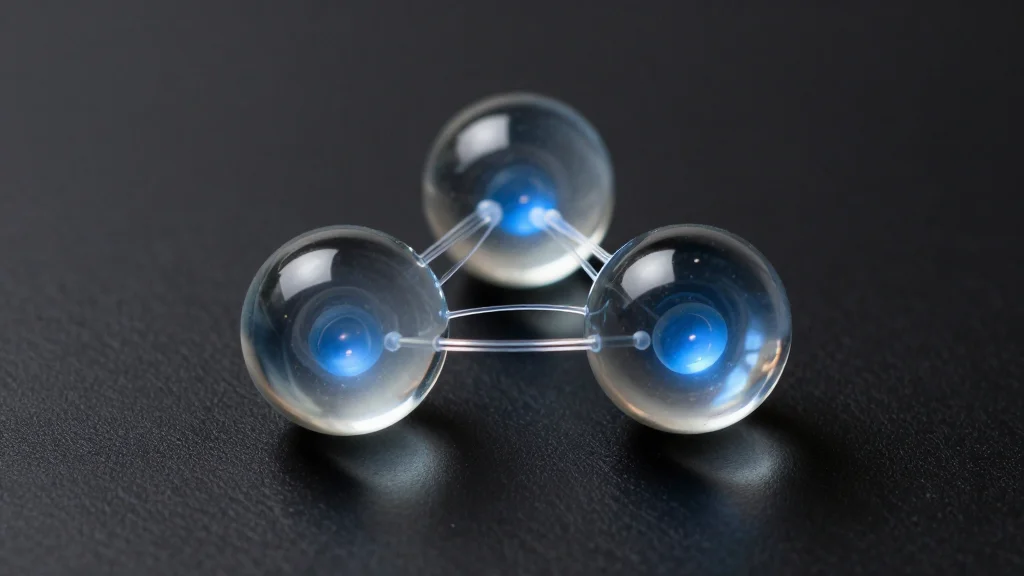
'Elegant Triangle' Experiment Suggests Quantum Internet May Be Closer than We Think
An international team led by Dr. Nicolas Gisin demonstrated genuine quantum network non‑locality using a three‑node “elegant triangle” setup, where each node received particles from two independent sources and performed fixed measurements. The experiment produced correlations that cannot be explained...
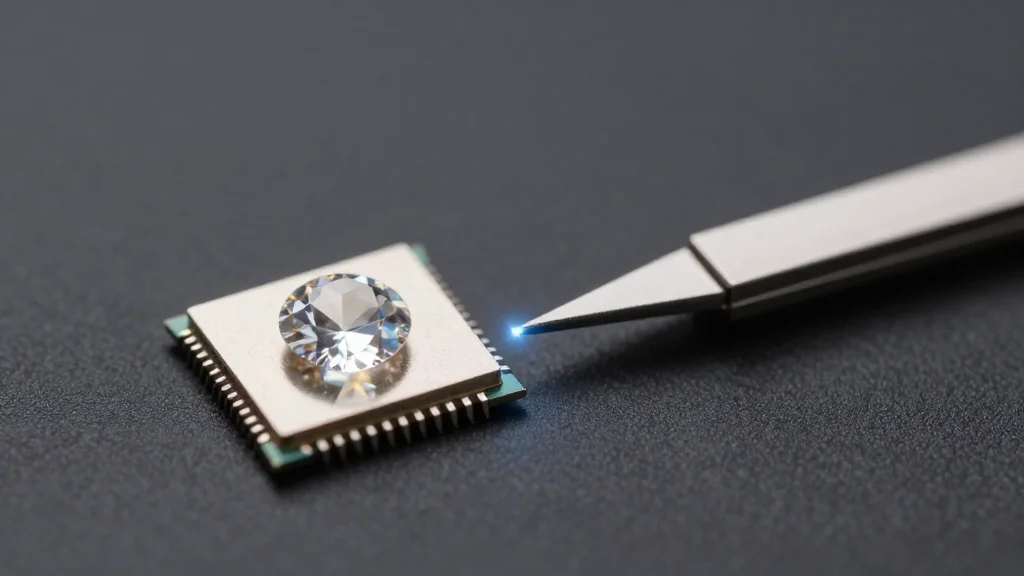
Good Vibrations for Quantum Communications: Engineers Couple Single Phonon to Single Atomic Spin
Harvard engineers have for the first time coupled a single phonon—the quantum unit of sound—to a single atomic spin in a diamond colour‑centre qubit, a breakthrough reported in Nature. The nanometer‑scale mechanical resonator achieves strong spin‑phonon interaction, enabling phonons to...
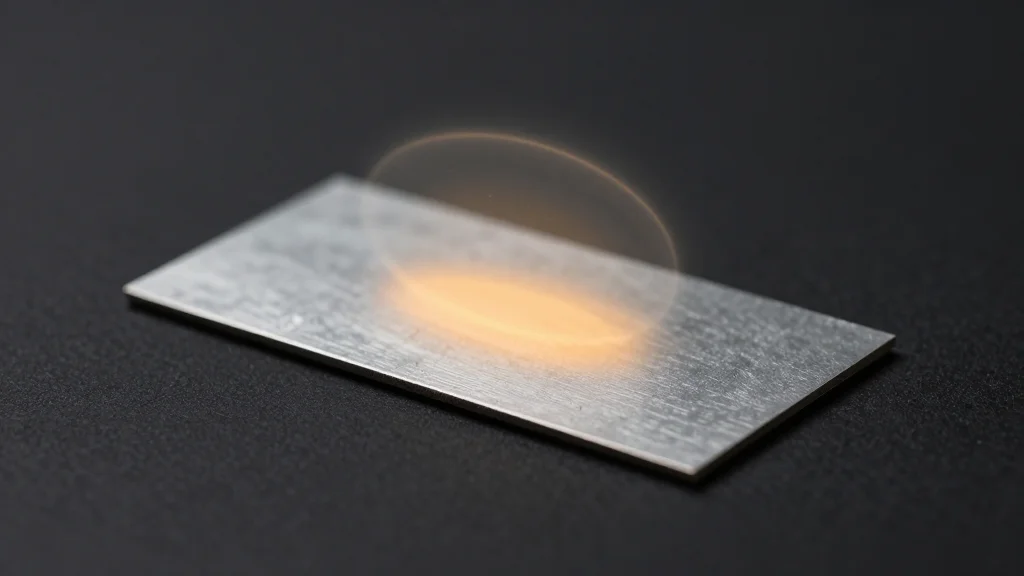
Quantum Metallurgy: Electron Crystals Deform and Melt
University of Michigan researchers demonstrated that charge density waves—electron crystals—can deform and melt within a two‑dimensional sheet of tantalum sulfide. By heating the metal to roughly 568 °F and probing it with electron diffraction, the team observed the gradual smearing of...

Quantum Geometry Applied to Light-Based Systems Expands Toolkit for Topological Photonics
Researchers Anton Montag and Tomoki Ozawa have extended quantum geometry to non‑Hermitian photonic systems, publishing their findings in Physical Review Research. They demonstrated programmable artificial potentials for light that control gain and loss, and introduced a direct experimental method to measure...
Symmetry Says These Crystal Vibrations Can Never Mix, but an Exotic Quantum Phase Rewrites the Rules
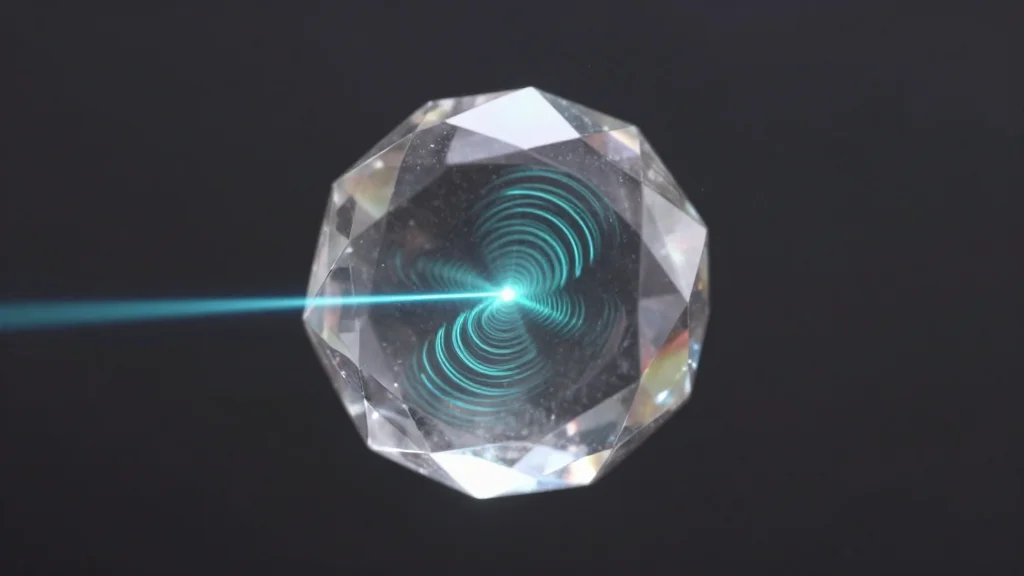
Researchers at UT Austin and the Max Planck Institute have shown that electronic fluctuations in a ferroaxial charge‑density‑wave crystal can dynamically couple vibrational modes that symmetry normally forbids. Using helicity‑resolved light scattering, they observed a resonant interaction between an amplitudon (the...

Time-Varying Magnetic Fields Can Engineer Exotic Quantum Matter
Cal Poly physicists Ian Powell and Louis Buchalter demonstrated that periodically varying magnetic fields can create quantum phases that do not exist in any static material. Their paper in Physical Review B introduces a Floquet‑engineering framework that maps a topological phase...

Physicists Have Measured 'Negative Time' In the Lab
Physicists at the University of Toronto have experimentally measured a negative dwell time for photons passing through a rubidium atomic cloud, confirming a long‑standing quantum oddity. By firing single photons and a weak probe laser simultaneously, they recorded both early...

Sudden Quantum Jolts May Not Break Adiabatic Behavior After All
A pair of German theoretical physicists have shown that the quantum adiabatic theorem can remain valid even after an instantaneous perturbation. Using exact analytical methods for a transverse‑field Ising model with a non‑zero energy gap, they proved the system stays...

Quantum Computing's Next Dark Horse Emerges From a Frozen Surface, Where Almost Nothing Behaves as Expected
Researchers at DOE’s Argonne National Laboratory have refined an electron‑on‑neon qubit that traps single electrons above a solid neon surface. The new study, published in Nature Electronics, shows the platform’s noise is 10‑10,000× lower than typical semiconductor qubits and its...

A Flower-Like Pattern Exposes Chiral Superconductivity's Long-Sought Fingerprint
University of Tennessee physicists have demonstrated the first clear fingerprint of chiral superconductivity by depositing a one‑third monolayer of tin atoms on silicon and imaging the resulting quasiparticle interference. The experiment produced a distinctive flower‑like pattern with a central atomic‑scale...

Frozen in Dry Ice, Hydrogen Reveals a Surprisingly Simple Way to Control Quantum Behavior
University of Maryland chemists have shown that freezing molecular hydrogen in dry‑ice crystals can lock or release its nuclear‑spin states. By embedding H₂ in different crystal symmetries, the researchers prevent the ortho‑to‑para conversion for two ortho substates, while adding nitrogen...

Physicists Reveal Universal Speed Limit on Quantum Information Scrambling
Theoretical physicists at the University of Maryland have mathematically proven a universal speed limit for quantum information scrambling, showing that the minimum time for information to spread depends on a system's entropy and temperature. Building on Hawking radiation concepts and...

Light Can Now Be Shaped in Empty Space, and It Could Simplify Sensing and Boost Data Links
Scientists at the University of East Anglia and the University of the Witwatersrand have shown that light can spontaneously develop handed (chiral) spin while propagating through empty space, without mirrors, lenses or exotic materials. By preparing a beam in a...
Quantum 'Dark Modes' No Longer Block Phonon Control, Opening New Paths for Scalable Devices
Researchers at RIKEN have demonstrated a technique to convert problematic quantum "dark modes" into temporary bright modes, restoring topological phonon control in non‑Hermitian systems. By engineering dark modes with artificial quantum information, they overcame the phonon blockade that previously halted...

One-Way Phonon Synchronization Could Survive Noise and Defects, Theoretical Physicists Suggest
A team of RIKEN theorists has unveiled a novel scheme for one‑way quantum synchronization of phonons that tolerates fabrication defects and environmental noise. Their approach, detailed in a Nature Communications paper, leverages a synergistic combination of light‑induced and magnetic‑field effects...
Quantum Chips Could Scale Faster with New Spin-Qubit Readout that Reduces Sensors and Wiring
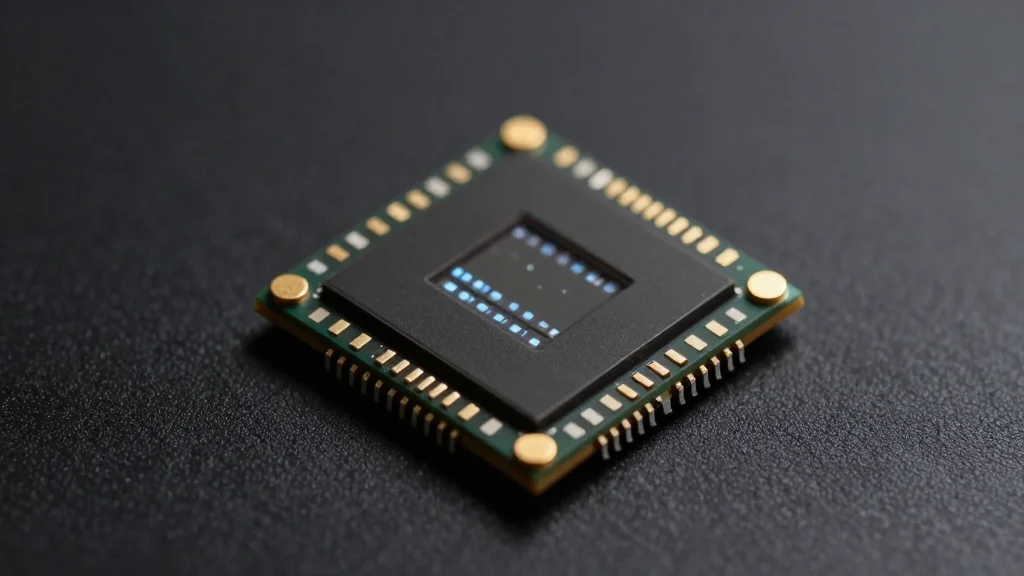
Researchers at Quantum Motion and UCL unveiled a radio‑frequency electron‑cascade readout that amplifies spin‑qubit signals, boosting signal‑to‑noise ratio by over 35 dB. The technique reads two‑electron spin states in roughly 7.6 µs, a hundred‑fold speed gain versus prior dispersive methods. By eliminating...
Physicists Revive 1990s Laser Concept to Propose a Next-Generation Atomic Clock
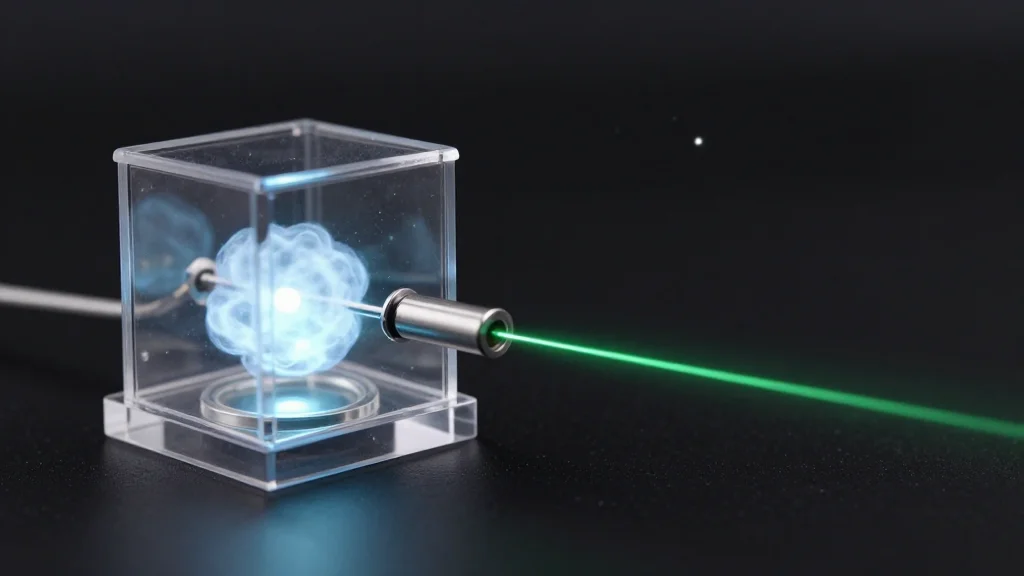
Physicists at the University of Colorado and the University of Bonn have revived a 1990s superradiant laser concept, proposing a three‑level atomic scheme that could power a continuous‑wave atomic clock. By adding an extra ground state, the design sidesteps heating...
Soundwaves Settle Debate About Elusive Quantum Particle
Researchers at Cornell have resolved a long‑standing controversy over the thermal Hall effect in the insulator α‑RuCl₃. By measuring ultrasonic phonon propagation instead of heat flow, they showed that rotating lattice vibrations—chiral phonons—produce the Hall response via intrinsic Hall viscosity....

Classical Physics Can Explain Quantum Weirdness, Study Shows
MIT researchers have demonstrated that the classical principle of least action, when extended with a density term, can reproduce exact quantum‑mechanical results. By reformulating the Hamilton‑Jacobi equation, they derived wavefunctions identical to those from the Schrödinger equation for scenarios such...

Do Decoherence, Gravity, Dark Matter and Dark Energy All Originate From Quantum Corrections?
Physicist Kyoung Yeon Kim proposes that quantum‑correction terms in the Wigner–Moyal phase‑space formulation of quantum mechanics can generate effective forces that reproduce dark‑matter phenomena and an apparent dark‑energy driven acceleration. By treating the magnitude of these corrections as resolution‑dependent on the gravitational...

Scientists Take a Step Toward a Quantum Internet Using New York City's Fiber
A collaborative team from New York University, quantum‑startup Qunnect, and Cisco has demonstrated entanglement swapping across a three‑node network using existing telecom fiber in Manhattan and Brooklyn. The proof‑of‑concept linked two outer nodes to a central hub equipped with cryogenic...
Photonic Chip Generates Milliwatt-Level UV Light, 100 Times Brighter than Before
Researchers at the University of Twente and Harvard have demonstrated a photonic chip that generates several milliwatts of ultraviolet (UV) light, a power level roughly 100 times higher than prior on‑chip attempts. The breakthrough relies on converting two red photons...

Pressure-Tuned Quantum Spin Liquid-Like Behavior Observed in Material Y-Kapellasite
Researchers at University Paris‑Saclay‑CNRS and the University of Stuttgart applied hydrostatic pressure to Y‑kapellasite while monitoring it with muon spin spectroscopy (µSR). The pressure gradually suppressed the material’s static magnetic order, revealing persistent spin dynamics that resemble a quantum spin‑liquid...
Could the Mathematical 'Shape' Of the Universe Solve the Cosmological Constant Problem?
Physicists at Brown University propose that the topology of space‑time, embodied in the Chern‑Simons‑Kodama (CSK) state, can neutralize quantum fluctuations that would otherwise drive the cosmological constant to absurdly large values. By drawing an analogy to the topologically protected conductance...
Why Ultrashort Laser Pulses Could Make Low-Power Electron Sources Far More Practical
University of Michigan researchers demonstrated that shrinking laser pulses from about 15 cycles to sub‑cycle lengths can raise photoemission quantum efficiency by roughly ten orders of magnitude, all while keeping laser power and intensity constant. The theoretical model, solved via...

Quantum Gas Resists Heating Under Periodic Kicks, Revealing Many-Body Localization Mechanism
A collaborative theoretical study by the University of Innsbruck and Zhejiang University explains why a periodically kicked ultracold quantum gas resists heating, a phenomenon known as dynamical localization. By mapping the driven many‑body system onto an effective lattice model, the...
Two Paths to Scalable Quantum Computing: Optical Links Between Fridges and Higher-Temperature Qubits
Researchers led by Prof. Hong Tang reported two advances that could unlock large‑scale quantum computers. First, they built an electro‑optic transducer that converts microwave qubit signals to optical photons, enabling a 1‑km fiber link between separate dilution refrigerators without cryogenic...

Bringing Quantum Time Into the Lab—A Single Clock Can Run Young and Old at Once
Physicists from Stevens Institute of Technology, Colorado State University and NIST have shown that ultra‑precise trapped‑ion optical clocks can be placed in quantum superpositions of their own proper time, effectively ticking both faster and slower at once. By leveraging squeezed...
A Long-Sought Quantum Computing Milestone Arrives as Fermionic Atom Gates Top 99% Accuracy
Two independent teams at the Max Planck Institute and ETH Zurich have demonstrated collisional quantum gates using fermionic lithium‑6 atoms, achieving two‑qubit gate fidelities above 99 %. Bojović’s group reported a peak accuracy of 99.75 %, while Kiefer’s team reached a loss‑corrected...
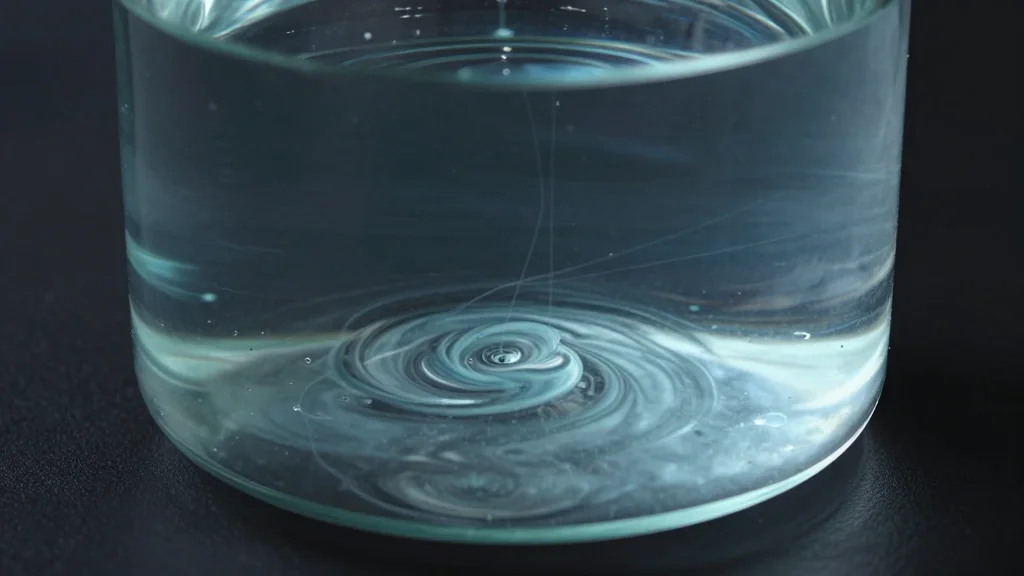
Water Simulation of Famous Quantum Effect Reveals Unexpected Wave Patterns
Physicists at the Okinawa Institute of Science and Technology (OIST), together with collaborators from Oslo and Chile, used a custom water tank to create a swirling vortex and launch surface waves from opposite sides. The interference produced rotating nodal lines—momentarily...

Universal Quantum Protocol Extracts Maximum Work without Knowing a System's State in Advance
A team from the University of Tokyo has unveiled a universal quantum protocol that extracts the maximum possible work from many copies of a quantum system without needing to know the system’s exact state beforehand. Published in Nature Communications, the...
Quantum-Informed AI Improves Long-Term Turbulence Forecasts While Using Far Less Memory
Researchers at University College London have demonstrated a hybrid quantum‑informed AI model that predicts long‑term turbulence more accurately than leading classical approaches. By feeding simulation data through a 20‑qubit IQM quantum processor before training on a supercomputer, the model achieved...
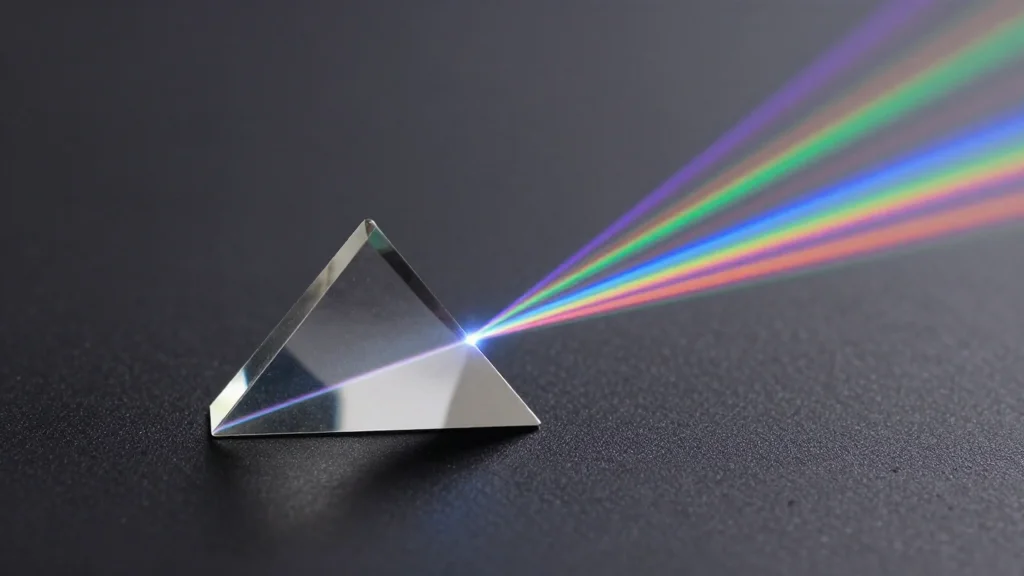
Quantum Bottleneck Breaks Wide Open as One Light Beam Carries 23 Secure Channels at the Same Time
Bar‑Ilan University researchers have demonstrated a way to transmit, manipulate, and measure quantum information across many frequency channels at once, breaking the long‑standing detector bandwidth bottleneck. Using broadband squeezed light, spectral shaping and parametric homodyne detection, they performed continuous‑variable quantum...