Phys.org Robotics News
Daily updates on robotics research breakthroughs and applied technology advances
Can Pepper the Robot Be a Good Playmate?
Researchers at Norway’s NTNU examined how the humanoid robot Pepper performs as a playmate in a controlled trash‑can basketball experiment. Participants played both cooperatively and competitively, with variations in who started the game, to measure engagement, motivation and enjoyment. The study found that cooperative modes and allowing humans to start yielded the highest enjoyment, while Pepper’s stiff, overly aggressive behavior caused frustration. The authors conclude that robot design must align pace, role and responsiveness with human expectations to be effective play partners.

Sonar–Camera System Sees Through Murky Waters
Engineers at MIT and the Woods Hole Oceanographic Institution unveiled Sonar‑MASt3R, a system that merges sonar depth data with optical camera imagery to produce real‑time 3D maps in turbid water. In controlled tank experiments the hybrid approach resolved centimeter‑scale features...
Seeing Through a Robot's Eyes: Augmented Reality Helps Humans Predict Machine Behavior
Researchers at BGSU and NYU Tandon demonstrated that a smartphone‑based augmented reality (AR) app can display a robot’s destination, planned route, and safety buffer in real time. In tests with 58 participants, the AR interface lifted situational‑awareness scores to an...
AI Robot Cleaners Leave the Lab for China's Living Rooms
Chinese household‑help platform 58.com has teamed with robotics firm X Square to offer an AI‑powered cleaning service using the Quanta X1 Pro robot. Priced at 149 yuan (≈ $22) for a three‑hour session, the service is available in Beijing and Shenzhen and has attracted about...
Robots Are Closing in on Human-Like Judgments, Addressing a Key Challenge in Physical AI
KAIST researchers unveiled Video‑based Optimal Transport Preference (VOTP), a method that lets physical‑AI systems infer human judgment criteria from only a few demonstration videos. By replacing thousands of manually labeled data points with single‑digit video samples, VOTP dramatically cuts the...

Struggling German Auto Supplier Bosch Pivots to Robots
Bosch, the world’s largest auto parts supplier, is pivoting toward humanoid robotics as its traditional automotive business faces weakening demand. The company highlights a booming market for MEMS sensors—projected to exceed $19.2 billion by 2030 with a 4% CAGR—critical for robot...
New App Lets Anyone Operate a Robot From Their Phone
Georgia Tech researchers unveiled COBALT, a mobile app that turns any smartphone into a controller for robot arms via a secure Wi‑Fi link and WebRTC streaming. The system let novice users in nine countries remotely operate arms in the lab,...
Finding the Best Ways for Humans and Robots to Work Together Requires 'Swarm' Thinking
A new Transportation Science study shows that warehouse workers achieve higher order throughput when they dynamically switch among multiple autonomous mobile robots rather than staying paired with a single unit. The flexible “swarm” policy outperforms the traditional system‑directed, one‑to‑one approach...

A Tiny Underwater Antenna Is Changing How Robots Talk in Dark, Murky Seas
University of Florida researchers unveiled BlueME, a compact magnetoelectric antenna that enables low‑power, long‑range communication for underwater robots. The system transmits very‑low‑frequency signals using about 10 watts of power and demonstrated a 700‑meter range in ocean tests. BlueME’s design sidesteps the...
'5-in-1' Seed-Sized Surgical Robot Switches Tools in Under One Second
Scientists at Nanyang Technological University have unveiled a 4.4 mm seed‑sized robot that can perform five distinct surgical functions—cutting, gripping, drug release, tissue sampling and localized heating—by switching tools in under one second using weak magnetic fields. The device’s soft magnetic...
Motion Tracking System Shows Robots the Path Most Traveled by, Keeping Them on Task
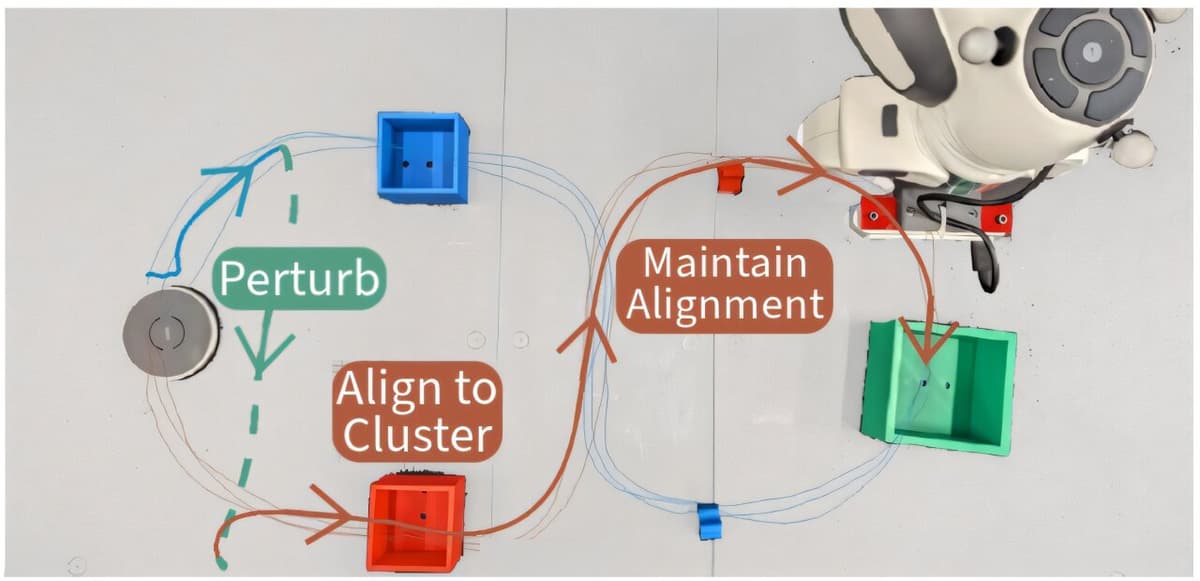
MIT CSAIL researchers unveiled Cluster Alignment for Learned Motions (CALM), a motion‑tracking system that derives a mean trajectory from a handful of human demonstrations. By clustering similar paths and maintaining a belief of task progress, CALM lets robots recover from...
Closing the Gap Between Animal Movement and Robotic Control
Carnegie Mellon researchers have created an AI‑driven framework that uses reinforcement learning to refine neuromechanical models of animal movement. The system acts as a digital twin, automatically identifying the parameters that cause discrepancies between real‑world animal data and simulations, and...

Artificial Muscle Merges Sensing and Movement in One Structure for Humanoid Robots
Researchers at Seoul National University have created an artificial muscle that merges actuation and sensing within a single liquid‑crystal elastomer structure. By embedding two liquid‑metal channels—one for heating‑driven contraction and another for real‑time force and deformation measurement—the device mimics the...
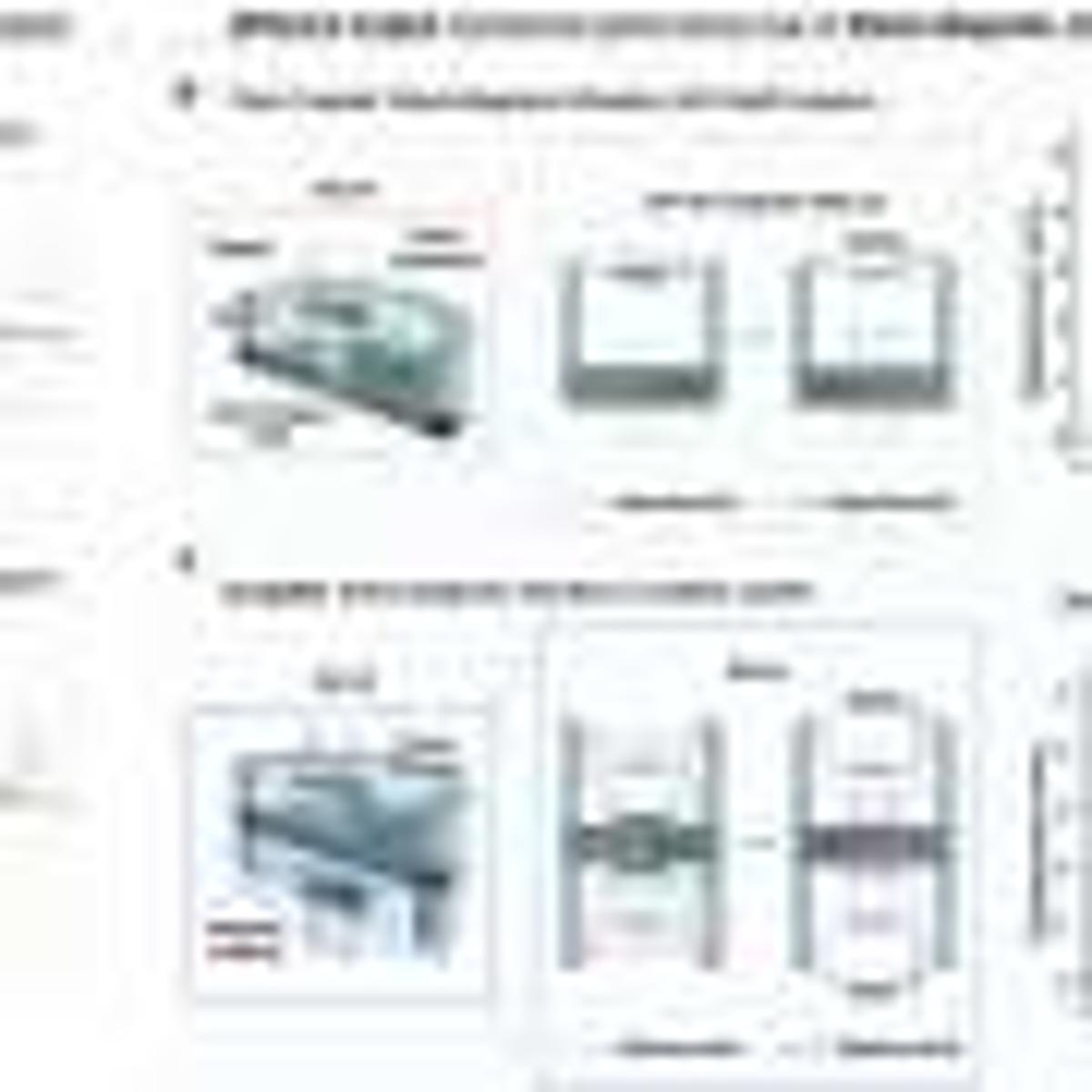
From Motion to Memory: Researchers Create Soft Machines that Amplify Movement and Remember Touch
Researchers at Seoul National University unveiled a soft actuator using elasto‑magnetic instability (C‑EsMV) that can amplify motion by up to 700‑fold and store mechanical memory without electronics. The system balances magnetic attraction and elastic tension to produce stepwise, bistable responses,...
New Understanding of Insect Flight Points Way to Stable Flapping-Wing Robots
Cornell researchers have built a five‑dimensional computational model that captures the core physics of insect wing‑body coupling, identifying two explicit formulas that define a passive‑stability sweet spot. The model shows that many insects can achieve stable flight without active neural...