
Senators Seek Increased Funding for NASA Mars Missions
Senators are urging the Senate Appropriations Committee to allocate at least $400 million to NASA’s Mars Future Missions account for FY 2027, warning that the $110 million provided in FY 2026 is insufficient and could cause irreversible damage to U.S. Mars capabilities. NASA’s own FY 2027 request mirrors the $110 million figure, shifting focus to lower‑cost science missions rather than the technology needed for a Mars Sample Return. The push comes as the administration proposes a 47% cut to NASA’s overall science budget, threatening dozens of missions and U.S. leadership against a rising Chinese program. Industry players such as Lockheed Martin claim they can deliver a sample‑return architecture for under $3 billion, underscoring the urgency of stable funding.

Rethinking Cyber and Space with Joe Mazur
SpaceNews’ new podcast *Space Minds* featured an interview with Nightwing’s cyber‑space strategist Joe Mazur. Mazur discussed how cyber operations are accelerating and becoming integral to space missions, emphasizing the rise of offensive cyber capabilities. He also explained how acquisition processes...

NRO Highlights Government and Industry Partnerships
The National Reconnaissance Office announced at the Space Symposium its drive to broaden partnerships with industry, academia, allies and the Space Force to accelerate next‑generation intelligence, surveillance and reconnaissance capabilities. Over the past five years the agency has awarded contracts...

SES and Boeing Move Toward Factory-Installed Multi-Orbit Inflight Connectivity
SES and Boeing have agreed to integrate SES’s multi‑orbit inflight connectivity hardware into aircraft production, starting with Boeing 737s and later 787s, moving away from retrofit installations. The hardware will become fully line‑fit by 2028 after an initial phase that...

Commercial Space Federation (CSF) Welcomes ispace-U.S. To Board of Directors
The Commercial Space Federation announced that ispace‑U.S., a U.S.-based lunar exploration firm, has joined its Board of Directors. ispace‑U.S. has been an associate member and will now help shape CSF’s strategic priorities and policy engagement. The move aligns with NASA’s...

Seagate Space and Oceaneering Join Forces to Build the Future of Offshore Launch Infrastructure
Oceaneering International and Seagate Space have signed a memorandum of understanding to co‑develop an offshore launch platform, dubbed the Gateway concept. The partnership leverages Oceaneering’s maritime and space systems heritage, including work on the Space Shuttle and Artemis, to accelerate...

Put Science Back in the Driver’s Seat
NASA’s science program is increasingly dependent on ride‑along payloads, a stark shift from decades of dedicated missions that delivered breakthroughs like alien oceans and the accelerating universe. A proposed 46% budget cut for 2026‑27 would eliminate half of the agency’s...

White House Releases Space Nuclear Policy
The White House unveiled a six‑page space nuclear policy (NSTM‑3) on April 14, directing NASA, the Pentagon and the Department of Energy to develop low‑ to mid‑power nuclear reactors for orbit and the lunar surface. NASA must begin work within 30 days...

Defense Firms Unveil New Satellite Designs for Orbital Warfare
U.S. defense giants BAE Systems and Lockheed Martin announced accelerated programs to develop maneuverable satellites for orbital warfare. BAE unveiled the Ascent platform, a 2,200‑kg payload, refuelable space tug, targeting a classified pathfinder launch in 2027. Lockheed detailed its Next‑Generation...

Q&A: Aerospace Corp Flexes Its Data Advantage
Aerospace Corporation, the government‑funded research center, is leveraging its 65‑year legacy of spacecraft testing to build AI models that speed design and anomaly resolution. CEO Tanya Pemberton highlighted a new "government‑furnished talent" initiative that lets private firms tap the FFRDC’s...

Gravitics Targets 2027 Flight Test for ‘Orbital Carrier’ Architecture
Gravitics is developing an orbital carrier platform, dubbed Medusa, that can store and deploy up to six reusable Viper OTX space tugs. The effort is funded through a STRATFI agreement with the U.S. Space Force, pairing $30 million in government money...

Citra Space Raises $15 Million Series A to Expand Platform for Identifying Objects in Orbit
Citra Space announced a $15 million Series A round led by Washington Harbour Partners to scale its space‑domain‑awareness platform. The Colorado startup, founded by former U.S. Space Force officers, aggregates data from ground and space sensors to create persistent fingerprints of orbital...

Atomic-6 Unveils Online Marketplace for Orbital Data Centers
Atomic-6 announced ODC.space, an online marketplace that lets customers procure complete satellites for on‑orbit data‑center capacity. The platform offers both dedicated satellites and shared compute rentals, handling everything from component sourcing to launch and mission operations. Target customers include AI...

Orbit Is Filling up Fast. Now Comes the Awkward Bit: Pre-Empting and Handling a Crisis.
Earth’s orbital environment is nearing a tipping point as tens of thousands of new satellites are slated for launch, pushing low‑Earth orbit toward congestion. In 2023 Starlink alone performed roughly 300,000 collision‑avoidance maneuvers, and analysts warn that as many as...

Key Senate Appropriator Rejects Proposed NASA Budget Cuts
Sen. Jerry Moran, chair of the Senate Appropriations Commerce, Justice and Science subcommittee, announced he will fight the administration’s proposed 23% cut to NASA’s FY2027 budget, aiming to keep funding near last year’s $24.4 billion level. He emphasized a balanced budget...

Q&A: Building a Broadband Constellation for a Contested Space Era
Logos Space Services, founded by former NASA and Google executive Milo Medin, received FCC approval to launch up to 4,178 low‑Earth‑orbit broadband satellites operating in K‑, Q‑ and V‑band frequencies. The company’s private‑network architecture uses super‑narrow beams to boost capacity,...

Rocket Lab Wins Contract for Three More iQPS Launches
Rocket Lab announced a new contract with Japan’s iQPS to launch three more Electron missions beginning in 2028. The agreement adds to an existing pipeline that already includes seven completed iQPS flights and five launches on order. Each Electron flight...

Falcon 9 Launches Cygnus Cargo Spacecraft to the ISS
On April 11, a SpaceX Falcon 9 lifted off from Cape Canaveral carrying Northrop Grumman’s Cygnus NG‑24 cargo spacecraft, named S.S. Steven R. Nagel, to the International Space Station. The launch, delayed by weather, placed the 5‑ton XL‑class vehicle into low‑Earth orbit, where it will dock...

Hungary Taps Northrop Grumman for First National Geostationary Communications Satellite
During Vice President JD Vance’s April 7 visit to Budapest, Hungary announced a partnership with Northrop Grumman to build its first national geostationary communications satellite, part of the HUSAT program slated for 2030 delivery. The satellite, based on Northrop’s GEOStar‑3...

Starfish Space Raises More than $100 Million
Starfish Space announced a Series B round that raised over $100 million, led by Point72 Ventures and co‑led by Activate Capital and Shield Capital. The capital will be used to scale production of its Otter line of satellite‑servicing spacecraft and to hire...

NASA’s New Moon Base Project Requires Operational Technology Systems in Space, but They Are Vulnerable.
NASA Administrator Jared Isaacman announced a $20 billion Moon‑base program, shifting from a lunar‑orbit station to a surface settlement. The plan, timed against China’s 2030 lunar landing goal, includes robotic landers, drones, and a future nuclear power plant. Experts warn the...

Nominate Space Industry Leaders for the 2026 SpaceNews Icon Awards
SpaceNews has opened nominations for its 2026 Icon Awards, inviting the global space community to recognize innovators, collaborators and change‑makers. Nominations close on August 14, with the awards ceremony scheduled for December 1 at the Johns Hopkins Bloomberg Center in...

Earth Observation Operators Push to Deliver Satellite Images Within Minutes
Earth‑observation firms are racing to shrink image‑delivery latency from hours to minutes, with Vantor showcasing a 13‑minute turnaround and BlackSky’s Gen‑3 satellite delivering first‑light imagery within hours of launch. Government and commercial clients now demand sub‑20‑minute, often sub‑10‑minute, access to...

Moog Highlights Growing Satellite Bus Capabilities with Full‑Scale METEOR Reveal at Space Symposium
Moog Inc. unveiled a full‑scale model of its METEOR satellite bus at the 41st Space Symposium in Colorado Springs, highlighting a portfolio of scalable spacecraft platforms. The METEOR demonstrator showcases adaptable payload interfaces, flexible power systems, and high‑delta‑V propulsion designed...

FOSSA Targets Japan’s Defense Market as Larger Smallsats Expand Capabilities
Spanish startup FOSSA Systems is entering Japan’s defense market through a distribution deal with conglomerate Kanematsu and opening a Tokyo office. The company has moved from sub‑kilogram picosatellites to larger 3U, 6U cubesats and is developing a 75‑150 kg microsatellite platform...
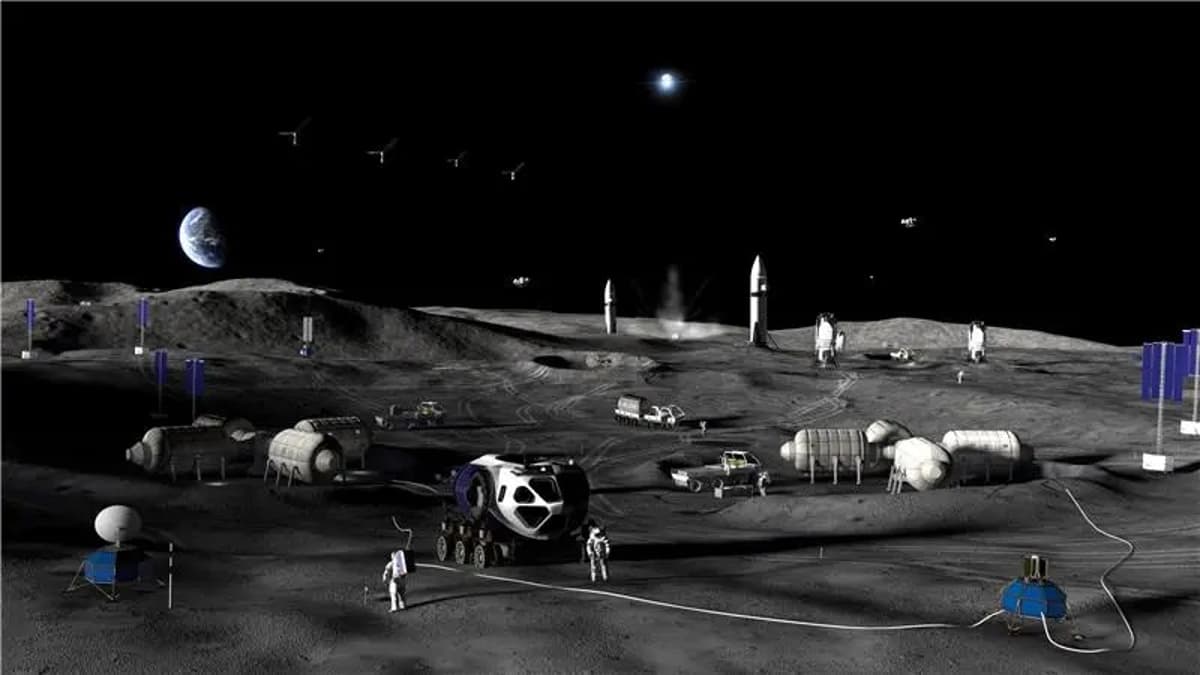
The Moon Base Has a Hardware Plan. It Needs a Software Strategy, Too.
NASA announced a phased plan to build a permanent lunar base, targeting crewed landings every six months and a nuclear propulsion test to Mars by 2028. The initiative relies on a sprawling network of commercial partners, CLPS providers, and international...

Seagate Space Signs MOU with Firefly Aerospace to Collaborate on Offshore Launch Infrastructure for Alpha
Seagate Space Corp. signed an MOU with Firefly Aerospace to develop an offshore launch platform for the Alpha rocket, leveraging Seagate’s purpose‑built Gateway Series. The platform received “Approval in Principle” from the American Bureau of Shipping, marking the first offshore...

Artemis 2 in Good Shape Cruising Towards the Moon
NASA confirmed that Artemis 2’s Orion spacecraft is performing nominally as it cruises toward the moon, with subsystems operating as expected. The translunar injection burn on April 2 used propellant within 5% of predictions, prompting controllers to cancel the first of three...

Italy’s Argotec Plans to Scale Florida Satellite Facility to Meet Rising US Demand
Italy’s Argotec has opened a 465‑square‑meter satellite production plant near Kennedy Space Center, backed by a $25 million investment. The facility will initially staff about 20 engineers and plans to triple that headcount within two years, enabling simultaneous assembly of more...

Swift Spacecraft Reorientation Buys Time for Reboost Mission
NASA has reoriented the 2004‑launched Swift observatory to reduce atmospheric drag by roughly 30%, buying critical weeks before its orbit falls below the 300‑kilometer threshold needed for a planned reboost. Updated decay models now show a 10% chance of reaching...

Former Sierra Space CEO Tom Vice to Lead Astrion
Tom Vice, former Sierra Space chief executive, has been appointed CEO and executive chair of Huntsville‑based defense contractor Astrion. The company also named former Lockheed Martin Space vice president Eric Brown as president of space operations and ex‑RTX executive Conn...

Optical Terminals Still a Bottleneck in Pentagon’s Proliferated Constellation
On Oct. 15, Lockheed Martin launched 21 Space Development Agency Tracking Layer Tranche 1 satellites, each carrying three laser communication terminals (OCTs) instead of the planned four due to a supply shortfall. Tesat‑Spacecom delivered 42 terminals while CACI supplied only 21,...

Moog Technology Successfully Steers Artemis II Launch
Moog Inc. supplied the critical actuation and motion‑control systems that steered NASA’s Artemis II launch, including thrust‑vector control, launch‑abort actuators, fluid‑control hardware, and mobile launch‑pad mechanisms. The SLS rocket lifted four astronauts from Kennedy Space Center, marking a record‑setting step toward...
Relativity, Hermeus, Astrion and Divergent Executives Join Fortastra C-Suite
Fortastra, a Los Angeles‑based space startup, has bolstered its leadership team by hiring senior executives from Relativity Space, Hermeus, Astrion and Divergent Technologies. Josh Jetter joins as chief technology officer, Sahil Desai as vice president of product, and Arnold Nowinski...

Teledyne Forms Dedicated Space Unit to Capture Rising Demand
Teledyne Technologies is launching a dedicated business unit called Teledyne Space, consolidating its imaging, electronics, and component operations to meet rising demand for satellite‑based sensing. The new sector merges detectors, microwave devices, optoelectronics, and radiation‑tolerant semiconductors under one umbrella. It...

Saltzman: Space ‘Baked Into’ Modern Combat Operations
U.S. Space Force chief Gen. Chance Saltzman said the service is now "baked in" to modern combat, supplying missile‑warning, satellite communications and electronic‑warfare capabilities that underpin joint operations from Iran to Venezuela. He highlighted the force’s role in the February...

Aspect Aerospace Secures Early Funding to Advance Swarm-Deployable VLEO Satellites
Aspect Aerospace, a University of South Alabama spin‑off, secured $2.4 million—including a $1.9 million U.S. Space Force SBIR grant—to build circuit‑board‑sized Single‑Board Satellites (SBS) for swarm deployment in very low Earth orbit (VLEO). The SBS integrates sensing, communications and power on a...

From the Midwest to the Moon
NASA’s Artemis 2 mission, slated for a spring 2026 launch, will put Orion into lunar orbit for the first time since Apollo. While the launch pad remains in Florida, the mission’s critical testing and hardware development are anchored in Ohio, home...

The Florida Model for Sustainable Aerospace Growth
Space Florida, created as a public corporation two decades ago, has built a sustainable aerospace ecosystem by emphasizing long‑term partnerships rather than short‑term cash incentives. The agency conducts venture‑capital‑style due diligence, aligning state infrastructure, workforce and market outlook before committing...

Vantor Wins Intelligence Agency Contract to Monitor Space Objects
Vantor, a commercial Earth‑intelligence firm, won a $2.3 million contract from the National Geospatial‑Intelligence Agency to monitor low‑Earth‑orbit objects. The award is the first NGA Luno task order focused on non‑Earth imaging, expanding the agency’s $500 million Luno A/B framework. Vantor will...

China Targets 140 Launches in 2026 Amid Commercial Space Surge
China aims to conduct about 140 orbital launches in 2026, a 52% jump from 2025’s record 92 missions. The surge is driven by expanding launch infrastructure at sites such as Jiuquan, Hainan’s commercial pads, and Haiyang, as well as rapid...

Europe’s Space Sector Faces Power Shift as Funding Grows
A new Aerospace Corporation report warns that the European Union is set to become the dominant political and financial driver of Europe’s space sector, with proposed 2028‑2034 budgets potentially raising defense and space spending to about $150 billion. The EU could...

Artemis 2 Countdown Underway
NASA kicked off the two‑day Artemis 2 countdown on March 30, targeting an April 1 launch from Kennedy Space Center’s Launch Complex 39B within a two‑hour window. Mission managers reported no major issues with the Space Launch System rocket, Orion crew capsule, or ground...

Second Starlink Satellite Suffers Anomaly, Generating Debris
SpaceX confirmed that Starlink‑34343 suffered an on‑orbit anomaly on March 29, generating tens of debris fragments at a 560‑kilometer altitude. Radar firm LeoLabs detected the debris and expects most fragments to deorbit within weeks because of the low orbit. SpaceX...

Rocket Lab Wins German Approval for Mynaric Deal
Rocket Lab received approval from Germany's Federal Ministry for Economic Affairs and Energy to acquire laser‑communications firm Mynaric for roughly $150 million, clearing the final regulatory hurdle. The approval, announced on March 30, enables the deal to close in April and marks...

Varda Flies Navigation Payload, Heat Shield Tests on Sixth Reentry Mission
Varda Space Industries launched its sixth re‑entry capsule, W‑6, aboard SpaceX’s Transporter‑16 rideshare from Vandenberg on March 30. The mission carries U.S. defense‑funded experiments, notably Rhea Space Activity’s autonomous navigation system that uses onboard cameras and the AutoNav algorithm to determine...

China’s Kinetica-2 Rocket Debuts Successfully, Sending Prototype Cargo Spacecraft to Orbit
Chinese commercial launch firm CAS Space successfully lifted its new Kinetica‑2 rocket into orbit on March 30, delivering a prototype cargo spacecraft and two other payloads. The 53‑meter vehicle can carry up to 12 tonnes to low‑Earth orbit and features a modular...

Satellite Imaging Industry’s Next Challenge: Getting Systems to Talk to Each Other
Commercial Earth‑observation constellations are delivering optical, radar and RF data at unprecedented rates, prompting defense agencies to seek fused, decision‑ready intelligence. While processing can now occur almost instantly, the real challenge is tasking—coordinating multiple sensors to capture complementary views of...

Starfish Space Finds a New Partner for Docking Demonstration Mission
Starfish Space announced that its Otter Pup 2 docking demonstration will target a new, still‑undisclosed partner after D‑Orbit withdrew in late 2025. The spacecraft, launched in June 2025, uses an electrostatic capture system to attach to flat surfaces on satellites lacking a...
Commercial Space Federation (CSF) Welcomes Two New Associate Members
The Commercial Space Federation (CSF) announced the addition of Astrolab and Zeno Power as associate members. Astrolab builds multi‑purpose rovers for lunar and Martian surface operations, while Zeno Power develops radioisotope batteries for extreme‑environment power. Both companies aim to strengthen...