Final Frontier for Meds? UK Startup Sends Drug-Making Into Space
Companies Mentioned

Why It Matters
Space‑based drug crystallisation could shift costly IV immunotherapies to inexpensive self‑injection, reducing hospital burden and lowering healthcare expenditures worldwide.
Key Takeaways
- •BioOrbit raised $12.5 m to launch Box‑E for space drug crystallisation
- •Microgravity enables ultra‑pure protein crystals for self‑injected cancer therapy
- •Self‑injection could cut NHS hospital visits, saving billions
- •SpaceX sees $22.7 tn market for in‑space manufacturing
- •Varda and United Therapeutics also pursue orbital pharma production
Pulse Analysis
The concept of manufacturing pharmaceuticals in microgravity is moving from theory to commercial reality. In orbit, the absence of sedimentation and convection currents allows large, flexible protein molecules to arrange into highly ordered crystals, improving stability and bioavailability. Researchers have already demonstrated this with Merck’s Keytruda, converting a lengthy IV infusion into a rapid subcutaneous injection. The scientific advantage translates into a compelling business case: higher‑purity drugs can be formulated at lower concentrations, enabling compact, self‑administered devices that patients can store at home.
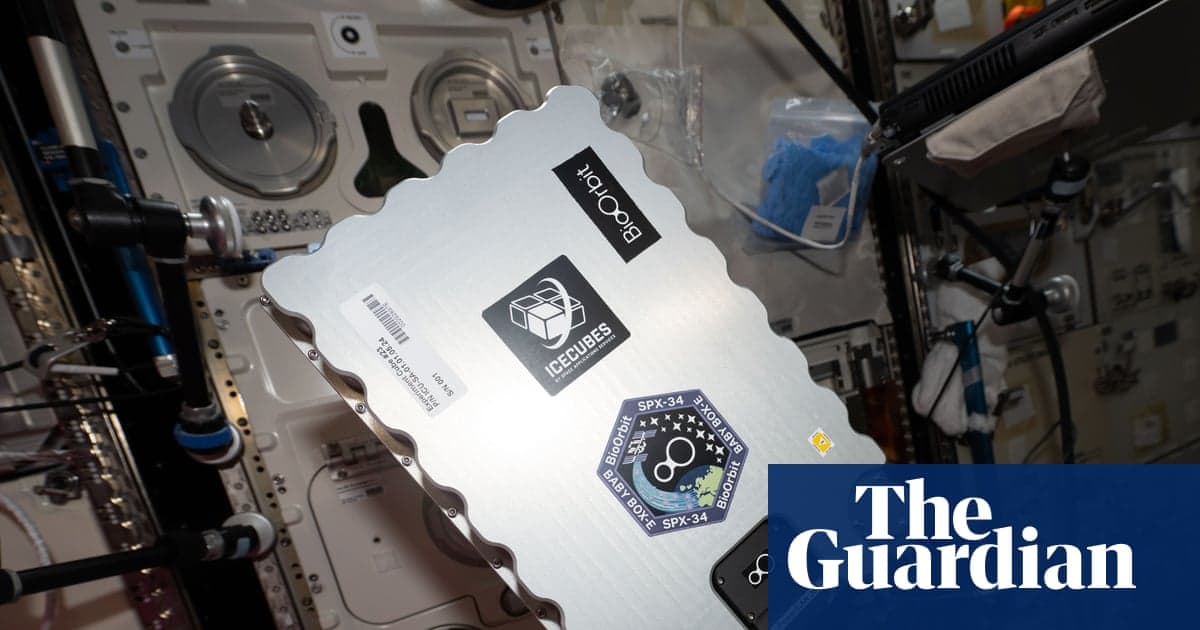
BioOrbit’s Box‑E unit, roughly the size of a microwave, represents a modular approach to scaling this capability. Backed by $12.5 million in venture funding and a $317 k contract from the UK Space Agency, the company plans to operate multiple units in low‑Earth orbit, processing thousands of litres of fluid annually. This aligns with SpaceX’s projection of a $22.7 trillion market for in‑space manufacturing, positioning BioOrbit as an early mover alongside rivals like Varda Space Industries. The startup’s strategy hinges on turning orbital experiments into a repeatable production line, reducing per‑dose costs and opening new revenue streams for biotech firms seeking differentiated delivery formats.
For healthcare systems, the impact could be profound. Self‑injected cancer therapies would diminish the need for hospital infusion suites, freeing up beds and staff while slashing operational expenses. The NHS, for example, could save billions of dollars over the drug’s lifecycle by avoiding repeated IV administrations and extending product shelf life. Moreover, patient convenience and adherence are likely to improve, potentially enhancing clinical outcomes. As regulatory pathways for space‑manufactured drugs solidify, the convergence of aerospace logistics and biotech innovation may redefine how life‑saving medicines are produced and delivered.
Final frontier for meds? UK startup sends drug-making into space
Comments
Want to join the conversation?
Loading comments...