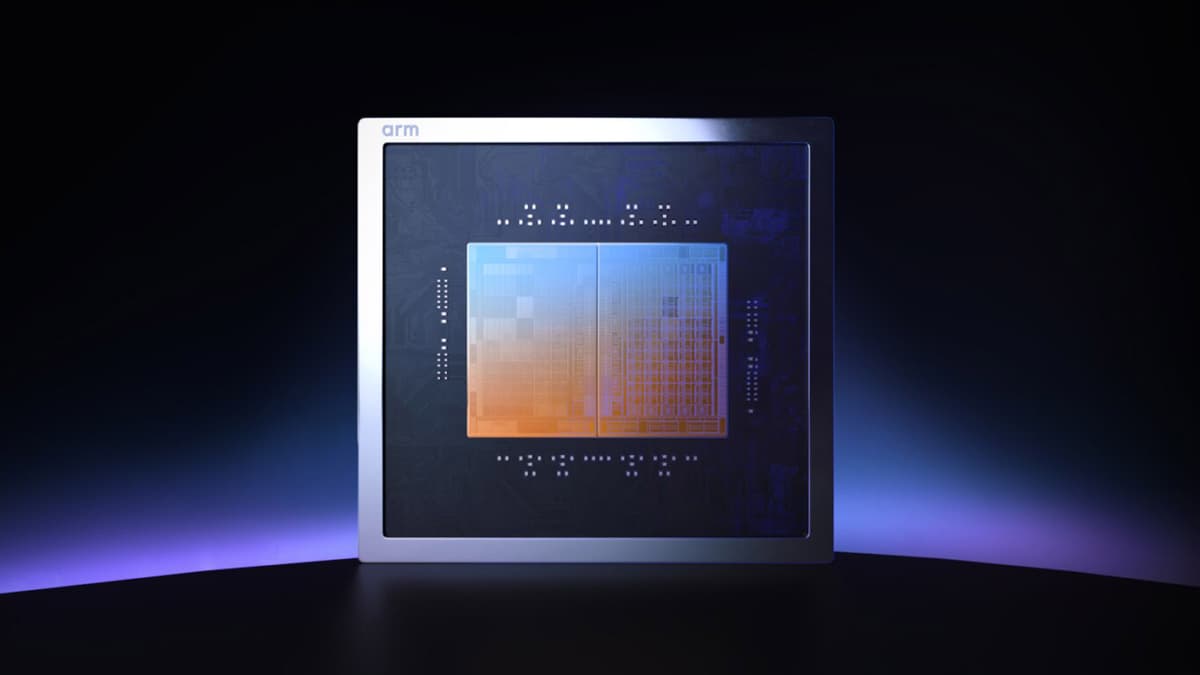
Arm Steps Deeper Into Silicon: Implications for the Semiconductor Value Chain
Companies Mentioned



Why It Matters
Arm’s turnkey offering lowers entry barriers for AI‑centric datacenters, accelerating adoption and capturing downstream revenue that previously went to custom silicon developers. This strategic shift could accelerate Arm’s market share at the expense of traditional fabless and foundry‑based models.
Key Takeaways
- •Arm launches AGI CPU on TSMC 3nm for AI data centers
- •Customers save $200‑$800M and cut time‑to‑market by up to 18 months
- •Turnkey chip pressures design service providers to shift toward system integration
- •Arm’s tiered model competes with RISC‑V’s open‑source flexibility
Pulse Analysis
Arm’s entry into silicon with the AGI CPU marks a pivotal evolution from pure IP licensing to a hybrid model that blends reference designs with full‑stack services. By leveraging TSMC’s leading‑edge 3 nm process, the chip delivers the performance and power efficiency required for modern AI workloads while eliminating the costly, multi‑year tape‑out cycle that has traditionally limited smaller players. This approach not only accelerates deployment for hyperscalers and cloud providers but also creates a new revenue stream for Arm, capturing value that was previously realized by custom‑design firms and foundries.
The broader industry impact is twofold. First, design service providers such as Global Unichip and Faraday Technology must reposition themselves, focusing on advanced packaging, chiplet integration, or domain‑specific accelerators where Arm’s baseline CPU no longer offers a competitive edge. Second, the move intensifies the strategic rivalry with open‑source RISC‑V, which has been gaining traction on cost and customization grounds. Arm counters this by offering a validated, production‑ready alternative that reduces risk and development expense, thereby preserving its ecosystem dominance while still appealing to customers who value a mature software stack and ecosystem support.
For hyperscalers, the AGI CPU introduces a new decision framework: adopt Arm’s ready‑made solution for baseline compute and allocate engineering resources toward differentiated accelerators, memory subsystems, and interconnects. This mirrors the chiplet strategies of AMD and Nvidia, where standardized cores are combined with custom I/O and AI engines. As AI workloads continue to drive datacenter expansion, the ability to launch new services within six to nine months—versus the traditional three‑to‑five‑year custom silicon timeline—offers a decisive competitive advantage. In sum, Arm’s vertical integration not only reshapes the semiconductor value chain but also sets a precedent for how IP vendors can capture downstream value in an increasingly cost‑sensitive, time‑critical market.
Arm Steps Deeper into Silicon: Implications for the Semiconductor Value Chain
Comments
Want to join the conversation?
Loading comments...