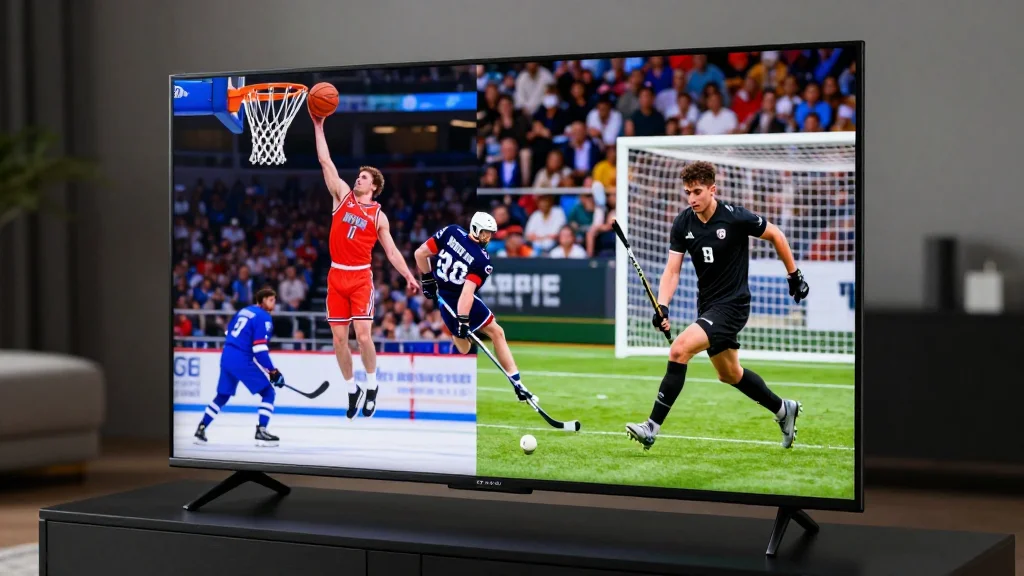
Sling Unveils $60 All‑Access June Streaming Bundle Covering NBA Finals, Stanley Cup, World Cup

Companies Mentioned


Why It Matters
The Sling bundle illustrates how OTT providers are leveraging bundled sports rights to differentiate themselves in an increasingly crowded market. By offering a single, affordable price for multiple premium events, Sling challenges the traditional pay‑per‑view and tiered‑subscription models that have dominated sports broadcasting for decades. If successful, the approach could force legacy cable operators and streaming competitors to rethink their pricing structures, potentially accelerating the migration of sports viewers to internet‑based platforms. Moreover, the bundle’s focus on June—a month packed with high‑stakes championships—highlights the growing importance of seasonal programming windows. As advertisers chase live‑view audiences, platforms that can deliver concentrated, high‑engagement viewership will command premium ad rates, reshaping revenue flows across the television ecosystem.
Key Takeaways
- •Sling launches a $60 monthly bundle covering NBA Finals, Stanley Cup Finals, FIFA World Cup and dozens of other live events for June.
- •The package is marketed as “everything worth watching in June,” consolidating three of the year’s most valuable sports properties.
- •Competitors like ESPN+ and Amazon Prime Video charge $12.99‑$14.99 for individual sports add‑ons, making Sling’s all‑in‑one price a value proposition.
- •Analysts project bundled sports packages could generate up to $5 billion in incremental OTT revenue by 2028.
- •Sling expects tens of thousands of new subscribers in the first quarter, though exact targets were not disclosed.
Pulse Analysis
Sling’s June bundle is a textbook example of price bundling used to lower the perceived cost of premium content while increasing the average revenue per user (ARPU). By aggregating three marquee events, Sling reduces the friction of multiple subscriptions and creates a single, compelling hook for sports fans. This mirrors the airline industry's success with bundled fare classes, where consumers accept a higher overall price for the convenience of an all‑inclusive package.
Historically, sports broadcasting has relied on exclusive rights deals that lock viewers into specific networks or platforms. The rise of OTT has fragmented that model, forcing consumers to juggle multiple apps and subscriptions. Sling’s strategy flips the script: it purchases a slice of the rights pie and repackages it in a consumer‑friendly format. If the bundle drives significant subscriber growth, we may see a cascade of similar offerings, potentially leading to a tiered ecosystem where bundles become the norm for high‑profile events.
Looking ahead, the real test will be whether Sling can sustain the bundle beyond June. The World Cup’s group stage offers a limited window, and the NBA and NHL finals are single‑event spectacles. Extending the model to year‑round events—such as the Olympics, major award shows, or even non‑sports live programming—could lock in a more stable revenue base. However, rights costs for those events are substantially higher, and the economics will hinge on Sling’s ability to negotiate favorable deals and maintain low churn after the marquee events conclude. The industry will be watching closely as Sling’s experiment either validates bundling as a growth engine or underscores the challenges of scaling premium live‑sports rights in the OTT era.
Sling Unveils $60 All‑Access June Streaming Bundle Covering NBA Finals, Stanley Cup, World Cup
Comments
Want to join the conversation?
Loading comments...