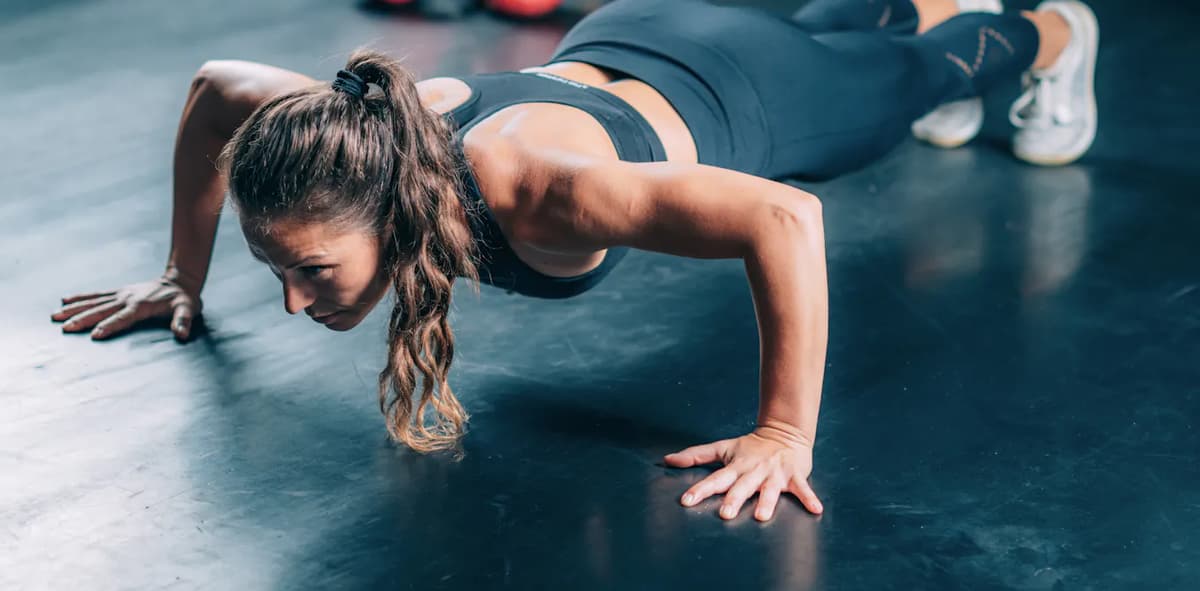
A Women’s ‘Push-Up Hack’ Is Trending on Social Media – an Anatomist Explains Why It Works
Why It Matters
Understanding gender‑specific biomechanics helps fitness brands deliver safer, more effective programs, boosting client retention and reducing injury‑related costs. It also creates market demand for tailored equipment and digital coaching solutions.
Key Takeaways
- •Hand rotation reduces elbow stress for women.
- •Female carry angle averages 15°, aiding sideways hand placement.
- •Wider pelvis increases Q‑angle, affecting lower‑body mechanics.
- •Adjusted stances lower knee‑caving and ACL injury risk.
- •Shoulder‑friendly exercises minimize overuse injuries in women.
Pulse Analysis
The recent push‑up hack illustrates how quickly a simple visual cue can spread across TikTok, Instagram and YouTube, shaping workout habits for millions. While fitness influencers often prioritize virality, the underlying science matters for long‑term engagement. Brands that integrate evidence‑based cues into their apps or class curricula can differentiate themselves, offering users credible guidance that translates into measurable performance gains and lower dropout rates.
From an anatomical perspective, women typically exhibit a 15‑degree elbow carry angle versus 10 degrees in men, a adaptation that clears the wider pelvis during arm elevation. Turning the hands outward aligns the forearm with this natural angle, decreasing joint torque and allowing smoother muscle recruitment. The broader female pelvis also widens the Q‑angle, influencing knee tracking during squats, lunges and jumps. Ignoring these differences can exacerbate knee valgus and raise ACL injury odds, which are already eight times higher for women.
Practical implications are clear for trainers, equipment manufacturers and digital health platforms. Coaches should cue outward‑facing hands for push‑ups, recommend slightly wider foot placement and 30‑degree toe‑out for lower‑body lifts, and prioritize shoulder‑friendly movements like seated dumbbell presses. Equipment designers might offer angled bars or adjustable grip stations to accommodate these biomechanics. By embedding such gender‑responsive tweaks into programs, the industry can reduce injury rates, improve client satisfaction, and capture a growing segment of health‑conscious consumers seeking personalized, science‑backed workouts.
A women’s ‘push-up hack’ is trending on social media – an anatomist explains why it works
Comments
Want to join the conversation?
Loading comments...