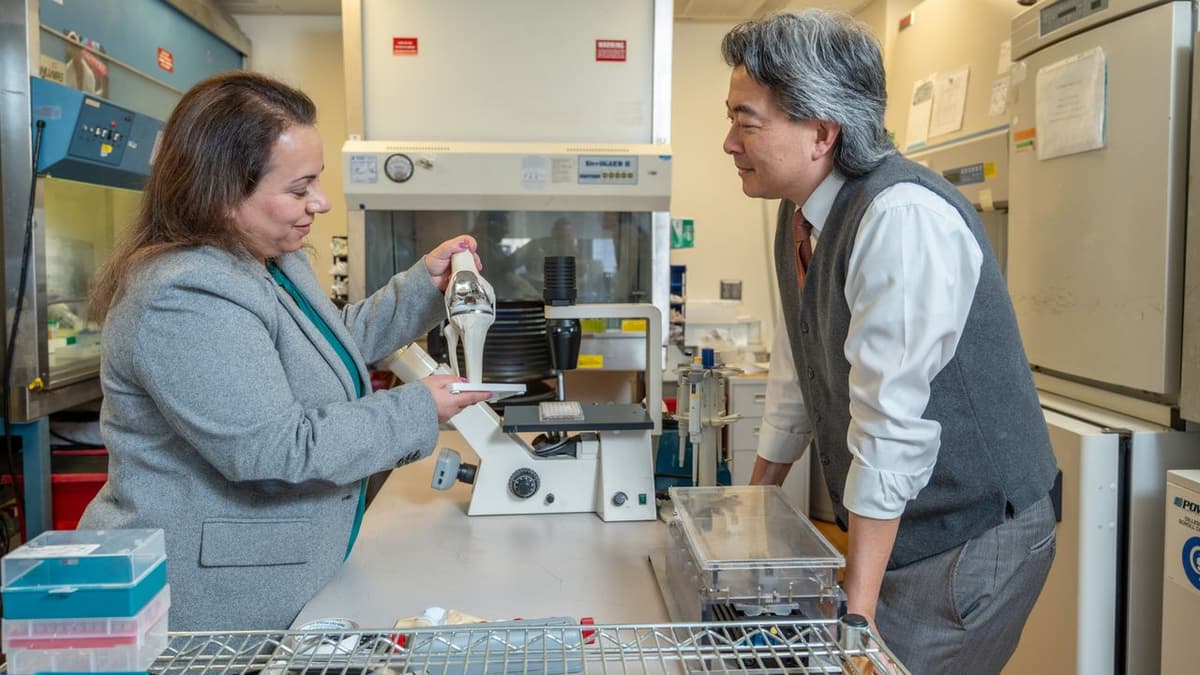
'Eventually, It Becomes You': Inventors of New 'Living' Knee Replacement Describe Why This Tech Is Desperately Needed and How It Works
Why It Matters
If successful, NOVAKnee could reduce revision surgeries and extend implant longevity, addressing a critical gap for younger osteoarthritis patients. Its regenerative approach may shift orthopedic care from metal replacements toward biologically integrated solutions.
Key Takeaways
- •NOVAKnee uses a biodegradable scaffold seeded with patient‑derived stem cells
- •Pre‑clinical work moved from mice to large‑animal osteoarthritis models
- •First human trials are planned for 2028 pending FDA clearance
- •Potential platform could be adapted for thumb and other joint replacements
Pulse Analysis
The orthopedic market has long been dominated by metal‑and‑plastic knee prostheses that typically outlive patients, prompting costly revision surgeries. NOVAKnee challenges that paradigm by marrying 3D‑printing with tissue engineering, creating a scaffold that gradually degrades while host‑derived bone and cartilage regenerate in situ. This bio‑integrative strategy not only promises longer implant life but also mitigates the bone loss and loosening risks that plague conventional revisions, especially in younger, active patients who currently rely on pain‑relief injections while awaiting surgery.
Regenerative knee technology hinges on two critical variables: scaffold composition and cell source. Researchers at Columbia and Missouri have engineered a polymer matrix that supports autologous stem‑cell differentiation into cartilage and bone, while also exploring allogeneic cell banks for patients with limited regenerative capacity. The dual‑track approach aims to personalize treatment pathways, balancing surgical feasibility with biological efficacy. Large‑animal studies using induced osteoarthritis models will reveal how mechanical loading influences scaffold degradation and matrix synthesis, data essential for FDA approval and eventual commercialization.
Beyond the knee, the NOVAKnee platform signals a broader shift toward living joint replacements. The developers acknowledge the knee’s mechanical complexity, yet they view it as a proving ground for scaling the technology to smaller, high‑force joints such as the thumb—an area with scant therapeutic options. If clinical outcomes meet expectations, insurers and hospitals could see a reduction in long‑term revision costs, while patients gain a more natural, durable solution. The coming years will test whether this regenerative model can transition from experimental labs to mainstream orthopedic practice, potentially redefining standards of care across multiple joints.
'Eventually, it becomes you': Inventors of new 'living' knee replacement describe why this tech is desperately needed and how it works
Comments
Want to join the conversation?
Loading comments...